Why Micro-OLED Displays Are Key for Future VR Headsets
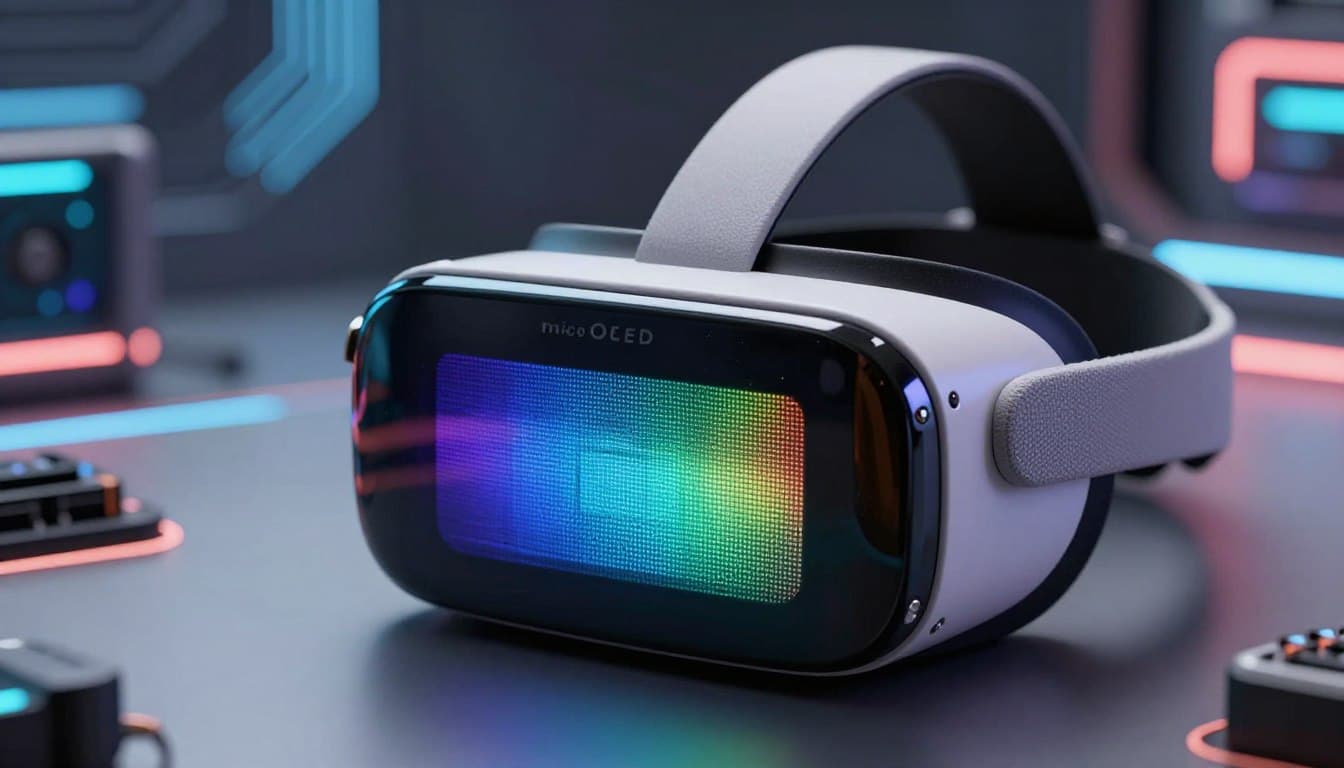
The future of VR headsets is closely tied to advancements in display technology. Among the various innovations, micro-OLED displays stand out for their potential to revolutionize the virtual reality experience.
Micro-OLED displays offer superior image quality, faster response times, and lower power consumption compared to traditional LCDs. This makes them particularly suited for VR headsets, where a seamless and immersive experience is crucial.

As VR technology continues to evolve, the importance of high-quality displays cannot be overstated. Micro-OLED displays are poised to play a critical role in this evolution, enhancing the overall user experience.
Key Takeaways
- Micro-OLED displays offer superior image quality and faster response times.
- They are more energy-efficient, making them ideal for VR applications.
- The technology is crucial for advancing VR headset capabilities.
- Enhanced display quality leads to a more immersive VR experience.
- Micro-OLED displays are a key component in the future development of VR technology.
What Are Micro-OLED Displays?
Understanding micro-OLED displays is crucial for appreciating the future of VR technology. Micro-OLED displays are a type of OLED technology that is specifically designed for small, high-resolution applications such as VR headsets.
The Technology Behind Micro-OLED
Micro-OLED technology integrates OLED panels with silicon-based backplanes, allowing for a more compact and efficient display system. This technology enables high contrast ratios and true blacks, enhancing the overall visual experience in VR applications.
The use of silicon backplanes in micro-OLED displays facilitates faster switching times and higher pixel densities compared to traditional OLED displays. This results in sharper images and smoother motion, which are critical for an immersive VR experience.
How Micro-OLED Differs from Standard OLED Panels
While both micro-OLED and standard OLED displays use organic compounds to emit light, the key difference lies in their design and application. Micro-OLED displays are designed for high-resolution, small-scale applications, making them ideal for VR headsets.
One of the main differences is the pixel density. Micro-OLED displays offer significantly higher pixels per inch (PPI) than standard OLED panels, reducing the screen door effect and providing a more seamless visual experience.
- Higher pixel density for sharper visuals
- Faster response times for reduced motion blur
- Compact design for sleeker VR headsets
The Evolution of VR Display Technology
The evolution of VR display technology is a story of continuous innovation, driven by the quest for more realistic visuals. As VR technology advances, the importance of high-quality display technology becomes increasingly evident.
Early VR Headsets and LCD Screens
Early VR headsets utilized LCD screens, which were the norm at the time. However, LCD technology had its limitations, including lower response times and a less immersive viewing experience compared to modern standards.
LCD screens were prone to motion blur and had lower contrast ratios, which affected the overall VR experience. Despite these limitations, LCD technology laid the groundwork for future advancements.
The Shift to OLED Technology
The transition to OLED technology marked a significant improvement in VR display quality. OLED panels offered faster response times, better contrast ratios, and more vivid colors, enhancing the VR experience.
"The adoption of OLED technology in VR headsets has been a game-changer, providing users with a more immersive and engaging experience."
The Emergence of Micro-OLED Solutions
The latest development in VR display technology is the emergence of Micro-OLED solutions. Micro-OLED offers even higher pixel density, faster response times, and more compact designs, further enhancing VR visuals and user comfort.
Micro-OLED technology represents a significant leap forward, enabling the creation of more sophisticated VR headsets that are both powerful and portable.
Superior Pixel Density for Sharper Visuals
One of the key advantages of micro-OLED in VR headsets is its ability to provide superior pixel density. This characteristic is crucial for delivering sharper visuals, which are essential for an immersive VR experience.
Understanding Pixels Per Inch in VR
Pixels Per Inch (PPI) is a measure of the density of pixels on a display. In the context of VR, a higher PPI means that the virtual environment appears more realistic and detailed. Micro-OLED displays offer significantly higher PPI compared to traditional LCD or standard OLED panels.
Higher PPI results in:
- Smoother edges on objects
- More detailed textures
- A more immersive experience overall
Eliminating the Screen Door Effect
The "screen door effect" is a phenomenon where the grid of pixels on a display becomes visible, resembling looking through a screen door. This effect can detract from the immersion in VR. Micro-OLED's high pixel density helps to eliminate this effect, providing a more seamless visual experience.
Real-World Visual Quality Improvements
The impact of micro-OLED's superior pixel density can be seen in various real-world applications. For instance, in gaming and simulation, the increased visual fidelity enhances the overall experience.
| Display Technology | PPI | Screen Door Effect |
| Micro-OLED | 1000+ | Minimal |
| Standard OLED | 500-700 | Noticeable |
| LCD | 200-400 | Significant |
This comparison highlights the advantages of micro-OLED in terms of pixel density and the reduction of the screen door effect, leading to a superior VR experience.
Ultra-Fast Response Times Reduce Motion Blur
In the realm of virtual reality, the importance of display response time cannot be overstated. Fast response times are essential for a seamless VR experience, as they directly impact the clarity of visuals during motion.
Why Response Time Matters in Virtual Reality
Response time refers to how quickly pixels can change color. In VR, this is critical because fast movements require rapid pixel transitions to prevent blur. A faster response time ensures that the visuals remain clear and sharp, even during intense movements.
Micro-OLED vs. LCD Response Rates
Micro-OLED displays typically have faster response times compared to LCDs. This difference is significant in VR applications where motion blur can detract from the user experience. The faster response rate of micro-OLED technology makes it more suitable for VR headsets.
| Display Technology | Typical Response Time (ms) |
| Micro-OLED | 0.01-0.1 |
| LCD | 5-10 |
The table above illustrates the significant difference in response times between micro-OLED and LCD displays. This comparison highlights the advantage of micro-OLED in reducing motion blur.
Compact Form Factor Enables Sleeker Headset Designs
The compact form factor of micro-OLED displays is revolutionizing VR headset design by enabling sleeker and more portable devices. This significant reduction in size is crucial for the development of more comfortable and visually appealing VR headsets.
Size Comparison with Traditional VR Displays
Traditional VR displays, such as LCD and standard OLED panels, are generally larger and heavier than micro-OLED displays. This size difference is significant when considering the overall design of VR headsets.
| Display Type | Size (inches) | Weight (grams) |
| LCD | 2.5 | 120 |
| Standard OLED | 2.2 | 100 |
| Micro-OLED | 1.8 | 60 |
As shown in the table, micro-OLED displays are substantially smaller and lighter than their counterparts, making them ideal for VR headset design.
Impact on Overall Headset Weight and Comfort
The reduced size and weight of micro-OLED displays directly contribute to the overall comfort of VR headsets. By minimizing the weight, users can enjoy longer VR sessions without fatigue.
Key benefits of micro-OLED displays in VR headsets include:
- Reduced overall weight
- Improved balance and ergonomics
- Enhanced comfort during extended use
With the compact form factor of micro-OLED displays, manufacturers can design headsets that are not only more comfortable but also more aesthetically pleasing, potentially increasing user adoption rates.
Enhanced Power Efficiency for Longer Sessions
Enhanced power efficiency is a hallmark of micro-OLED technology, enabling longer VR sessions. This is particularly important for VR headsets, which require a significant amount of power to deliver high-quality visuals and immersive experiences.
Power efficiency is crucial for VR devices, especially those that are battery-powered or designed to be used for extended periods. Micro-OLED displays offer a significant advantage in this area due to their unique characteristics.
Power Consumption Metrics
When evaluating the power consumption of VR displays, several metrics come into play. These include the power required to maintain the display's brightness, the energy consumed during active use, and the standby power consumption.
Micro-OLED displays excel in these areas by consuming less power compared to traditional LCD or standard OLED panels. For instance, micro-OLED can achieve the same level of brightness as other technologies while using less energy.

Benefits for Standalone VR Headsets
Standalone VR headsets, which operate without the need for an external PC or console, greatly benefit from the power efficiency of micro-OLED displays. These headsets rely on built-in batteries, and their overall user experience is heavily influenced by how long they can operate on a single charge.
By integrating micro-OLED technology, standalone VR headsets can offer longer usage sessions, making them more practical for users. This is particularly beneficial for applications such as gaming, education, and virtual travel, where extended sessions are common.
The improved power efficiency also allows manufacturers to design sleeker, more comfortable headsets without compromising on battery life. This balance between performance and power consumption is a significant step forward in VR technology.
True Black Levels and Superior Contrast Ratios
One of the standout features of Micro-OLED displays is their ability to produce true black levels, significantly enhancing the VR experience. This capability is crucial for creating immersive virtual environments that feel realistic.
How OLED Technology Achieves Perfect Blacks
OLED technology achieves true black levels because each pixel can be turned on and off independently. When a pixel is off, it emits no light, resulting in true blacks. This is different from LCDs, which use a backlight and can suffer from light leakage.
True blacks enhance the overall visual fidelity of VR experiences, making them feel more realistic and engaging. This is particularly important in VR, where the goal is to create an immersive experience.
Impact on Immersion and Visual Realism
The superior contrast ratios offered by Micro-OLED technology contribute significantly to the immersion factor in VR. By providing a more nuanced range of colors and deeper blacks, Micro-OLED displays make virtual environments more visually appealing.
The enhanced visual realism not only makes the VR experience more enjoyable but also reduces the likelihood of visual fatigue. This is because the visuals are more coherent and aligned with how we perceive the real world.
Current Virtual Reality Headsets Using Micro-OLED
The adoption of Micro-OLED displays in current VR headsets marks a significant leap in virtual reality technology. Several high-end VR headsets have already integrated this technology, offering users enhanced visual experiences.
Apple Vision Pro Implementation
The Apple Vision Pro is one of the most anticipated VR headsets to utilize Micro-OLED technology. Its display specifications and performance are noteworthy.
Display Specifications and Performance
The Apple Vision Pro features high-resolution Micro-OLED displays with a fast response time, reducing motion blur and providing crisp visuals.
- Resolution: 1832 x 3204 per eye
- Refresh Rate: Up to 120Hz
- Response Time:
User Experience Benefits
The Micro-OLED display in the Apple Vision Pro enhances the overall user experience by providing vivid colors and deep blacks, making virtual environments more immersive.
| Feature | Apple Vision Pro |
| Display Technology | Micro-OLED |
| Resolution per Eye | 1832 x 3204 |
| Refresh Rate | Up to 120Hz |
PlayStation VR2 Technology
The PlayStation VR2 also leverages Micro-OLED technology to deliver a premium VR experience. Its display features are designed to optimize performance.
Display Features
The PlayStation VR2 boasts impressive display features, including a high refresh rate and quick response time, ensuring a smooth VR experience.
- Resolution: 1024 x 1024 per eye
- Refresh Rate: Up to 120Hz
- Response Time:
Other Notable Implementations
Besides the Apple Vision Pro and PlayStation VR2, other VR headsets are also adopting Micro-OLED technology. These include various high-end models designed for gaming and professional applications.
The trend towards Micro-OLED in VR headsets is expected to continue, driven by the demand for higher quality visuals and more immersive experiences.
Comparing Micro-OLED to Other VR Display Technologies
Micro-OLED is revolutionizing VR headsets, but how does it stack up against other display technologies? As VR continues to evolve, understanding the strengths and weaknesses of different display technologies is crucial for developers and consumers alike.
LCD Panels vs. Micro-OLED
LCD (Liquid Crystal Display) panels have been a staple in VR technology for some time. However, when compared to Micro-OLED, they fall short in several key areas.
- Resolution and Pixel Density: Micro-OLED offers significantly higher pixel density, reducing the "screen door effect" and providing a more immersive experience.
- Response Time: Micro-OLED has a faster response time, minimizing motion blur and enhancing overall visual quality.
- Contrast Ratio: While LCDs can struggle with contrast, Micro-OLED delivers true blacks and a superior contrast ratio, making visuals more lifelike.

Standard OLED vs. Micro-OLED
Standard OLED (Organic Light-Emitting Diode) displays are known for their excellent color reproduction and contrast. However, Micro-OLED takes these qualities to the next level.
- Brightness and Color Accuracy: Both technologies offer excellent color accuracy, but Micro-OLED can achieve higher peak brightness, making it more versatile for various VR environments.
- Viewing Angles: Micro-OLED maintains its color accuracy and contrast even at wider viewing angles, a critical feature for VR where users may look in different directions.
MicroLED vs. Micro-OLED
MicroLED is another emerging technology that promises significant improvements over traditional display methods. How does it compare to Micro-OLED?
- Brightness: MicroLED is known for its high brightness levels, potentially surpassing Micro-OLED in very bright environments.
- Power Efficiency: Micro-OLED generally offers better power efficiency, crucial for standalone VR headsets where battery life is a concern.
- Manufacturing Complexity: Both technologies are complex to manufacture, but Micro-OLED has been more established in production, potentially giving it an edge in terms of cost and availability.
In conclusion, while each display technology has its strengths and weaknesses, Micro-OLED stands out for its combination of high resolution, fast response time, and excellent contrast ratio. As VR technology continues to advance, the choice of display technology will play a critical role in shaping the user experience.
Challenges and Limitations of Micro-OLED Displays
One of the significant barriers to the widespread adoption of Micro-OLED displays in VR is their high production cost and limited scalability. Despite their superior visual quality and other advantages, Micro-OLED displays face several challenges that need to be addressed to make them more viable for mainstream VR applications.
Manufacturing Costs and Scalability
The production of Micro-OLED displays involves complex manufacturing processes, contributing to high costs. Scaling up production while maintaining quality is a significant challenge. Manufacturers must invest in advanced equipment and techniques to improve yield rates and reduce costs.
Currently, the cost of Micro-OLED displays is significantly higher than that of traditional LCD or OLED panels. This is due in part to the low production volumes and the high cost of manufacturing equipment. As demand increases and production techniques improve, economies of scale are expected to reduce costs.
Current Production Limitations
Micro-OLED production is limited by several factors, including the availability of suitable silicon wafers and the complexity of the OLED deposition process. Improving production yields is crucial to reducing costs and increasing supply.
| Production Limitation | Impact | Potential Solution |
| Silicon Wafer Availability | Limits production capacity | Invest in wafer production or alternative materials |
| OLED Deposition Complexity | Increases production cost and reduces yield | Advancements in deposition technology |
Brightness Considerations
Another challenge facing Micro-OLED displays is achieving sufficient brightness, particularly in very bright environments. While OLED technology is known for its excellent contrast ratios, maximizing brightness without compromising other aspects of display quality is an ongoing challenge.
Researchers are exploring various techniques to enhance the brightness of Micro-OLED displays, including improving the efficiency of OLED materials and optimizing display design. Addressing brightness concerns is essential for ensuring that VR experiences remain vivid and immersive under various lighting conditions.
The Future of Micro-OLED in VR Technology
Micro-OLED displays are set to revolutionize the VR landscape with their superior visual quality and efficiency. As we look to the future, several key advancements are on the horizon that promise to further enhance the VR experience.
Predicted Advancements in Resolution
One of the most significant areas of development is in resolution. Micro-OLED technology is expected to continue pushing the boundaries of pixel density, providing users with even sharper and more detailed visuals. This advancement will be crucial in creating more immersive VR environments.
The increase in resolution will also help in reducing the screen door effect, a common issue in lower-resolution VR headsets. By making individual pixels less discernible, micro-OLED displays will create a more seamless and engaging visual experience.
Wider Adoption Across Price Points
As micro-OLED technology matures, it is anticipated that it will become more widespread across various price points. This democratization of high-quality VR display technology will make advanced VR headsets more accessible to a broader audience.
Currently, high-resolution VR headsets can be prohibitively expensive for many consumers. However, as manufacturing processes improve and economies of scale are achieved, the cost is expected to decrease, making these advanced headsets more mainstream.
Integration with Other Emerging Technologies
The future of micro-OLED in VR also involves integration with other emerging technologies. Two significant areas of integration are eye-tracking and foveated rendering, as well as augmented reality applications.
Eye-Tracking and Foveated Rendering
Eye-tracking technology allows VR headsets to focus processing power on the area where the user is looking, thanks to foveated rendering. This technique significantly reduces the computational load, enabling smoother performance and potentially extending battery life in portable VR devices.
Micro-OLED's fast response time and high refresh rates make it an ideal candidate for pairing with eye-tracking and foveated rendering technologies, further enhancing the VR experience.
Augmented Reality Applications
Beyond VR, micro-OLED displays also hold promise for augmented reality (AR) applications. AR requires a display that can provide high brightness, good color accuracy, and a compact form factor—all areas where micro-OLED excels.
The integration of micro-OLED in AR devices could lead to more sophisticated and user-friendly AR experiences, blending digital information seamlessly with the real world.
Conclusion
As virtual reality continues to evolve, the role of micro-OLED displays in shaping its future cannot be overstated. With their superior pixel density, ultra-fast response times, and compact form factor, micro-OLED displays are poised to revolutionize the VR experience.
The advantages of micro-OLED technology, including true black levels and enhanced power efficiency, make it an ideal choice for VR headsets. Current implementations in devices like the Apple Vision Pro and PlayStation VR2 demonstrate the potential of micro-OLED displays to deliver sharper visuals and more immersive experiences.
While challenges such as manufacturing costs and scalability remain, the future of micro-OLED in VR technology looks promising. Predicted advancements in resolution and wider adoption across price points are expected to further enhance the VR landscape. As VR technology continues to advance, the integration of micro-OLED displays will be crucial in driving innovation and delivering high-quality virtual reality experiences.