VR Training: How Police & Military Use Immersion Now
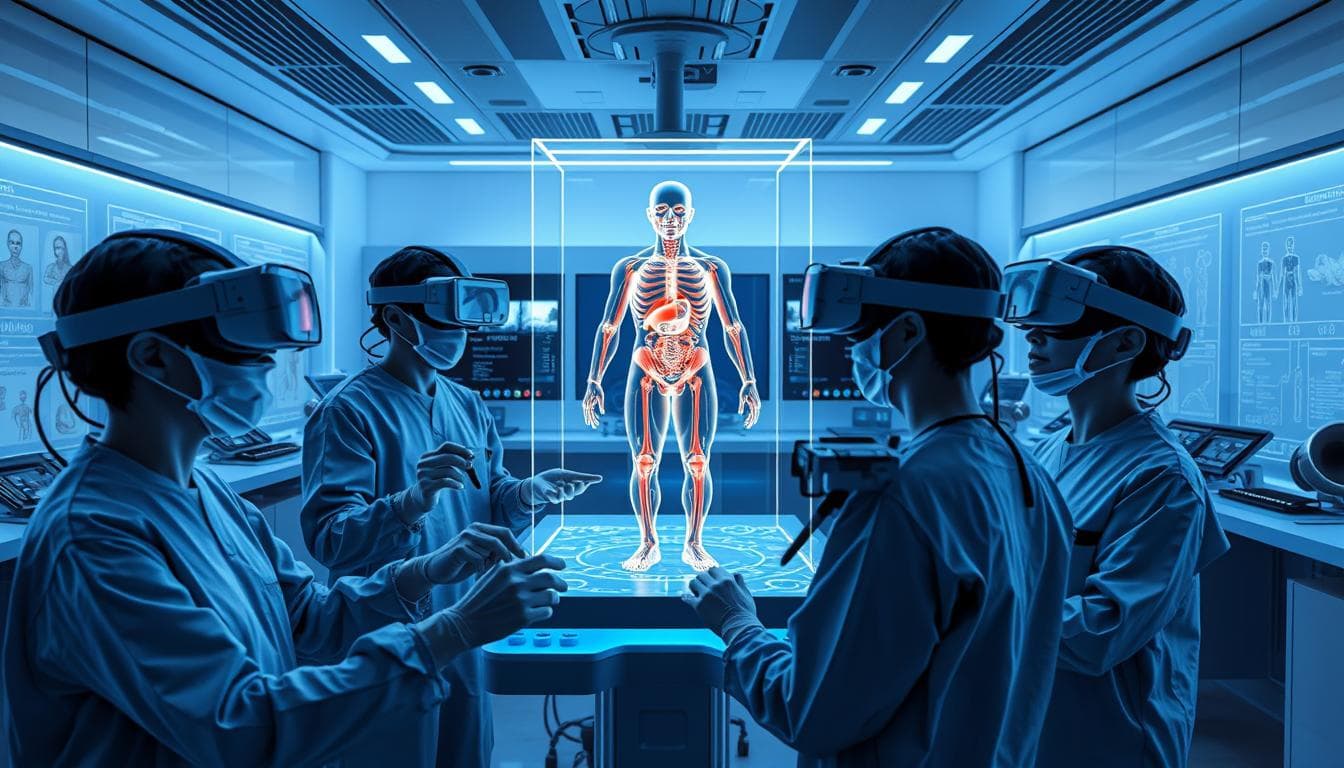
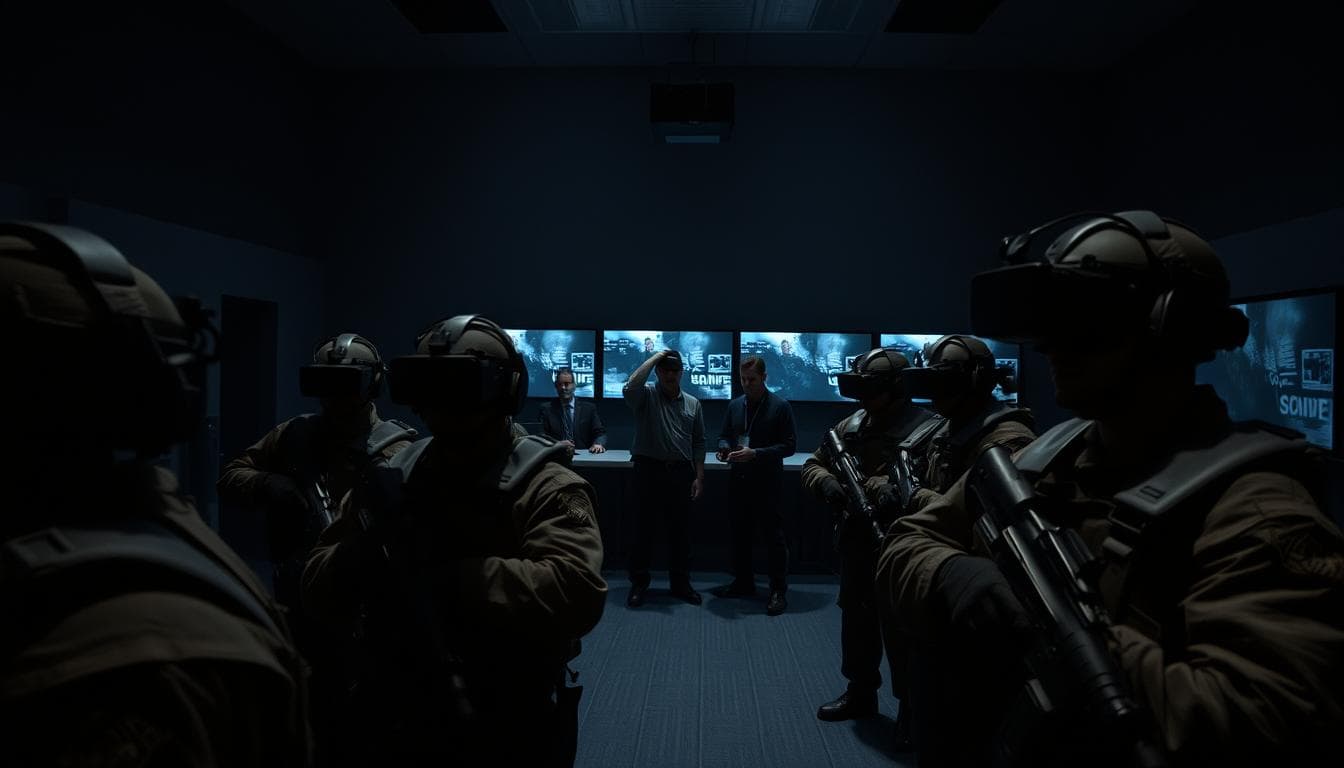
The use of VR training is revolutionizing the way police and military personnel prepare for critical situations. By leveraging immersive training technology, these organizations can simulate real-world scenarios, enhancing their response to high-pressure events.

This innovative approach to training allows individuals to practice and hone their skills in a controlled, yet realistic environment. As a result, they can develop the expertise needed to tackle complex challenges effectively.
Key Takeaways
- VR training is being increasingly adopted by police and military organizations.
- Immersive training enhances the preparedness of personnel for real-world scenarios.
- The technology allows for the simulation of high-pressure events, improving response times.
- VR training provides a controlled environment for personnel to practice and hone their skills.
- The use of VR training is revolutionizing traditional training methods.
The Evolution of Virtual Reality in Training Simulations
From rudimentary beginnings to sophisticated immersive environments, VR technology has significantly advanced training simulations for military and law enforcement. The journey began with basic simulations and has now evolved into fully immersive experiences.
From Basic Simulations to Fully Immersive Environments
The early days of VR training prototypes were marked by limited capabilities, often restricted to simple, repetitive scenarios. However, these early systems laid the groundwork for modern immersion capabilities.
Early VR Training Prototypes
Initial VR training systems were characterized by their simplicity, often involving rudimentary graphics and limited interactivity. Despite these limitations, they represented a crucial step towards more advanced training methodologies.
Modern Immersion Capabilities
Today's VR training simulations offer highly realistic and interactive environments. Trainees can engage in complex scenarios that mimic real-world challenges, enhancing their preparedness and response.
Key Technological Milestones Enabling Today's Training Systems
Several technological advancements have driven the evolution of VR training simulations. These include improvements in graphics processing, advancements in haptic feedback systems, and the development of more sophisticated software.
| Technological Advancement | Impact on VR Training |
| Graphics Processing | Enhanced visual realism |
| Haptic Feedback Systems | Increased tactile interaction |
| Software Development | More complex and realistic scenarios |
These advancements have collectively contributed to the sophisticated VR training systems used today, offering unparalleled levels of realism and effectiveness.
Why Virtual Reality Training Works: The Science of Immersion
Immersive VR training has revolutionized the way police and military personnel prepare for critical situations by leveraging the science of immersion. This advanced training methodology has shown significant promise in enhancing the preparedness and performance of trainees.
Neurological Responses to Immersive Environments
The effectiveness of VR training can be attributed to its ability to induce strong neurological responses. When immersed in a VR environment, trainees experience a heightened sense of presence, which triggers realistic physiological reactions.
Stress Response Simulation
VR training simulates high-stress scenarios, allowing trainees to develop and practice their stress response mechanisms. This simulation is crucial for preparing personnel for the intense conditions they may face in real-world situations.
Muscle Memory Development
Repeated exposure to VR training scenarios helps in developing muscle memory, enabling trainees to react instinctively and appropriately in critical situations.
Skill Transfer from Virtual to Real-World Scenarios
One of the key benefits of VR training is its ability to facilitate the transfer of skills from virtual to real-world scenarios. This transfer is facilitated by the high degree of similarity between the VR environment and actual operational conditions.
Retention Rates Compared to Traditional Training
| Training Method | Retention Rate |
| Traditional Training | 60% |
| VR Training | 85% |
As shown in the table, VR training significantly outperforms traditional training methods in terms of retention rates, making it a valuable tool for enhancing skill retention among trainees.
Police Applications: De-escalation and Use of Force Training
Virtual reality technology is revolutionizing police training by providing immersive experiences for de-escalation and use of force scenarios. Law enforcement agencies are leveraging VR to create realistic training environments that simulate the stress and complexity of real-world situations.
Crisis Intervention Scenarios
VR training includes crisis intervention scenarios that help officers develop the skills needed to handle sensitive situations.
Mental Health Response Training
Officers can practice responding to mental health crises, learning to recognize and appropriately respond to individuals in distress.
Hostage Situation Simulations
VR simulations of hostage situations allow officers to practice negotiation techniques and decision-making under pressure.
Split-Second Decision Making Under Pressure
VR training also focuses on split-second decision making, a critical skill for law enforcement officers.
Shoot/Don't Shoot Scenarios
Officers are trained to make quick decisions in high-stress situations, practicing both appropriate use of force and de-escalation techniques.
Force Continuum Application
VR training helps officers understand and apply the appropriate level of force in various scenarios, ensuring they are prepared for the range of situations they may encounter.
Military Virtual Reality Applications: From Boot Camp to Battlefield
Military organizations are increasingly leveraging VR to create sophisticated training simulations that prepare personnel for complex battlefield environments. This technological advancement is revolutionizing the way troops are trained, from basic boot camp procedures to intricate combat scenarios.
Combat Readiness Training
VR enhances combat readiness by simulating a variety of scenarios that troops may encounter. This includes:
- Urban Combat Simulations: Training in urban warfare tactics, navigating through buildings, and engaging targets in a densely populated environment.
- Vehicle and Aircraft Operation: Simulating the operation of military vehicles and aircraft, allowing personnel to practice maneuvers and emergency procedures in a safe and controlled environment.
Specialized Mission Rehearsals
VR is also used for mission rehearsals, providing detailed simulations tailored to specific operations. This includes:
- Terrain-Specific Training: Simulating the terrain of potential conflict zones, allowing troops to familiarize themselves with the landscape and plan their operations accordingly.
- Special Operations Preparation: Conducting rehearsals for special operations, such as hostage rescue or high-value target extraction, in a highly realistic and immersive environment.
| Training Aspect | VR Application | Benefit |
| Combat Readiness | Urban Combat Simulations | Enhanced tactical awareness |
| Mission Rehearsals | Terrain-Specific Training | Improved operational planning |
As highlighted by a military training expert, "VR technology has significantly improved our training protocols, allowing for more realistic and effective preparation for our troops." This underscores the value of VR in modern military training.
The Hardware Powering Today's Virtual Reality Training Systems
Behind the immersive worlds of VR training lies a complex ecosystem of hardware designed to simulate real-world conditions accurately. The effectiveness of these systems depends on a combination of cutting-edge technologies that work together seamlessly.
Headsets and Haptic Feedback Systems
At the forefront of VR hardware are advanced headsets that provide high-resolution, low-latency visuals crucial for creating an immersive experience. Companies like Oculus (owned by Meta) and HTC lead the market with their high-end VR headsets.
Leading VR Headset Platforms
The choice of VR headset can significantly impact the training experience. For instance, Oculus Quest offers a standalone solution that doesn't require a PC or console, making it highly portable. On the other hand, HTC Vive Pro provides advanced graphics and motion tracking for more complex training scenarios.
Tactile Feedback Technologies
Haptic feedback systems are equally crucial as they provide trainees with tactile sensations, enhancing the realism of the training. These systems can simulate the feel of a firearm or the resistance of a door, making the training more engaging and effective.
Environmental Simulators and Physical Integration
Beyond headsets and haptic feedback, environmental simulators play a vital role in creating a fully immersive training environment. These can include motion platforms and physical props that simulate real-world conditions.
Motion Platforms and Physical Props
Motion platforms can simulate the movements of a vehicle or aircraft, while physical props can recreate specific environments, such as a city street or a building interior. This physical integration significantly enhances the realism of the training.
Weapon Simulation Systems
For military and law enforcement training, weapon simulation systems are critical. These systems allow trainees to practice with simulated firearms that mimic the weight, feel, and operation of real weapons, providing a safe and controlled environment for training.
As VR training continues to evolve, the hardware powering these systems will become even more sophisticated, offering more realistic and effective training experiences for law enforcement and military personnel.
Software Innovations: Creating Realistic Training Scenarios
Modern VR training relies heavily on sophisticated software innovations that create immersive and realistic training environments. These advancements are crucial for both police and military training, enabling trainees to experience scenarios that closely mimic real-world situations.
AI-Driven NPC Interactions
One of the significant software innovations in VR training is the use of AI-driven Non-Player Character (NPC) interactions. This technology allows for more realistic simulations as NPCs can behave in a more human-like manner, responding to the trainee's actions in real-time.
Adaptive Scenario Response
AI-driven NPCs can adapt their responses based on the trainee's decisions, creating a more dynamic and unpredictable training environment. This adaptability ensures that trainees are prepared for a wide range of scenarios.
Realistic Human Behavior Modeling
The AI algorithms used in VR training software are designed to model realistic human behavior, making the training scenarios more believable and effective. This realism is crucial for transferring skills learned in the virtual environment to real-world situations.
Environmental Variability and Scenario Customization
Another key aspect of VR training software is its ability to create varied environmental conditions and customize scenarios according to the training needs.
Weather and Time-of-Day Variables
Trainers can adjust weather conditions and time-of-day to simulate different operational environments, enhancing the realism of the training. This variability helps trainees prepare for various conditions they might encounter.
Scenario Builder Tools for Trainers
Scenario builder tools empower trainers to create customized training scenarios without requiring extensive programming knowledge. This flexibility allows for the development of highly specific training programs tailored to the needs of the trainees.
| Feature | Description | Benefit |
| AI-driven NPCs | Non-player characters that behave realistically | More immersive training experience |
| Environmental Variability | Adjustable weather and time-of-day conditions | Prepares trainees for various operational environments |
| Scenario Customization | Tools for creating tailored training scenarios | Enhances training effectiveness by focusing on specific needs |

Case Studies: Success Stories from Police Departments
Several major police departments have implemented VR training with significant positive outcomes. This section highlights some of these success stories and the impact of VR on law enforcement training.
Major City Implementation Examples
The New York Police Department (NYPD) has been at the forefront of VR training implementation.
NYPD VR De-escalation Program
The NYPD has developed a VR de-escalation program that focuses on crisis intervention and decision-making under pressure. Officers engage in realistic scenarios that require them to assess situations and make critical decisions.
Los Angeles Police Department Training Initiatives
Similarly, the Los Angeles Police Department has integrated VR into their training regimen, focusing on use of force scenarios and community policing.
Measurable Outcomes and Officer Feedback
The implementation of VR training has led to measurable improvements in officer performance and decision-making.
Use of Force Incident Reduction
Departments have reported a reduction in use of force incidents, attributing this to the improved decision-making skills developed through VR training.
Officer Confidence and Preparedness Metrics
Officers have shown increased confidence and preparedness in handling critical situations, as evidenced by feedback and performance metrics.
These case studies demonstrate the effectiveness of VR training in law enforcement, highlighting its potential to enhance officer preparedness and reduce critical incidents.
Military Success Stories: How Virtual Reality Transforms Readiness
The U.S. military has made significant strides in incorporating Virtual Reality (VR) into their training protocols, revolutionizing combat readiness. By providing immersive and realistic training environments, VR technology is enhancing the effectiveness of military training across various branches.
Branch-Specific Implementation Examples
The military's adoption of VR training is not a one-size-fits-all approach; each branch has tailored VR to meet its specific needs.
Army's Synthetic Training Environment
The U.S. Army has developed the Synthetic Training Environment (STE), a cutting-edge VR platform that allows soldiers to train in highly realistic and dynamic environments. STE enables units to conduct complex training exercises in a virtual setting, reducing the need for live training exercises.
Air Force and Navy Simulation Programs
The Air Force and Navy have also implemented advanced VR simulation programs. For instance, the Air Force uses VR to train pilots in combat scenarios, while the Navy utilizes VR for ship handling and damage control training. These programs have shown significant improvements in trainee performance and readiness.
Performance Metrics and Combat Readiness Improvements
The effectiveness of VR training in the military is not just anecdotal; numerous studies have documented its impact on performance metrics and combat readiness.
Documented Effectiveness Studies
Research has shown that VR training leads to significant improvements in soldier performance. For example, a study on the Army's STE found that units trained in VR performed 15% better in live exercises compared to those trained using traditional methods.
Cost Savings from Reduced Live Training
In addition to improving readiness, VR training has also resulted in substantial cost savings. By reducing the need for live training exercises, the military has been able to cut costs associated with fuel, maintenance, and personnel.
| Branch | VR Training Program | Performance Improvement | Cost Savings |
| Army | Synthetic Training Environment | 15% | $1.2 million |
| Air Force | VR Pilot Training | 20% | $2.5 million |
| Navy | VR Ship Handling Training | 12% | $1.8 million |
As the military continues to adopt and refine VR training technologies, we can expect to see even greater improvements in combat readiness and operational effectiveness.
Ethical Considerations in Immersive Training
As VR training becomes increasingly prevalent in law enforcement and military contexts, ethical considerations surrounding its use have come to the forefront. The immersive nature of VR training raises important questions about its psychological impact on trainees.
Psychological Impact on Trainees
The intensity of VR training can have significant psychological effects on trainees. Two critical areas of concern are PTSD risk assessment and desensitization.
PTSD Risk Assessment
Exposure to traumatic or stressful scenarios in VR can potentially trigger or exacerbate PTSD symptoms in some individuals. It's crucial to assess the risk of PTSD before and after VR training sessions.
Desensitization Concerns
Repeated exposure to violent or stressful situations in VR might lead to desensitization, potentially affecting a trainee's emotional response in real-life situations. This concern necessitates careful scenario design and monitoring.
Balancing Realism with Psychological Safety
To mitigate potential negative effects, it's essential to balance the realism of VR training with measures that ensure psychological safety. One approach is incorporating trauma-informed design principles.
Trauma-Informed Design Principles
Trauma-informed design involves creating VR scenarios that are realistic enough to be effective for training but also sensitive to the potential for triggering traumatic responses. This includes providing clear warnings before intense scenarios and offering support after training sessions.
| Design Principle | Description | Benefit |
| Clear Warnings | Informing trainees about the intensity of upcoming scenarios | Reduces unexpected stress |
| Support Mechanisms | Providing access to counseling or support after training | Mitigates potential negative psychological impact |
| Scenario Control | Allowing trainees to pause or exit scenarios at will | Enhances sense of control and safety |

Challenges and Limitations of Current VR Training Systems
Despite the advancements in VR technology, several challenges hinder its effectiveness in training simulations. These challenges can be broadly categorized into technical constraints and human factors.
Technical Constraints
Technical issues are a significant barrier to the widespread adoption of VR training systems. Two major technical challenges are:
Motion Sickness and Physical Discomfort
Motion sickness and physical discomfort are common complaints among VR users. Prolonged exposure to VR environments can cause nausea, headaches, and eye strain.
Hardware Limitations and Maintenance
The hardware used in VR systems has limitations, including resolution, field of view, and tracking capabilities. Regular maintenance is also required to ensure optimal performance.
Human Factors and Adaptation Issues
Human factors play a crucial role in the effectiveness of VR training. Key issues include:
Learning Curve for Instructors
Instructors need training to effectively integrate VR into their curriculum. This learning curve can be steep, especially for those unfamiliar with the technology.
Generational Adoption Differences
Different generations have varying levels of comfort with VR technology. Younger trainees may adapt more quickly, while older personnel might require more support.
| Challenge | Description | Impact |
| Motion Sickness | Nausea and discomfort during VR use | Reduced training effectiveness |
| Hardware Limitations | Technical constraints of VR hardware | Increased maintenance costs |
| Learning Curve | Difficulty in adopting VR technology | Instructor training required |
The Future of Virtual Reality in Law Enforcement and Military Training
Emerging technologies are set to revolutionize VR training for police and military personnel. As VR continues to evolve, we can expect significant advancements in training methodologies.
Emerging Technologies on the Horizon
The next generation of VR training systems will incorporate cutting-edge technologies to enhance immersion and effectiveness. Some of the key emerging technologies include:
- Full-Body Haptic Suits: Providing tactile feedback to simulate real-world sensations.
- Brain-Computer Interfaces: Enabling more intuitive control and interaction within virtual environments.
Integration with Other Training Methodologies
VR training will not exist in isolation; instead, it will be integrated with other training methodologies to create comprehensive training programs. Key integration areas include:
- Hybrid Live-Virtual Training: Combining live training exercises with virtual reality simulations.
- AI-Driven Personalized Training Paths: Using artificial intelligence to tailor training programs to individual needs.
These advancements will significantly enhance the effectiveness of law enforcement and military training, preparing personnel for the challenges they may face.
Conclusion: The Transformative Impact of Immersive Training
The integration of Virtual Reality (VR) in law enforcement and military training has marked a significant shift towards more effective and immersive training methodologies. Through the use of VR, trainees can experience realistic scenarios that simulate real-world challenges, enhancing their preparedness and response.
Immersive training has shown a transformative impact on both police and military personnel. By replicating high-pressure situations in a controlled environment, VR training enables trainees to develop critical decision-making skills and react instinctively in crisis situations.
The benefits of immersive training extend beyond individual skill development. Organizations have reported improved team cohesion and a reduction in training injuries. As VR technology continues to evolve, its role in enhancing law enforcement and military readiness is expected to grow.
The future of immersive training looks promising, with advancements in technology set to further enhance the realism and effectiveness of VR simulations. As the use of immersive training becomes more widespread, its transformative impact on training methodologies is likely to be felt across various sectors.