What's Next for VR After Meta's Metaverse Pivot?
The world of virtual reality is at a crossroads. After Meta's significant pivot towards the Metaverse, the future of VR technology hangs in the balance. As Meta refocuses its efforts, the implications for VR are vast and varied.

The shift towards the Metaverse has sparked both excitement and concern among tech enthusiasts. On one hand, Meta's investment in the Metaverse could lead to groundbreaking advancements in VR technology. On the other hand, the redirection of resources raises questions about the immediate future of VR.
As we navigate this pivotal moment, understanding the potential trajectories of VR is crucial. Will Meta's Metaverse pivot propel VR into new heights, or will it stall progress? The answer lies in how these technological shifts unfold.
Key Takeaways
- The future of VR is closely tied to Meta's Metaverse strategy.
- Advancements in VR technology could be significant with continued investment.
- The redirection of resources by Meta may impact the VR landscape.
- Understanding the implications of Meta's pivot is crucial for stakeholders.
- The tech community remains watchful of developments in the VR space.
The Reality Check: Meta's Metaverse Vision and Its Impact
Meta's foray into the Metaverse has sparked both excitement and skepticism. As the company continues to navigate this complex and ambitious project, understanding the nuances of its strategy and the market's reaction is crucial.
Meta's Original Metaverse Strategy
Initially, Meta's Metaverse strategy was centered around creating an immersive and interactive virtual world. The company invested heavily in developing VR hardware and software, aiming to revolutionize how people interact online. Key components included advanced VR headsets, social platforms, and developer tools to create Metaverse experiences.
- Development of VR hardware with enhanced user experience
- Creation of social platforms for interaction within the Metaverse
- Provision of developer tools to foster a community-driven ecosystem
The Pivot: What Changed and Why
However, Meta's original plan underwent a significant pivot. The shift was largely driven by market realities and the need for more immediate returns on investment. The company adjusted its focus towards more achievable milestones, recalibrating its strategy to better align with current technological and market conditions.
- Reevaluation of project timelines and resource allocation
- Adjustment of focus towards more commercially viable applications
- Emphasis on incremental innovation rather than revolutionary changes
Market Reaction to Meta's Shift
The market's reaction to Meta's strategic pivot has been mixed. Investors have responded positively to the more focused approach, while some industry observers remain cautious, questioning the long-term viability of the Metaverse concept. The reaction underscores the challenges Meta faces in balancing short-term expectations with long-term vision.
The implications of Meta's decisions are far-reaching, influencing not just the company's trajectory but the broader VR industry. As the landscape continues to evolve, understanding these dynamics will be key to navigating the future of virtual reality.
The Current State of Virtual Reality in 2023
The current state of virtual reality in 2023 is characterized by rapid growth and expanding applications. As technology advances, VR is becoming increasingly integral to various industries, from gaming and entertainment to education and healthcare.
Market Size and Growth Projections
The VR market has experienced significant growth in recent years, with a projected global market size of $44.7 billion by 2024, up from $12.5 billion in 2021. This represents a compound annual growth rate (CAGR) of 23.4%. The growth is driven by increasing demand for immersive experiences, advancements in VR technology, and expanding applications across various sectors.
The growth projections indicate a continued upward trend, with the market expected to reach $80 billion by 2025. This growth will be fueled by the adoption of VR in enterprise settings, the development of more sophisticated hardware, and the increasing availability of VR content.
Consumer Adoption Rates
Consumer adoption of VR technology has been steadily increasing, driven by the availability of more affordable and user-friendly devices. The global VR headset market has seen significant growth, with shipments expected to reach 12.7 million units by the end of 2023. The consumer market is expected to continue growing as prices decrease and content offerings expand.
Key factors influencing consumer adoption include the quality of VR experiences, the availability of compelling content, and the price point of VR devices. As these factors improve, we can expect to see higher adoption rates among consumers.
Major Challenges Facing VR Technology
Despite the progress made in VR technology, several challenges remain. These include issues related to cost, content availability, and user experience. High-end VR devices can be expensive, limiting their adoption among consumers. The development of high-quality, engaging content is also crucial for driving adoption.
Other challenges include addressing concerns around user comfort, improving resolution and field of view, and reducing the complexity of VR systems. Overcoming these challenges will be essential for the widespread adoption of VR technology.
Beyond Meta: Key Players Reshaping the VR Landscape
As Meta pivots its metaverse strategy, other key players are emerging to reshape the VR landscape. The VR industry is becoming increasingly diverse, with major companies bringing their unique expertise and products to the forefront.
Apple's Vision Pro and Its Potential Impact
Apple's entry into the VR market with the Vision Pro is highly anticipated. With its reputation for innovation and quality, Apple is expected to make a significant impact. The Vision Pro is rumored to feature advanced technology, including high-resolution displays and sophisticated tracking systems, potentially setting a new standard for VR devices.
The integration of Apple's ecosystem is likely to provide a seamless user experience, making the Vision Pro an attractive option for existing Apple device owners. This could potentially drive consumer adoption and expand the VR market.
Sony's PSVR2 and Gaming-Focused Approach
Sony continues to be a major player in the VR gaming space with its PSVR2. Designed specifically for the PlayStation 5, the PSVR2 offers an immersive gaming experience with improved graphics and controller features. Sony's focus on gaming is expected to attract a dedicated user base, further establishing VR as a viable gaming platform.
The PSVR2's success will depend on the quality of its exclusive games and the overall user experience. Sony's strong lineup of gaming titles is likely to drive interest and adoption among gamers.
HTC, Pico, and Other Specialized Manufacturers
HTC and Pico are among the specialized manufacturers making significant contributions to the VR industry. HTC's Vive series is known for its high-end VR solutions, catering to both consumer and enterprise markets. Pico, on the other hand, has gained popularity with its standalone VR headsets, offering a more affordable and accessible entry point into VR.
These companies are pushing the boundaries of VR technology, offering a range of products that cater to different segments of the market. Their innovations are crucial in driving the overall growth and adoption of VR technology.
Hardware Evolution: The Next Generation of VR Devices
Advancements in VR hardware are paving the way for more sophisticated and accessible virtual reality experiences. As the technology continues to mature, we're seeing significant improvements in various aspects of VR devices.
Lightweight and Wireless Technologies
The shift towards lightweight and wireless VR is one of the most notable trends in the next generation of VR devices. This shift is driven by advancements in both form factor improvements and connectivity innovations.
Form Factor Improvements
Manufacturers are focusing on reducing the size and weight of VR headsets without compromising on performance. This makes VR more comfortable for extended use, enhancing the overall user experience.
Connectivity Innovations
The move towards wireless VR is being facilitated by advancements in wireless technologies such as Wi-Fi 6 and 5G. These technologies enable faster data transfer rates and lower latency, making wireless VR a viable alternative to tethered solutions.
Resolution and Field of View Advancements
Another critical area of improvement is in resolution and field of view (FOV). Higher resolution displays and wider FOV are crucial for creating a more immersive VR experience. Recent advancements have led to higher pixel densities and wider FOV, making VR more engaging and realistic.
As Mark Zuckerberg once noted, "The future of VR is not just about gaming; it's about creating new ways for people to interact, work, and play together." Advances in resolution and FOV are key to realizing this vision.
Battery Life and Comfort Solutions
Battery life and comfort are also receiving significant attention. Longer battery life and more comfortable designs are essential for making VR more accessible for everyday use. Manufacturers are exploring new battery technologies and ergonomic designs to address these challenges.
In conclusion, the next generation of VR devices is set to offer significant improvements in hardware technology, making VR more accessible and enjoyable for a wider audience.
The Software Revolution in Virtual Reality Applications
The future of VR is not just about hardware; it's also about the software that brings virtual worlds to life, including operating systems, development frameworks, and content delivery platforms. As VR technology advances, the importance of robust, user-friendly software becomes increasingly evident.
Operating Systems and Platforms
The foundation of any VR experience is its operating system. Recent advancements have led to the development of more sophisticated VR operating systems, such as Meta's Horizon OS and Valve's SteamVR. These platforms provide the necessary infrastructure for VR applications, including device drivers, user interface components, and content management systems.
Key features of modern VR operating systems include:
- Improved device compatibility and integration
- Enhanced user interfaces for navigating virtual environments
- Advanced content management and distribution capabilities
Developer Tools and Frameworks
For VR experiences to reach their full potential, developers need powerful tools and frameworks. Recent years have seen significant advancements in this area, with popular frameworks like Unity and Unreal Engine offering robust support for VR development.
Some notable features of these developer tools include:
- Cross-platform compatibility, allowing developers to deploy their applications across multiple VR devices
- Advanced physics engines and graphics rendering capabilities
- Integrated support for various input devices and tracking systems
Content Distribution Channels
The way VR content is distributed is also undergoing a significant transformation. Traditional app stores are being complemented by more specialized VR content platforms, such as Meta's Horizon Worlds and SteamVR store.
"The rise of VR-specific content distribution channels is democratizing access to VR experiences, allowing creators to reach their audiences more directly."
These platforms offer unique benefits, including:
- Curated content discovery, helping users find high-quality VR experiences
- Monetization options for creators, such as subscription models and in-app purchases
- Community features that foster engagement and social interaction within VR environments
VR Beyond Gaming: Expanding Use Cases
As VR technology advances, its applications are expanding beyond the realm of gaming. The versatility of VR is being increasingly recognized across various industries, leading to innovative solutions in education, healthcare, and remote work.
Education and Training Applications
VR is revolutionizing the education sector by providing immersive learning experiences. Virtual classrooms allow students to interact with complex concepts in a more engaging way. For instance, medical students can practice surgeries in a risk-free environment, enhancing their skills before working with real patients. VR education tools are also being used to train professionals in fields like aviation and manufacturing.

Healthcare and Therapeutic Uses
In healthcare, VR is being utilized for therapeutic purposes, such as treating PTSD and anxiety disorders. Exposure therapy in a controlled virtual environment can help patients overcome their fears. Additionally, VR is used for pain management, providing patients with a distraction from their discomfort. The technology is also being explored for rehabilitation purposes, helping patients regain motor skills after injuries or strokes.
Remote Work and Collaboration Tools
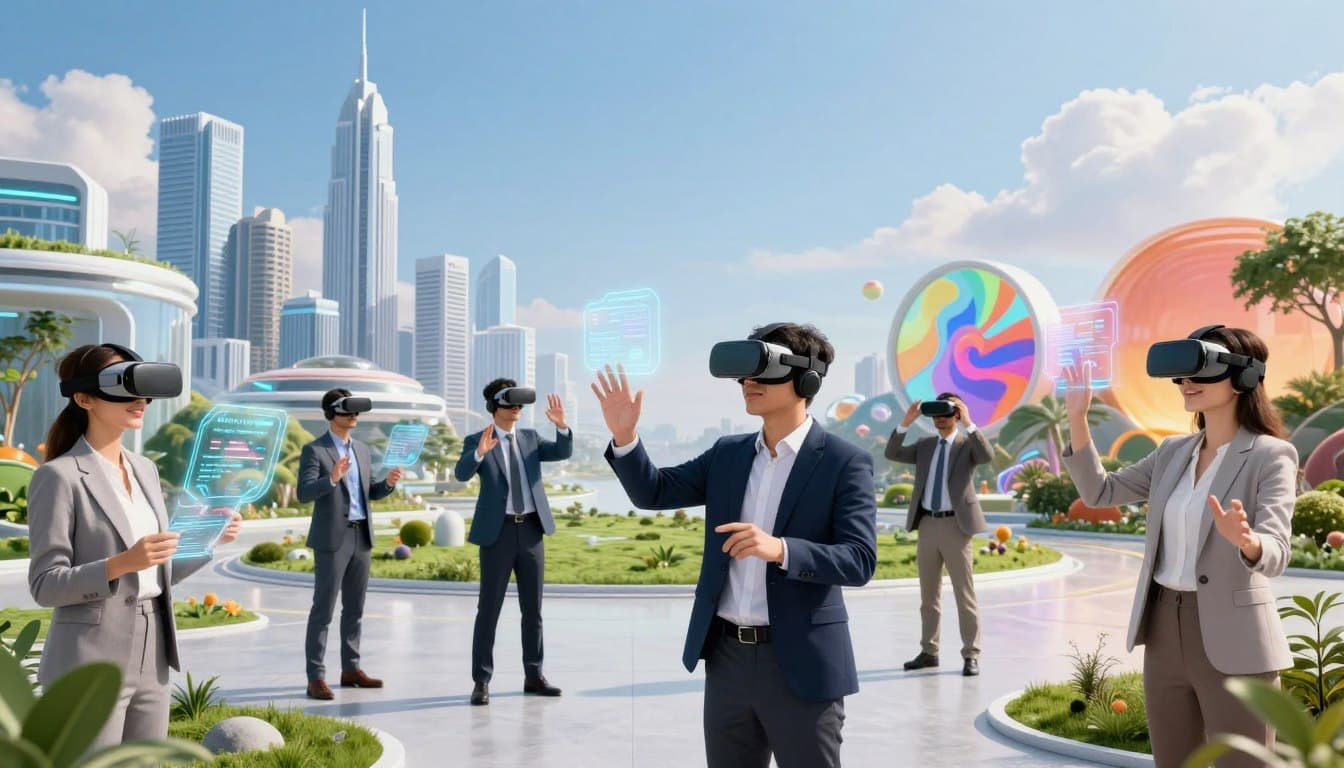
The shift towards remote work has accelerated the adoption of VR collaboration tools. Virtual meeting spaces allow teams to interact in a more immersive and engaging way, regardless of their physical location. VR remote work solutions enable colleagues to collaborate on projects in real-time, using virtual whiteboards and manipulating 3D models. This enhances productivity and fosters a sense of presence among remote teams.
The Enterprise Angle: Business Applications Driving VR Adoption
As VR technology continues to mature, its adoption in the enterprise sector is gaining momentum, driven by innovative applications across various industries. The use of VR in business is not just about enhancing existing processes; it's about revolutionizing them.
Industrial Design and Manufacturing
In the realm of industrial design and manufacturing, VR is proving to be a game-changer. Companies are using VR to create immersive design experiences, allowing for more effective prototyping and product development. This not only reduces costs associated with physical prototypes but also accelerates the design process.
The benefits of VR in industrial design include:
- Enhanced collaboration among design teams
- Improved product visualization
- Reduced time-to-market for new products
Real Estate and Architecture Visualization
VR is also transforming the real estate and architecture sectors by providing immersive visualization experiences. Potential buyers can now take virtual tours of properties, and architects can showcase their designs in a more engaging and interactive manner.
Key advantages include:
- Increased buyer engagement
- Better design communication
- Enhanced marketing capabilities
Corporate Training and Onboarding
Corporate training is another area where VR is making a significant impact. By providing immersive, interactive training experiences, companies can improve knowledge retention and reduce training costs. VR is particularly useful for onboarding new employees, allowing them to familiarize themselves with company processes and environments in a simulated setting.
The use of VR for corporate training offers several benefits, including:
- Personalized learning experiences
- Reduced training time
- Increased employee engagement
In conclusion, VR is driving significant advancements in the enterprise sector, from industrial design and real estate visualization to corporate training. As the technology continues to evolve, we can expect to see even more innovative applications across various industries.
Mixed Reality: The Convergence of VR and AR Technologies
The convergence of VR and AR is creating a new paradigm known as Mixed Reality (MR), revolutionizing how we interact with digital information. Mixed Reality combines the immersive qualities of VR with the real-world integration of AR, offering a more nuanced and interactive experience.
Mixed Reality enables users to interact with both physical and digital objects simultaneously, creating a seamless blend of the real and virtual worlds. This technology has the potential to transform various aspects of our lives, from entertainment and education to professional training and beyond.

Technical Differences Between VR, AR, and MR
The primary distinction between VR, AR, and MR lies in their approach to reality. Virtual Reality (VR) creates a completely artificial environment, shutting out the physical world. Augmented Reality (AR) overlays digital information onto the real world, enhancing it without replacing it. Mixed Reality (MR), on the other hand, integrates digital and physical objects in real-time, allowing for more complex interactions.
Technically, MR requires advanced hardware and software capabilities, including sophisticated sensors and cameras to understand and map the user's environment. This enables MR systems to accurately superimpose digital information onto the real world and respond to user interactions in a more sophisticated manner.
Consumer Applications of Mixed Reality
Mixed Reality is poised to revolutionize consumer experiences across various domains. In gaming, MR can create immersive experiences that blend the virtual and real worlds. For instance, players can interact with virtual objects or characters within their living rooms.
Beyond gaming, MR can enhance shopping experiences by allowing consumers to see how products would look in their homes before making a purchase. It can also revolutionize education by providing interactive, 3D content that makes learning more engaging and effective.
The Role of Passthrough Technology
Passthrough technology is a critical component of Mixed Reality systems, enabling the integration of the real and virtual worlds. By using cameras and sensors to capture the user's environment, passthrough technology allows MR devices to display a composite view of both physical and digital objects.
This technology is particularly important for safety and usability, as it allows users to navigate their physical surroundings while interacting with virtual objects. As MR continues to evolve, advancements in passthrough technology will play a crucial role in enhancing the overall user experience.
Challenges and Opportunities for Virtual Reality's Mainstream Adoption
Achieving mainstream success for VR requires tackling the key challenges head-on. As VR technology continues to evolve, it faces significant hurdles that must be overcome to ensure widespread adoption. "The future of VR is not just about the technology itself, but about how it integrates into our daily lives," notes a recent industry report.
Price Point and Accessibility Barriers
One of the primary challenges facing VR's mainstream adoption is the high price point of VR devices. Currently, high-end VR headsets can cost upwards of $1,000, making them inaccessible to many potential users. To address this, manufacturers are exploring more affordable options without compromising on quality.
For instance, advancements in technology could lead to more cost-effective production methods, thereby reducing the financial barrier to entry for consumers.
Content Ecosystem Development
The development of a robust content ecosystem is crucial for VR's success. This involves creating a diverse range of applications and experiences that cater to different interests and needs. "A rich content ecosystem is the backbone of any successful VR platform," emphasizes a leading VR developer.
Efforts are being made to encourage developers to create more VR content, including the provision of developer tools and frameworks that simplify the content creation process.
Social and Cultural Acceptance
Social and cultural acceptance plays a significant role in VR's adoption. As VR technology becomes more prevalent, societal perceptions of VR are shifting. However, there are still concerns regarding VR's impact on social interactions and health.
Addressing these concerns through education and by promoting responsible VR use can help foster greater social acceptance. Moreover, creating VR experiences that encourage social interaction can help mitigate some of the negative perceptions associated with VR.
Conclusion: The Future Trajectory of VR Technology
The future of VR is bright, with significant advancements in VR technology expected to drive its adoption across various industries. As Meta continues to evolve its metaverse vision, other key players like Apple and Sony are making significant strides in the VR landscape.
The VR trajectory is being shaped by improvements in hardware, such as lightweight and wireless technologies, and advancements in resolution and field of view. These developments are making VR devices more comfortable and accessible, paving the way for mainstream adoption.
As VR technology continues to advance, we can expect to see new and innovative applications emerge, particularly in education, healthcare, and remote work. The convergence of VR and AR technologies is also expected to play a significant role in shaping the VR future.
With the VR market expected to grow significantly in the coming years, it's clear that VR technology advancements will have a lasting impact on the way we interact, work, and play. As the industry continues to evolve, we can expect to see new opportunities and applications emerge, driving the VR trajectory forward.