VR's Next Leap: From Remote Events to Space Training
Have you ever wondered what it feels like to walk on the moon without leaving your home? Today, VR technology makes these once-impossible dreams a part of our daily lives. This tech is quickly moving past simple gaming to change how we work and learn.

From attending live global concerts to preparing for orbital missions, the range of VR applications is truly impressive. Experts now use these immersive tools to master complex skills in a safe, digital space. This growth proves that virtual reality is ready for its most significant leap yet.
We are entering a time where physical distance no longer limits our experiences. These advancements offer a friendly and accessible way for everyone to explore the unknown. Let’s look at how this exciting shift is rewriting the rules of human training.
Key Takeaways
- Immersive tech is evolving from entertainment to professional training tools.
- Remote events provide immersive global access for users everywhere.
- Space agencies use advanced simulations to improve astronaut safety.
- Modern software creates highly realistic and interactive learning environments.
- The technology successfully bridges the gap between digital and physical worlds.
- Major industries are adopting these tools to reduce high training costs.
The Evolution of Virtual Reality Technology
Virtual reality technology has come a long way since its inception, evolving from a niche gaming novelty to a robust tool with diverse applications. This transformation is largely attributed to advancements in VR hardware and software, making it more accessible and user-friendly for a broader audience.
From Gaming Novelty to Essential Tool
Initially, VR was primarily associated with the gaming industry, offering immersive experiences that were not possible with traditional gaming setups. However, its potential soon became apparent in various other fields, including education, healthcare, and entertainment. The technology has advanced to the point where it is now considered an essential tool in many industries.
Key Features of Modern VR Hardware:
- Higher resolution displays for clearer visuals
- Advanced tracking systems for more precise movement detection
- Improved comfort and ergonomics for longer usage
- Enhanced controllers for more interactive experiences
Meta Quest 3, PlayStation VR2, and Modern Hardware
The latest VR headsets, such as the Meta Quest 3 and PlayStation VR2, have significantly improved upon their predecessors. These devices offer higher resolution, better tracking, and more comfortable designs, making them more appealing to both gamers and non-gamers alike.
| Feature | Meta Quest 3 | PlayStation VR2 |
| Resolution | 2064 x 2208 per eye | 2000 x 2040 per eye |
| Tracking System | Inside-out tracking | Outside-in tracking with cameras |
| Controllers | Touch Plus controllers | Sense controllers |
How Accessibility is Driving Mainstream Adoption
The increased accessibility of VR technology is driving its mainstream adoption. With more affordable and user-friendly options available, people are increasingly using VR for a variety of purposes beyond gaming, such as education, socializing, and entertainment.
As VR continues to evolve, we can expect to see even more innovative applications across different industries. The technology's potential to transform how we interact, work, and play is vast, and its continued development is eagerly anticipated.
Virtual Reality Transforms Remote Events
Virtual reality technology is transforming the landscape of remote events, offering unprecedented levels of engagement and participation. This transformation is evident across various sectors, from entertainment to business and education.
The way we experience events has changed dramatically with the advent of VR. No longer are remote events limited by geographical constraints or lack of interactivity. Immersive experiences are now possible, allowing attendees to engage fully with the event content.
Immersive Concerts with Venues Like Horizon Venues
One of the most exciting applications of VR in remote events is in the realm of immersive concerts. Platforms like Horizon Venues are pioneering this space, allowing users to attend concerts and other live events from anywhere in the world. These virtual venues recreate the excitement of live events, with attendees able to interact with each other and the performers in real-time.
Global Business Conferences in Virtual Spaces
VR is also revolutionizing the way businesses conduct conferences and meetings. Global business conferences can now be held in virtual spaces, reducing the need for travel and increasing accessibility for participants worldwide. These virtual conferences can include a range of interactive elements, such as Q&A sessions, workshops, and networking opportunities.
The benefits of hosting conferences in VR are numerous. Not only does it reduce costs associated with travel and venue rental, but it also allows for more flexible and creative event design. Organizers can create customized environments that enhance the conference experience, from virtual auditoriums to interactive exhibition spaces.
Virtual Trade Shows and Product Demonstrations
Another significant application of VR in remote events is in virtual trade shows and product demonstrations. Companies can create immersive, interactive environments to showcase their products, allowing potential customers to explore and interact with them in detail. This can be particularly effective for product launches, where companies want to generate buzz and provide a memorable experience for attendees.
These virtual events can be tailored to specific audiences, with personalized content and experiences that enhance engagement and conversion rates. As VR technology continues to evolve, we can expect to see even more innovative applications in the realm of remote events.
Corporate Applications in the Remote Work Era
Virtual Reality is transforming the remote work experience by providing immersive and interactive environments for corporate applications. As companies continue to adopt flexible work arrangements, the need for effective virtual collaboration tools has become increasingly important.
The integration of VR technology in corporate settings is enhancing the way teams interact, collaborate, and engage with one another. With the help of VR software, businesses can create sophisticated virtual environments that simulate real-world interactions, fostering a more connected and productive remote workforce.
Virtual Meeting Rooms with Spatial Audio
One of the key corporate applications of VR is the creation of virtual meeting rooms equipped with spatial audio. This technology allows participants to feel as though they are in the same physical space, enhancing the sense of presence and engagement during virtual meetings. Spatial audio technology enables team members to pinpoint the source of sounds, making conversations feel more natural and reducing the fatigue associated with traditional video conferencing.
Virtual meeting rooms in VR also offer a range of interactive tools and features, such as whiteboards, screen sharing, and 3D modeling. These features facilitate more effective communication and collaboration, allowing teams to work together more efficiently on complex projects.
Team Building Through Shared VR Experiences
VR is also being used to foster team building and camaraderie among remote workers. Shared VR experiences can range from collaborative problem-solving exercises to social activities like virtual happy hours. These experiences help to build trust and strengthen relationships among team members, which is crucial for maintaining a cohesive and productive remote team.
By participating in shared VR experiences, employees can develop a stronger sense of connection and community, despite physical distance. This can lead to improved collaboration, increased job satisfaction, and reduced turnover rates.
Persistent Virtual Office Environments
Another significant corporate application of VR is the creation of persistent virtual office environments. These virtual spaces allow employees to work together in a continuous, immersive environment that is always available. Persistent virtual offices can include features like virtual break rooms, meeting spaces, and individual workstations, replicating the structure and feel of a traditional office.
The use of persistent virtual office environments can enhance productivity and collaboration by providing a consistent and familiar workspace for remote employees. It also allows companies to maintain a strong company culture, even in a remote work setting, by facilitating informal interactions and social connections among employees.
Entertainment and Social Connection Through VR
As VR technology advances, it's opening new avenues for entertainment and social connection. The boundaries between physical and virtual worlds are blurring, allowing users to engage in experiences that are not only immersive but also highly interactive.
"The future of entertainment is not just about watching; it's about being part of the experience," says a leading industry expert. This shift is evident in the growing popularity of VR platforms that offer more than just passive entertainment.
VRChat and Social Platform Communities
VRChat has emerged as a pioneering social platform where users can create their avatars and interact in various virtual environments. It has become a hub for socializing, with users attending virtual events, participating in discussions, and even creating their own content within the platform.
The community aspect of VRChat is one of its strongest features. Users can join groups based on shared interests, from gaming to art, fostering a sense of belonging and connection among its users.
Next-Generation Gaming Immersion
VR is revolutionizing the gaming industry by providing an unparalleled level of immersion. Games are no longer just something you play; they become experiences you live through. With advanced hardware like Meta Quest 3 and PlayStation VR2, gamers can enjoy rich, interactive worlds that simulate real-life environments or create entirely new ones.
The level of immersion in VR gaming is unmatched, allowing players to be fully engaged in the game environment. This not only enhances the gaming experience but also opens up new possibilities for game developers to create more complex and engaging narratives.
Virtual Tourism from the Louvre to Machu Picchu
Virtual tourism is another exciting application of VR technology. With VR, users can visit famous landmarks and destinations around the world without leaving their homes. The Louvre Museum in Paris and Machu Picchu in Peru are just a couple of examples of the many places that can be explored virtually.
This technology not only makes cultural and historical sites more accessible but also provides an educational experience. Users can explore these locations in detail, learning about their history and significance in an engaging and interactive way.
Professional Training Applications Across Industries
VR applications in professional training are revolutionizing how industries prepare their workforce. By providing immersive and interactive experiences, VR is enhancing the effectiveness of training programs across various sectors.
The integration of VR in professional training is not limited to a single industry; it's a versatile tool being adopted by multiple fields to improve education and training simulations.
Surgical Simulations and Medical Education
Medical education is being transformed through surgical simulations that allow for realistic and risk-free training environments. VR enables medical students and professionals to practice complex procedures without the consequences of real-life mistakes.
- Realistic simulations for surgical training
- Enhanced learning through interactive experiences
- Reduced risk of errors in real-life surgeries
Industrial Safety and Manufacturing Procedures
Industries are using VR to train employees on safety protocols and manufacturing procedures. This not only improves compliance with safety regulations but also reduces the risk of accidents.
VR training modules can simulate hazardous environments and equipment operation, allowing workers to gain experience in a controlled setting.
Emergency Response and Crisis Management
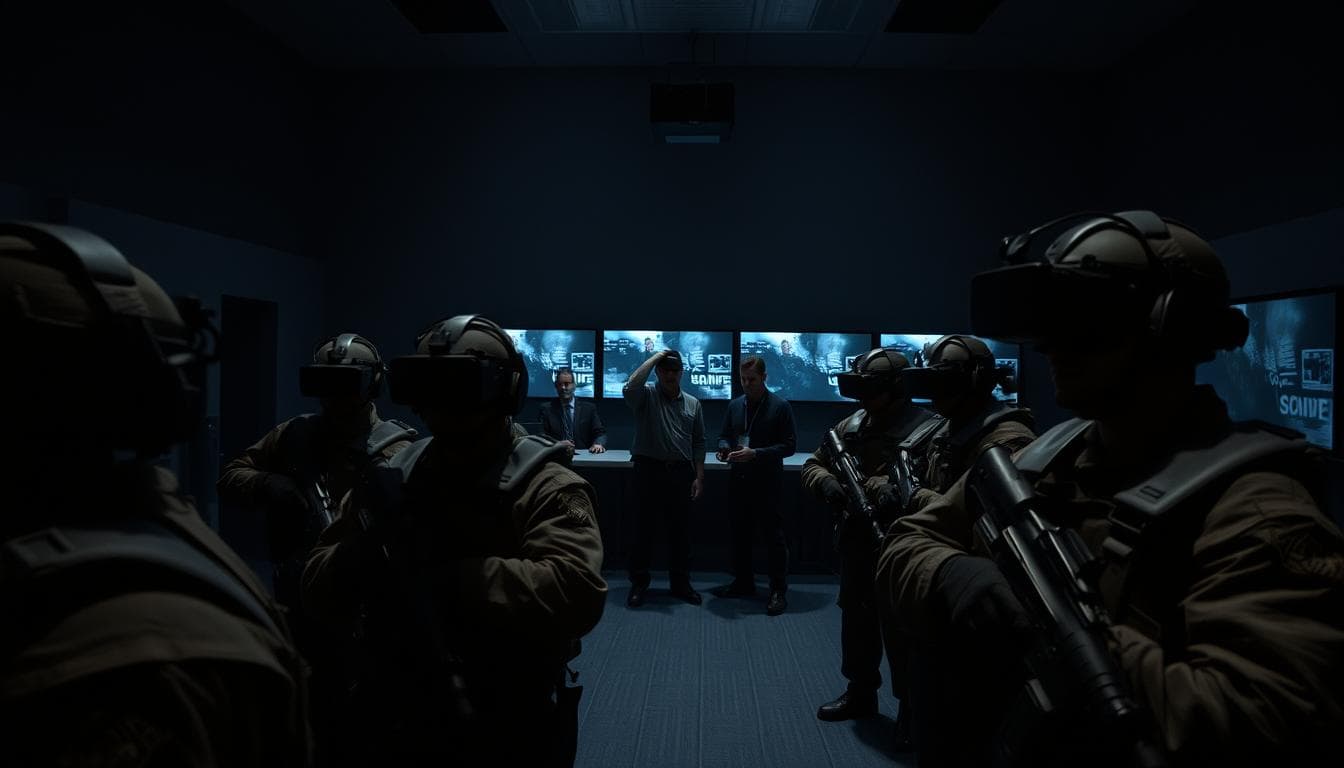
VR is being utilized for emergency response training, including scenarios for firefighters and law enforcement officers. These simulations prepare responders for high-pressure situations.
Firefighter Training Scenarios
Firefighter training scenarios in VR include navigating through smoke-filled buildings and responding to emergency situations. This training enhances situational awareness and decision-making under stress.
Law Enforcement Situational Awareness
Law enforcement training with VR involves scenarios that require officers to make quick decisions in complex situations, improving their situational awareness and response strategies.
The use of VR in professional training is a significant step forward in preparing workers for the demands of their jobs. As VR technology continues to evolve, its applications in education and training simulations will only expand.
Virtual Reality in Space Training Programs
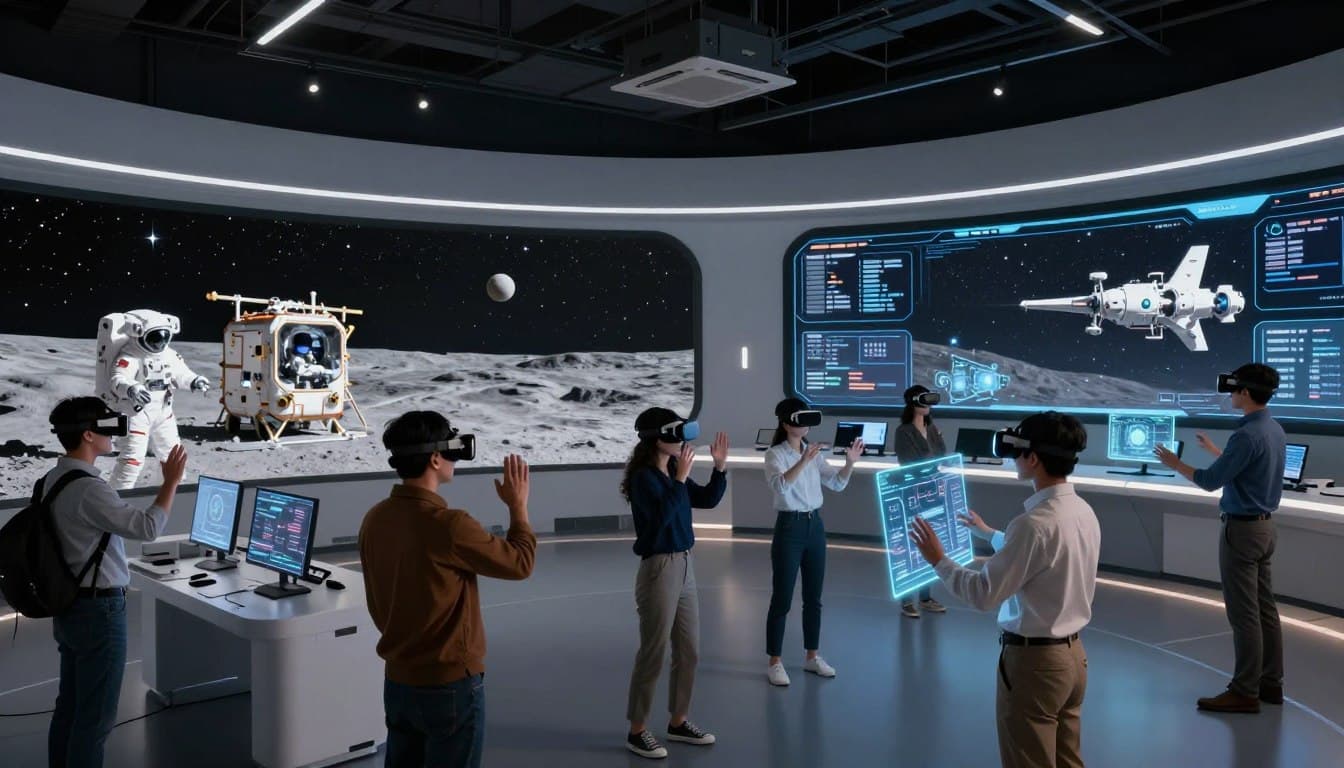
VR is becoming a crucial tool in the arsenal of space training programs, offering immersive and realistic simulations. This technology is being leveraged by prominent space agencies to prepare astronauts for the challenges of space missions.
The use of VR in space training allows for the simulation of complex tasks and environments that are otherwise difficult to replicate on Earth. This includes training for emergency scenarios, operating in microgravity, and navigating the complexities of spacecraft systems.
NASA's Virtual Reality Laboratory Applications
NASA has been at the forefront of utilizing VR technology for astronaut training. Their Virtual Reality Laboratory is equipped with advanced VR systems that simulate various aspects of space missions, including working in microgravity and performing spacewalks.
"NASA's use of VR has significantly enhanced our ability to train astronauts for the complexities of space missions. It allows us to simulate a wide range of scenarios in a highly realistic and immersive environment."
NASA Astronaut
SpaceX Crew Dragon Simulation Systems
SpaceX has also adopted VR technology for training astronauts on its Crew Dragon spacecraft. The simulations include launch and re-entry procedures, as well as emergency scenarios, ensuring that astronauts are fully prepared for all aspects of their mission.

Preparing for International Space Station Missions
VR training is crucial for preparing astronauts for missions to the International Space Station (ISS). Simulations include navigating the ISS modules, performing scientific experiments, and conducting spacewalks.
| Training Aspect | VR Simulation Benefits |
| Microgravity Operations | Improved adaptation to weightless environments |
| Spacewalk Training | Enhanced preparation for Extravehicular Activities (EVA) |
| Emergency Scenarios | Better response to critical situations |
Recreating Microgravity Conditions
One of the significant challenges in space training is simulating microgravity conditions. VR technology, combined with other simulation methods, helps recreate the microgravity environment, allowing astronauts to train effectively for tasks they will perform in space.
The integration of VR in space training programs is a significant step forward in preparing astronauts for the challenges of space exploration. As VR technology continues to evolve, its applications in space training are expected to expand, further enhancing the readiness of astronauts for their missions.
Advanced Astronaut Skill Development
With VR, astronauts can now rehearse critical spacewalk procedures and emergency scenarios in a highly realistic environment. This advanced training is crucial for preparing astronauts for the complexities of space missions.
Extravehicular Activity Rehearsals
Astronauts use VR to practice extravehicular activities (EVA), also known as spacewalks. These simulations allow them to familiarize themselves with the tasks they will perform in space, such as maintaining equipment and conducting scientific experiments.
Spacecraft Systems and Repair Training
VR simulations also enable astronauts to learn about spacecraft systems and practice repair procedures. This training is vital for ensuring that astronauts can respond effectively in case of malfunctions or other issues.
Emergency Scenario Response Protocols
Training for emergency scenarios is another critical aspect of astronaut preparation. VR simulations cover a range of potential emergencies, including rapid decompression and medical emergencies.
Rapid Decompression Procedures
Rapid decompression is a life-threatening emergency that requires immediate action. VR training simulates this scenario, teaching astronauts how to respond quickly and effectively.
"The use of VR in astronaut training has revolutionized our ability to prepare for complex space missions," said a NASA spokesperson. "It's a game-changer for ensuring crew safety."
Medical Emergency Management in Space
Managing medical emergencies in space is challenging due to the remote environment. VR training helps astronauts learn how to handle such situations, from basic first aid to more complex medical procedures.
Training Outcomes
The effectiveness of VR training for astronauts can be seen in the improved outcomes of space missions. The table below summarizes some key benefits:
| Training Aspect | Benefit |
| Extravehicular Activity Rehearsals | Improved task execution and reduced risk |
| Spacecraft Systems and Repair Training | Enhanced troubleshooting and repair skills |
| Emergency Scenario Response Protocols | Better preparedness for critical situations |
The Future of VR Technology and Applications
VR technology is on the cusp of a new era, driven by innovations in hardware and software. As we look to the future, several key developments are poised to further enhance the VR experience, making it more immersive, accessible, and integrated into various aspects of our lives.
The advancements in VR hardware are critical to the evolution of the technology. One of the most exciting developments is the creation of next-generation haptic suits and gloves. These devices are designed to provide a more immersive experience by allowing users to feel tactile sensations in virtual environments.
Next-Generation Haptic Suits and Gloves
Next-generation haptic feedback devices are being developed to simulate a wide range of sensations, from the gentle touch of a virtual breeze to the intense feeling of resistance during a virtual workout. Companies are investing heavily in this technology, recognizing its potential to revolutionize industries such as gaming, education, and healthcare.
For instance, advanced haptic gloves can simulate the sensation of holding and manipulating virtual objects, allowing for more realistic interactions in virtual environments. This technology has significant implications for training simulations, where the ability to practice handling equipment or performing procedures in a lifelike manner can greatly enhance skill acquisition.

Artificial Intelligence Enhanced Virtual Environments
Another significant development in VR technology is the integration of artificial intelligence (AI) to create more dynamic and responsive virtual environments. AI can be used to generate adaptive difficulty levels in games, create more realistic NPC (non-player character) behaviors, and even personalize the VR experience based on user preferences and behaviors.
AI-enhanced VR environments can also be used in educational and training contexts to create simulations that adjust to the user's skill level, providing an optimal learning experience. This adaptability can significantly enhance the effectiveness of VR training programs across various industries.
Overcoming Motion Sickness and Hardware Limitations
Despite the advancements in VR technology, challenges such as motion sickness and hardware limitations remain. Motion sickness, in particular, is a significant barrier to the widespread adoption of VR, as it can cause discomfort and nausea in some users.
Researchers and developers are working on several solutions to address these issues, including improving the refresh rates of VR displays, reducing latency, and developing more comfortable and intuitive control systems. Advances in fields like AI and machine learning are also being applied to predict and mitigate motion sickness by dynamically adjusting the VR experience to the individual user's needs.
As VR technology continues to evolve, we can expect to see significant improvements in both the hardware and software that underpin it. These advancements will not only enhance the user experience but also expand the range of applications for VR across different industries.
Conclusion
Virtual reality is revolutionizing numerous aspects of our lives, from the way we experience entertainment and connect with others to how we work and explore space. The advancements in VR technology have transformed remote events, corporate training, and professional development, offering immersive and interactive experiences that were previously unimaginable.
As VR applications continue to expand across various industries, the technology is poised to have a profound impact on our daily lives. With future developments on the horizon, such as next-generation haptic suits and AI-enhanced virtual environments, the potential for virtual reality to shape our experiences and interactions is vast.
The integration of virtual reality in space training programs, as seen with NASA and SpaceX, demonstrates its critical role in preparing astronauts for complex missions. As VR technology continues to evolve, it is likely to play an increasingly important role in shaping the future of space exploration.
With its vast potential and expanding applications, virtual reality is set to continue transforming the way we live, work, and interact with one another.