VR Training Breakthroughs: From Corporate to Space Exploration
The world of training is undergoing a significant transformation, thanks to the advancements in VR training. What was once confined to the realm of gaming is now being harnessed by industries worldwide to revolutionize the way we learn and prepare for complex tasks.

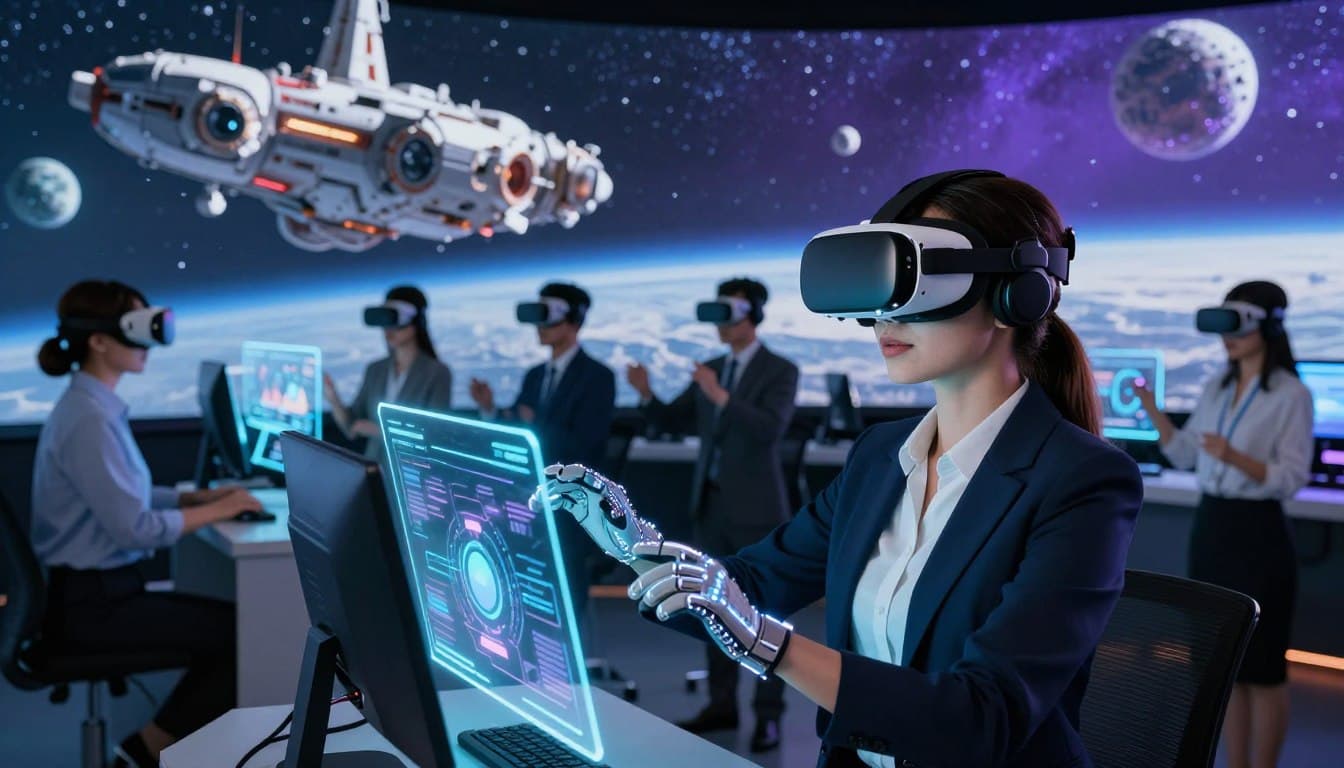
From enhancing corporate training programs to preparing astronauts for space exploration, virtual reality is proving to be a game-changer. Its immersive nature allows trainees to engage in realistic simulations that are both engaging and effective.
As we explore the breakthroughs in VR training, it becomes clear that its applications are vast and varied, promising a future where training is more efficient, accessible, and tailored to the needs of diverse industries.
Key Takeaways
- VR training is revolutionizing corporate training programs.
- Space exploration is being made safer with VR training simulations.
- The technology is becoming increasingly accessible across various industries.
- VR training offers immersive and realistic learning experiences.
- The future of training looks promising with continued advancements in VR.
The Evolution of Virtual Reality Training
Virtual reality (VR) has undergone significant transformations since its inception, evolving from a niche gaming technology to a robust tool for professional development. This evolution has been driven by advancements in both hardware and software, making VR an indispensable asset across various industries.
From Gaming to Professional Development
Initially, VR was predominantly used in the gaming sector, providing immersive experiences for users. However, as the technology advanced, its potential for professional training became increasingly evident. Today, VR is utilized in diverse fields such as healthcare, manufacturing, and corporate training, offering realistic simulations that enhance learning and retention.
Key Technological Advancements Enabling Training Applications
The transition of VR from gaming to professional training is attributed to significant technological advancements.
Hardware Innovations
Improvements in VR hardware, such as higher resolution headsets and more sophisticated controllers, have enhanced the overall user experience. These innovations have enabled more precise and interactive training simulations.
Software Developments
Alongside hardware advancements, software developments have played a crucial role. Sophisticated software allows for the creation of complex, realistic environments that can be tailored to specific training needs. This has made VR training more effective and accessible.
Understanding Virtual Reality as a Training Tool
As technology advances, VR is emerging as a powerful tool for immersive learning experiences. This shift is driven by the need for more effective and engaging training methods across various industries.
The Science of Immersive Learning
Immersive learning through VR engages users on multiple sensory levels, enhancing knowledge retention and skill acquisition. By simulating real-world environments, VR training allows learners to practice and apply their skills in a controlled setting.
Comparing Traditional vs. VR-Based Training Methods
Traditional training methods often rely on lectures and textbooks, which can be passive and less engaging. In contrast, VR-based training offers an interactive experience that can increase learner engagement and motivation.
| Training Method | Engagement Level | Knowledge Retention |
| Traditional | Low-Moderate | 40-60% |
| VR-Based | High | 70-90% |
Key Components of Effective VR Training Programs
Effective VR training programs require careful consideration of content creation, user experience, and feedback mechanisms. High-quality content that is relevant to the learner's needs is crucial.
Key components include:
- Realistic simulations
- Intuitive user interfaces
- Regular feedback and assessment
Corporate Training Transformed Through VR
The corporate world is witnessing a significant shift in training methodologies with the advent of Virtual Reality (VR) technology. This transformation is evident across various aspects of corporate training, from onboarding and orientation to soft skills development.
Onboarding and Orientation in Virtual Environments
VR is revolutionizing the onboarding process by providing new hires with immersive and interactive experiences. This approach not only enhances engagement but also accelerates the learning curve, ensuring that new employees are better equipped to contribute to the organization sooner.
- Interactive tours of company facilities
- Simulated team meetings and collaborations
- Virtual introductions to company culture and policies
Soft Skills Development Through Simulated Interactions
Soft skills are crucial for professional success, and VR offers a unique platform for developing these skills through simulated interactions. Employees can practice and refine their communication, leadership, and problem-solving skills in a controlled yet realistic environment.
Key benefits include:
- Enhanced confidence through practice
- Personalized feedback and assessment
- Reduced anxiety in real-world interactions
Cost-Benefit Analysis of VR Training Implementation
Implementing VR training involves initial investment considerations, but the long-term benefits often outweigh these costs. A thorough cost-benefit analysis is essential to understand the return on investment (ROI) of VR training programs.
Initial Investment Considerations
The initial costs of VR training include hardware, software development, and training content creation. While these costs can be significant, they are often offset by the long-term savings and benefits.
Long-term ROI Metrics
To evaluate the effectiveness of VR training, organizations should track key ROI metrics, such as improved employee performance, reduced training time, and lower costs associated with traditional training methods.
| Metric | Traditional Training | VR Training |
| Training Time | Average 5 days | Average 2 days |
| Cost | $1,000 per employee | $500 per employee |
| Retention Rate | 70% | 90% |
By adopting VR training, corporations can not only enhance the learning experience but also achieve significant cost savings and improved performance metrics.
Healthcare Revolution: Medical Training in Virtual Reality
The healthcare industry is on the cusp of a revolution, driven by the integration of Virtual Reality (VR) into medical training. This technological advancement is transforming how medical professionals learn and practice, offering immersive experiences that enhance skill acquisition and retention.
Surgical Procedure Simulation and Practice
VR is being increasingly used to simulate surgical procedures, allowing surgeons to practice and hone their skills in a risk-free environment. This not only improves their technical skills but also enhances their ability to handle complex situations. Simulated surgeries can be repeated multiple times, allowing for the refinement of techniques without risk to patients.
Patient Interaction Training for Medical Professionals
Effective patient interaction is crucial for healthcare professionals. VR training programs are being developed to teach medical professionals how to communicate effectively with patients, handle sensitive situations, and develop empathy. These simulations help in reducing the stress associated with real-life patient interactions, making healthcare providers more confident and competent.
Mental Health Applications and Therapy Training
VR is also making significant inroads into mental health training. It provides a controlled environment where therapists can practice and develop their skills in treating patients with various mental health conditions. This includes exposure therapy for anxiety disorders and PTSD. The immersive nature of VR helps therapists understand patient experiences more deeply, enhancing their therapeutic approaches.

| Application | Benefits |
| Surgical Simulation | Improved technical skills, risk-free practice |
| Patient Interaction Training | Enhanced communication skills, empathy |
| Mental Health Training | Effective therapy techniques, exposure therapy |
By leveraging VR technology, the healthcare industry is poised to significantly improve medical training outcomes, ultimately leading to better patient care.
Manufacturing and Industrial Safety Training
Industrial safety training is being redefined by VR, offering a risk-free environment for workers to learn and practice. This technology is particularly beneficial in the manufacturing sector, where equipment operation, emergency response, and maintenance training are critical.
Equipment Operation in Risk-Free Environments
VR allows workers to operate complex machinery in a simulated environment, reducing the risk of accidents and enhancing their familiarity with equipment. This immersive training ensures that workers can practice operating machinery without the fear of causing damage or harm.
Emergency Response Protocols and Simulations
VR simulations can mimic various emergency scenarios, enabling workers to practice response protocols in a controlled environment. This training is crucial for preparing workers to handle real-life emergencies effectively.
Maintenance Training for Complex Machinery
VR training programs can simulate the maintenance of complex machinery, allowing technicians to practice and hone their skills. This not only improves maintenance efficiency but also reduces downtime due to equipment failure.
By integrating VR into their training programs, manufacturing and industrial companies can significantly enhance worker safety and operational efficiency. As VR technology continues to evolve, its applications in industrial safety training are expected to expand, offering even more sophisticated training solutions.
Military Applications of VR Training Systems
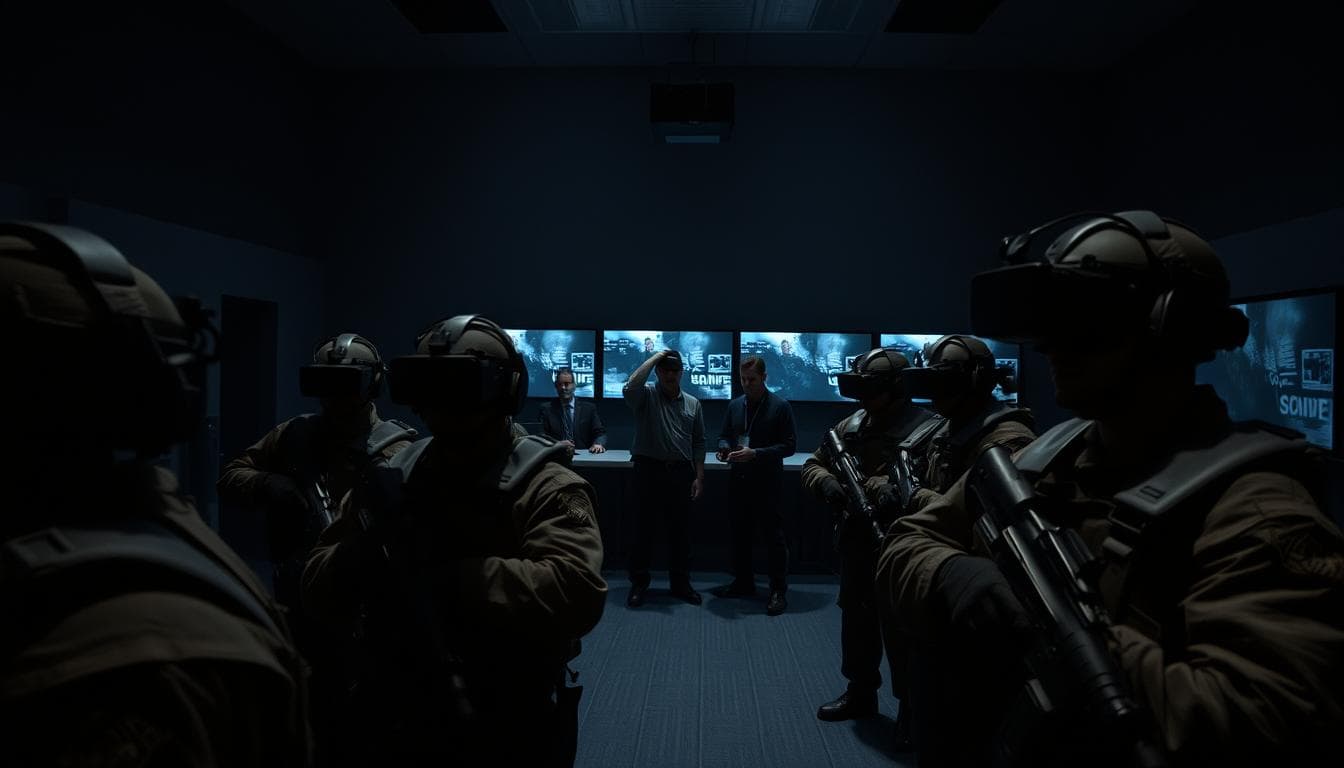
VR technology is transforming military training by providing immersive and realistic simulations that enhance readiness and decision-making skills. This advanced training methodology is being adopted across various military branches to improve operational effectiveness.
Combat Simulation and Tactical Decision Making
Military forces are utilizing VR to simulate complex combat scenarios, allowing personnel to practice tactical decision-making in a controlled, risk-free environment. These simulations can replicate a wide range of scenarios, from urban warfare to desert operations, providing comprehensive training experiences.
Vehicle and Aircraft Operation Training
VR is also being used to train military personnel in the operation of vehicles and aircraft. This includes simulating the operation of tanks, helicopters, and fighter jets, allowing trainees to gain valuable experience without the risks associated with real-world training.
Psychological Preparation for High-Stress Scenarios
Preparing military personnel for the psychological stresses of combat is a critical aspect of VR training. This includes training for PTSD prevention and stress management techniques.
PTSD Prevention Training
VR training programs are designed to help military personnel cope with the stresses of combat, reducing the risk of PTSD. These programs simulate the stresses of combat in a controlled manner, allowing personnel to build resilience.
Stress Management Techniques
In addition to PTSD prevention, VR training includes teaching stress management techniques. Trainees learn to manage their stress responses in high-pressure situations, improving their overall performance and well-being.

| Training Aspect | Traditional Method | VR Method |
| Combat Simulation | Live drills, limited scenarios | Immersive, varied scenarios |
| Vehicle Operation | Physical vehicles, high cost | Simulated vehicles, reduced cost |
| Psychological Preparation | Limited exposure therapy | Controlled exposure, enhanced resilience |
Educational Institutions Embracing Virtual Reality Learning
Virtual reality is transforming the educational landscape, offering immersive learning experiences that captivate students across various age groups. This technological advancement is not limited to a specific educational level; it's being integrated into K-12 education, higher education, and even teacher training programs.
K-12 Applications and Immersive Learning
In K-12 education, virtual reality is being used to create engaging and interactive lessons. For instance, students can explore historical sites, visit distant planets, or dive into the microscopic world, all from the safety of their classrooms. This immersive approach enhances understanding and retention of complex concepts.
Higher Education Specialized Training Programs
Higher education institutions are leveraging virtual reality for specialized training programs, particularly in fields that require hands-on experience, such as medicine, engineering, and aviation. Virtual reality simulations provide students with realistic and safe environments to practice and hone their skills.
Teacher Training in Virtual Classrooms
Teacher training is also benefiting from virtual reality. Educators can practice teaching in simulated virtual classrooms, helping them develop the skills needed to effectively integrate technology into their teaching methods. This training enhances their ability to manage classroom dynamics and respond to student needs in a controlled, virtual environment.
NASA and Space Exploration Training Breakthroughs
The use of Virtual Reality (VR) in space exploration has revolutionized the way astronauts are trained. NASA has been leveraging VR technology to prepare astronauts for the challenges of space travel and spacewalking.
Spacewalk Preparation in Virtual Environments
VR training allows astronauts to practice spacewalks in a highly realistic and immersive environment. This training is crucial for preparing astronauts for the complex tasks they will perform during actual spacewalks.
Mars Mission Training Simulations
NASA is using VR to simulate missions to Mars, allowing astronauts to experience the challenges they will face on the red planet. These simulations include navigating the Martian terrain and conducting scientific experiments.
International Space Station Operations Training
VR is also used to train astronauts for operations on the International Space Station (ISS). This includes:
Equipment Familiarization
Astronauts use VR to familiarize themselves with the ISS equipment and systems.
Emergency Protocols
VR training simulations prepare astronauts for emergency situations, such as system failures or fires on the ISS.
Psychological Preparation for Long-Duration Missions
Long-duration space missions can have significant psychological impacts on astronauts. VR training includes simulations designed to prepare astronauts for the isolation and confinement of long-duration missions.
NASA's use of VR training is a significant breakthrough in space exploration. By providing astronauts with realistic and immersive training experiences, NASA is better preparing them for the challenges of space travel.
The Psychology Behind Effective VR Training
VR training's success can be attributed to its ability to leverage psychological principles for enhanced learning. This section delves into the psychological aspects that make VR training so effective.
Immersion and Knowledge Retention
One of the key psychological benefits of VR training is its ability to create a sense of immersion. By fully engaging users in a virtual environment, VR training enhances knowledge retention. Studies have shown that immersive experiences lead to better recall and understanding of training material.
Reducing Training Anxiety Through Simulation
VR training also reduces training anxiety by allowing learners to practice in a safe, simulated environment. This is particularly beneficial for high-stress professions where the stakes are high, and mistakes can be costly.
Building Muscle Memory in Virtual Environments
Another psychological advantage of VR training is its ability to help build muscle memory. By repeating tasks in a virtual setting, learners can develop the necessary skills and reflexes for real-world applications.
Neurological Basis for VR Learning
The neurological basis for VR learning lies in its ability to stimulate the brain's natural learning processes. By creating an immersive experience, VR triggers a deeper level of cognitive processing, enhancing the learning outcome.
Transfer of Skills to Real-World Applications
A critical aspect of VR training is its effectiveness in transferring skills to real-world applications. The simulated environment allows learners to practice and refine their skills in a context that closely mirrors real-life scenarios, ensuring a smooth transition.
Conclusion: The Future of Virtual Training Across Industries
The future of VR training is poised to revolutionize the way industries approach professional development and skill acquisition. As seen in various sectors, from corporate to space exploration, virtual training is becoming an integral part of modern training programs.
Virtual training across industries is expected to continue its rapid growth, driven by advancements in VR technology and the increasing demand for immersive learning experiences. The benefits of VR training, including improved knowledge retention and reduced training anxiety, make it an attractive solution for organizations seeking to enhance their training programs.
As VR technology continues to evolve, we can expect to see even more innovative applications of virtual training. The potential for VR to transform the way we learn and interact is vast, and its adoption is likely to expand into new areas, including education and healthcare.
The future of VR training holds much promise, and its continued development will be shaped by the needs of industries and the advancements in VR technology. As we move forward, it's clear that virtual training will play a critical role in shaping the next generation of professionals.