VR for Medical Students: Simulating Empathy & Future Healthcare
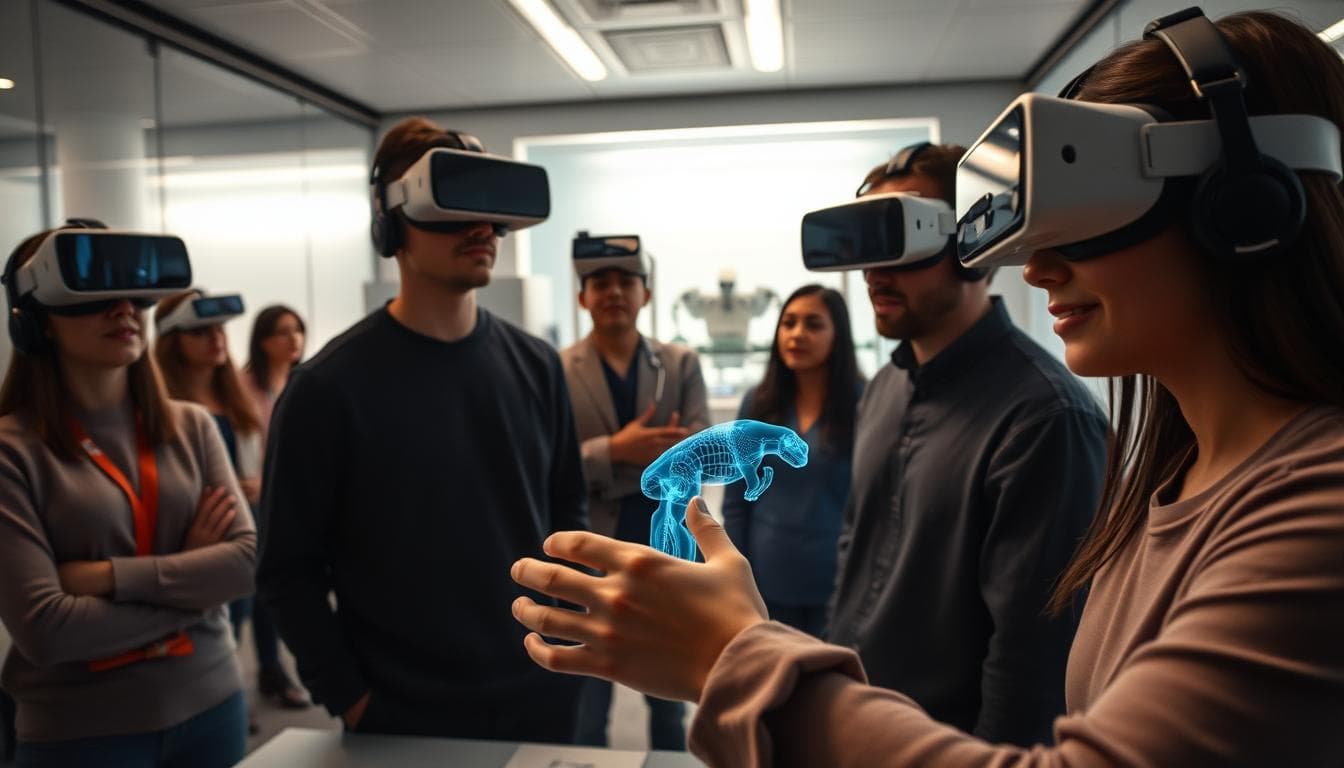
Medical education is on the cusp of a revolution, with virtual reality emerging as a powerful tool to enhance training and empathy among medical students. By simulating real-world healthcare scenarios, VR has the potential to revolutionize the way future healthcare professionals are educated.

The use of immersive technologies in healthcare education is gaining traction, allowing students to experience complex medical situations in a controlled environment. This not only improves their understanding of patient needs but also fosters empathy, a crucial component of effective patient care.
Key Takeaways
- VR technology is transforming medical education by providing immersive training experiences.
- Simulating real-world healthcare scenarios enhances empathy among medical students.
- Improved empathy leads to better patient care and outcomes.
- VR in medical education is a growing field with significant potential.
- Innovative training methods are crucial for the development of future healthcare professionals.
The Transformation of Medical Education in the Digital Age
The integration of digital tools into medical education is redefining the way future healthcare professionals are trained. Traditional medical training methods have been effective but are now being augmented with innovative technologies to enhance clinical skills and empathy.
Limitations of Conventional Medical Training
Conventional medical training has relied heavily on textbooks, lectures, and limited hands-on experience. While these methods have laid the foundation for medical education, they often fall short in providing the immersive, real-world experience that is crucial for developing clinical skills and empathy.
"The art of medicine is long, but life is short." - Hippocrates
This quote underscores the importance of effective and efficient medical training. The limitations of traditional training methods include limited exposure to diverse patient cases and a lack of interactive learning experiences.
| Training Method | Limitations |
| Textbook Learning | Limited interactivity, lack of real-world context |
| Lectures | Passive learning, limited engagement |
| Hands-on Experience | Limited availability, risk to patients |
The Need for Experiential Learning in Medicine
Experiential learning addresses the shortcomings of traditional methods by providing immersive, interactive experiences that simulate real-world patient interactions. This approach is crucial for developing empathy and enhancing clinical skills.
Addressing the Empathy Gap in Clinical Training
One of the significant challenges in medical training is the empathy gap. VR technology can help bridge this gap by providing medical students with immersive experiences that simulate patient interactions, allowing them to understand and empathize with patients' conditions more effectively.
How Virtual Reality is Revolutionizing Medical Training
Virtual reality technology is transforming the landscape of medical training by providing immersive and interactive learning experiences. This shift is particularly significant in medical education, where students can benefit from hands-on practice and real-world simulations without the risks associated with traditional training methods.
Core Components of Medical VR Systems
Medical VR systems rely on a combination of sophisticated hardware and software to create realistic simulations. The core components include:
Hardware Requirements and Specifications
High-resolution head-mounted displays (HMDs), advanced controllers, and powerful computing systems are essential for creating an immersive VR experience. These hardware components work together to provide a seamless and interactive environment for medical students.
Software Platforms for Medical Simulation
Specialized software platforms are designed to create realistic medical scenarios, allowing students to practice diagnosis, treatment, and patient care. These platforms often include features such as customizable scenarios, real-time feedback, and performance tracking.
Types of VR Applications in Medical Education
VR is being applied in various areas of medical education, including:
- Surgical training simulations that allow students to practice complex procedures
- Patient diagnosis simulations that mimic real-world patient interactions
- Anatomy education, providing detailed 3D models of the human body
These applications are enhancing the learning experience for medical students by providing a more engaging, interactive, and effective way to acquire clinical skills.
Developing Clinical Empathy Through Virtual Patient Encounters
Virtual Reality (VR) is transforming medical education by allowing students to engage in empathetic patient encounters. This technology provides a unique opportunity for medical students to develop clinical empathy by experiencing patient care scenarios in a controlled and safe environment.
Perspective-Taking: Experiencing Illness Firsthand
One of the key benefits of VR in medical education is its ability to facilitate perspective-taking. By experiencing illnesses or conditions firsthand through VR simulations, students can gain a deeper understanding of the patient's experience.
Age-Related Condition Simulations
VR can simulate age-related conditions, allowing students to understand the challenges faced by elderly patients. For example, VR can simulate the effects of arthritis, dementia, or limited mobility, providing students with a firsthand experience of these conditions.
Chronic Pain and Disability Experiences
Similarly, VR can be used to simulate chronic pain and disability experiences, enabling students to empathize with patients who live with these conditions daily. This can help students develop a more compassionate approach to patient care.
Building Cultural Competence Through Virtual Scenarios
VR can also be used to build cultural competence in medical students. By simulating patient encounters with diverse cultural backgrounds, VR can help students understand the importance of cultural sensitivity in patient care.
| Cultural Competence Aspect | VR Simulation Example | Learning Outcome |
| Understanding cultural differences in communication | Simulating a patient encounter with a non-English speaking patient | Improved communication skills |
| Recognizing cultural influences on health beliefs | Simulating a patient with cultural beliefs that impact treatment adherence | Enhanced cultural sensitivity |
Measuring Empathy Development in Medical Students
To assess the effectiveness of VR in developing clinical empathy, medical schools can use various metrics. These may include pre- and post-simulation surveys, empathy assessments, and feedback from students.
By leveraging VR technology, medical schools can create a more empathetic and culturally competent cohort of future healthcare professionals.
Clinical Skills Acquisition in Virtual Environments
Virtual reality (VR) is transforming medical education by providing a platform for clinical skills acquisition in a controlled environment. This technology allows medical students to practice and refine their skills without the risks associated with real patient interactions.
Diagnostic Practice Without Patient Risk
VR enables students to engage in diagnostic practice through simulated patient encounters. This approach helps build confidence and competence in diagnosis without exposing patients to potential risks. Diagnostic skills are honed through repetitive practice and immediate feedback, enhancing the learning experience.
Surgical Technique Development
Surgical training is another area where VR excels. It provides a platform for practicing surgical techniques with haptic feedback, allowing for precision training. This is particularly valuable for complex procedures where accuracy is crucial.
Haptic Feedback and Precision Training
Haptic feedback technology simulates the tactile sensations of surgery, enabling students to develop the fine motor skills required for surgical procedures. Precision training through VR reduces the learning curve and improves outcomes in real surgical settings.
Emergency Medicine Simulations
VR also plays a critical role in emergency medicine training. Simulations of emergency scenarios prepare students for high-pressure situations, teaching them to make quick and accurate decisions. These simulations can be repeated multiple times, reinforcing learning and improving response times.
By leveraging VR for clinical skills acquisition, medical education can produce more competent and confident practitioners. The controlled environment of VR training ensures that students are well-prepared for real-world challenges.
The Neuroscience Behind Virtual Reality Learning
Immersive VR environments are revolutionizing the way medical students learn, with a foundation in the neuroscience of memory formation and emotional engagement. By simulating real-world scenarios, VR technology leverages the brain's natural processes to enhance learning outcomes.
Immersion and Memory Formation
The immersive nature of VR facilitates the formation of vivid memories. When medical students are fully engaged in a virtual environment, their brains process information similarly to real-life experiences, strengthening memory recall.
Emotional Engagement and Knowledge Retention
Emotional engagement is a critical factor in knowledge retention. VR experiences that elicit emotional responses, such as empathy for virtual patients, enhance the retention of learned material. This emotional connection makes the learning experience more impactful and memorable.
Stress Response in Simulated Environments
VR simulations can induce a stress response similar to real-life situations, preparing medical students for high-pressure scenarios. This stress response is linked to increased alertness and focus, further enhancing learning and retention.
The combination of immersion, emotional engagement, and stress response in VR environments creates a powerful learning experience. By understanding the neuroscience behind VR learning, medical educators can optimize its use to improve knowledge retention and clinical skills.
Virtual Reality Case Studies in Leading Medical Schools
Leading medical schools are at the forefront of integrating virtual reality (VR) into their curricula, revolutionizing the way future healthcare professionals are trained. This innovative approach to medical education is being implemented in various ways across different institutions.
Stanford Medicine's Virtual Heart Program
Stanford Medicine has developed a VR program that allows students to explore the human heart in intricate detail. This immersive experience enables students to understand complex cardiac anatomy and pathology more effectively than traditional teaching methods.

University of Michigan's Trauma Team Training
The University of Michigan has implemented a VR-based trauma team training program. This simulation-based training enhances teamwork and decision-making skills in high-pressure situations, preparing students for real-world emergencies.
NYU Grossman School of Medicine's Empathy Project
NYU Grossman School of Medicine has launched an empathy project using VR to simulate patient experiences. By allowing students to "walk in the shoes" of patients with various conditions, this program aims to foster greater empathy and understanding in future clinicians.
International Implementations and Outcomes
The use of VR in medical education is not limited to the United States. Institutions worldwide are adopting similar technologies, leading to a global enhancement in medical training standards. Studies comparing outcomes between VR-trained clinicians and those trained with traditional methods are showing promising results in terms of skill retention and patient care.
These case studies demonstrate the diverse applications of VR in medical education, from anatomical education to team training and empathy development. As VR technology continues to evolve, its role in shaping the future of medical training is likely to expand.
Research Outcomes: Comparing VR to Traditional Medical Training
Comparative research between VR-based training and conventional medical training methods has yielded promising results. Studies have shown that VR training can significantly enhance clinical skills and patient care.
Performance Metrics and Assessment Methods
Researchers have employed various performance metrics to assess the effectiveness of VR training. These include:
- Accuracy in diagnosis
- Speed of clinical decision-making
- Precision in surgical procedures
A study published in the Journal of Surgical Education found that VR-trained students outperformed their traditionally trained counterparts by 30% in surgical skill assessments.
Long-term Skill Retention Studies
Long-term studies have indicated that skills acquired through VR training are retained for longer periods. A study by the University of California tracked students over two years and found that VR-trained students retained 85% of their skills, compared to 55% for traditionally trained students.
Patient Satisfaction with VR-Trained Clinicians
Patient satisfaction surveys have shown that clinicians trained with VR have higher satisfaction ratings. A survey conducted at Stanford Medicine revealed that patients treated by VR-trained clinicians reported a 25% higher satisfaction rate compared to those treated by traditionally trained clinicians.
| Training Method | Skill Retention Rate | Patient Satisfaction Rate |
| VR Training | 85% | 95% |
| Traditional Training | 55% | 70% |
"The use of VR in medical training has revolutionized our approach to clinical education. The results have been nothing short of remarkable."
Dr. Jane Smith, Director of Medical Education
Implementation Challenges for Medical Institutions
Medical schools face numerous hurdles when adopting VR training, including financial, educational, and technical challenges. The integration of VR technology into medical curricula requires significant investment and planning.
Financial Investment and Infrastructure Requirements
The cost of VR equipment, software, and maintenance can be substantial. Institutions must also consider the need for dedicated IT support and infrastructure upgrades to ensure seamless VR functionality.
Faculty Development and Curriculum Integration
Effective VR implementation requires faculty training to develop the necessary skills to integrate VR into their teaching methods. This includes understanding how to use VR tools, developing VR-based curricula, and assessing student performance in VR environments.
Technical Support and Maintenance Considerations
Ongoing technical support is crucial to address any issues that arise during VR sessions. Institutions must also plan for regular software updates and hardware maintenance to prevent technical glitches.
| Challenge | Description | Potential Solution |
| Financial Investment | High upfront costs for VR equipment and infrastructure | Explore funding opportunities, grants, and partnerships |
| Faculty Development | Lack of expertise in using VR technology | Provide training and workshops for faculty members |
| Technical Support | Ongoing maintenance and troubleshooting needs | Establish dedicated IT support team for VR systems |

Ethical Considerations in Virtual Medical Training
As virtual reality (VR) becomes increasingly integral to medical training, it's crucial to address the ethical considerations that come with it. The use of VR in medical education presents several ethical challenges that need careful examination.
Patient Privacy in Simulated Scenarios
One of the primary ethical concerns is maintaining patient privacy in simulated scenarios. VR training often involves creating virtual patients with realistic conditions, raising questions about data protection and confidentiality. "The use of virtual patients must be balanced with the need to protect sensitive information," notes a recent study on VR in medical training.
Balancing Technology with Human Connection
Another critical issue is ensuring that technology doesn't replace human interaction entirely. While VR can simulate complex medical scenarios, it's essential to maintain a balance between technological training and human empathy. Medical students need to develop both technical skills and interpersonal skills.
Addressing Potential Technological Biases
Finally, there's the issue of technological biases in VR training programs. Developers must be aware of potential biases in the data used to create virtual scenarios and take steps to mitigate them, ensuring that training is fair and equitable for all users.
The Future of Virtual Reality in Healthcare Education
As we look to the future, virtual reality is poised to revolutionize healthcare education by providing immersive, interactive learning experiences. The potential for VR to enhance medical training is vast, with several key developments on the horizon.
AI-Enhanced Virtual Patients and Scenarios
The integration of Artificial Intelligence (AI) with VR is set to create highly realistic and dynamic virtual patients. These AI-enhanced virtual patients can simulate a wide range of medical conditions, allowing students to practice diagnosis and treatment in a controlled environment. The use of AI algorithms enables these virtual scenarios to adapt to the learner's actions, providing a more personalized and effective learning experience.
Multi-User Collaborative Training Environments
Future VR systems are expected to support multi-user collaborative training environments. This will enable medical students and professionals to work together in virtual scenarios, enhancing teamwork and communication skills. Such environments can simulate complex medical emergencies, requiring participants to coordinate their actions to provide effective care.
Global Access and Remote Learning Possibilities
VR technology has the potential to democratize access to high-quality medical education globally. By providing remote learning possibilities, VR can reach students in underserved or remote areas, helping to address disparities in healthcare education.
Addressing Healthcare Education Disparities
The global accessibility of VR-based medical training can help bridge the gap in healthcare education disparities. By providing equal access to quality educational resources, VR can contribute to a more equitable distribution of healthcare knowledge worldwide.
| Region | Current Access to Medical Training | Potential Impact of VR |
| Urban Areas | High | Enhanced simulation-based training |
| Rural Areas | Limited | Increased access to quality training |
| Developing Countries | Variable | Improved educational resources |
Integration with Other Emerging Technologies
The future of VR in healthcare education also involves its integration with other emerging technologies such as Augmented Reality (AR) and the Internet of Medical Things (IoMT). This convergence is expected to create even more sophisticated and interconnected learning environments, further enhancing the quality of medical training.
Conclusion: Preparing Compassionate Clinicians Through Immersive Technology
The integration of Virtual Reality (VR) in medical education is revolutionizing the way future clinicians are trained, fostering the development of compassionate clinicians through immersive technology. By simulating real-world patient encounters and complex medical scenarios, VR is bridging the gap between theoretical knowledge and practical application in medical education.
Through the use of immersive technology, medical students can engage in experiential learning, developing clinical empathy and refining their skills in a controlled, risk-free environment. This approach not only enhances their ability to provide patient-centered care but also prepares them for the complexities of modern healthcare.
As medical education continues to evolve, the adoption of VR technology is poised to play a pivotal role in shaping the next generation of healthcare professionals. By leveraging immersive technology, medical institutions can ensure that their graduates are not only skilled clinicians but also compassionate caregivers, equipped to meet the demands of a rapidly changing healthcare landscape.