Transform Employee Onboarding with Immersive VR Training
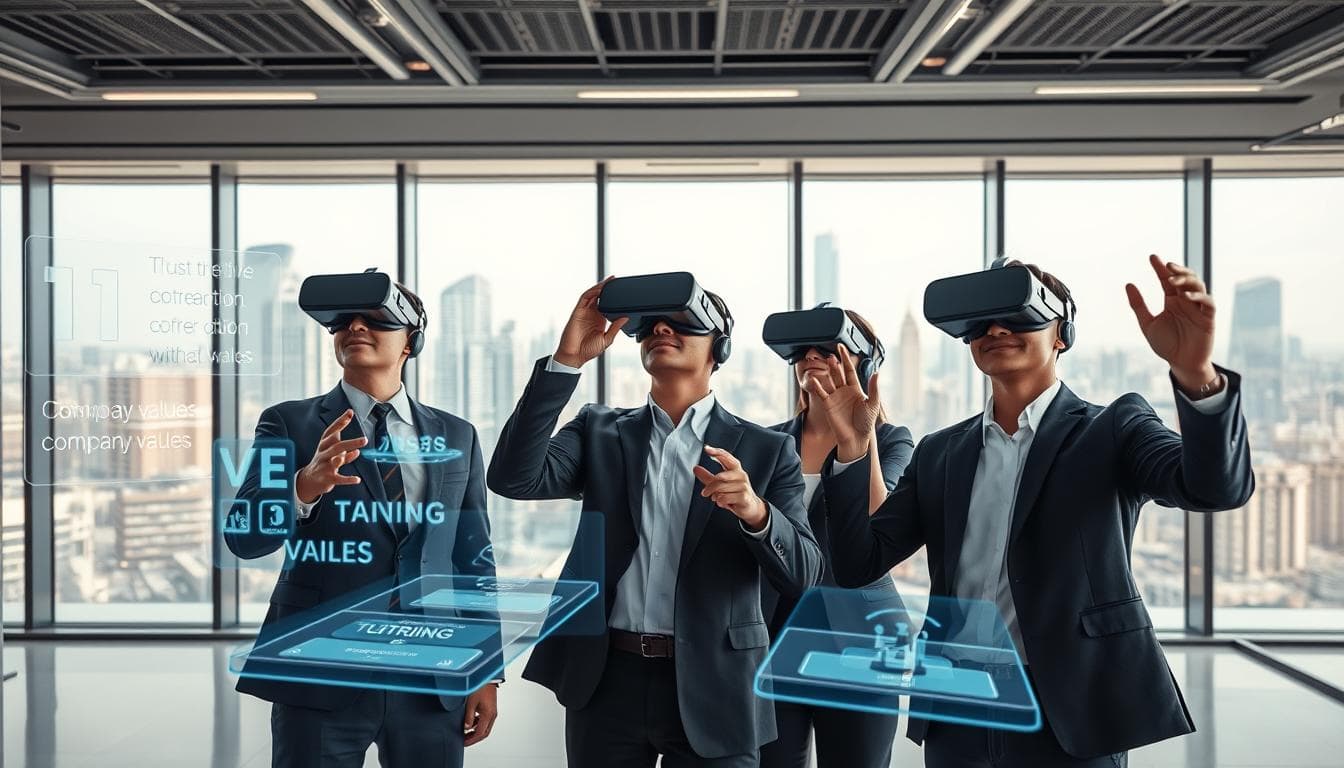
Employee onboarding is a critical process that sets the tone for a new hire's experience within a company. Traditional methods, while effective, can be enhanced with immersive VR training, providing a more engaging and interactive experience.

The use of VR training in employee onboarding has gained popularity due to its ability to simulate real-world environments, allowing new hires to practice and learn in a controlled setting. This approach not only improves knowledge retention but also reduces the time it takes for new employees to become productive members of the team.
Key Takeaways
- Immersive VR training enhances the employee onboarding experience.
- VR training simulates real-world environments for practice and learning.
- Improved knowledge retention is a significant benefit of VR training.
- New hires become productive team members more quickly.
- VR training is an innovative approach to traditional onboarding methods.
The Current State of Employee Onboarding
Traditional employee onboarding methods are facing numerous challenges in today's fast-paced business environment. The process of integrating new hires into an organization is crucial for their success and the company's overall performance.
Traditional Onboarding Challenges and Limitations
Conventional onboarding methods often rely on manual processes, paperwork, and in-person training sessions. These approaches can be time-consuming and inefficient, leading to a disengaged workforce. Moreover, traditional methods may not provide a consistent experience for new hires, particularly in organizations with multiple locations or remote teams.
The Digital Transformation of Workplace Training
The digital transformation has revolutionized workplace training, offering more flexible and effective solutions. Digital onboarding platforms enable organizations to streamline the onboarding process, providing new hires with a personalized and engaging experience. These platforms can include interactive content, virtual tours, and online training modules.
Remote and Hybrid Workforce Considerations
The rise of remote and hybrid workforces has further complicated the onboarding process. Organizations must now consider how to effectively onboard employees who may never meet their colleagues in person. This requires innovative approaches to virtual onboarding, including the use of virtual reality (VR) and other digital technologies.
By embracing digital transformation and considering the needs of remote and hybrid workforces, organizations can create a more inclusive and effective onboarding experience.
How Virtual Reality is Revolutionizing Corporate Training
Virtual reality (VR) is transforming the corporate training landscape by providing immersive and interactive learning experiences. This technology is not just a novelty; it's a powerful tool that's changing how companies train their employees.
Defining Immersive VR Technology
Immersive VR technology refers to the use of computer-generated simulations to create interactive and engaging environments that mimic real-world situations. This technology allows trainees to practice and learn in a controlled, risk-free setting, enhancing their understanding and retention of complex concepts.
The Growth Trajectory of VR in Workplace Learning
The adoption of VR in workplace learning is on a rapid growth trajectory. As VR technology becomes more sophisticated and accessible, more organizations are turning to this innovative training method.
Key Statistics and Adoption Rates
Recent studies have shown significant growth in VR adoption for corporate training. For instance, the VR market in corporate training is expected to grow by over 40% annually. Companies are seeing tangible benefits, including improved employee engagement and reduced training costs.
As VR technology continues to evolve, we can expect to see even more innovative applications in corporate training. The key will be to stay ahead of the curve and leverage VR in ways that drive real business results.
Core Benefits of VR-Based Onboarding Programs
The use of VR in onboarding is not just a trend; it's a strategic move to boost employee engagement and retention. By leveraging VR technology, companies can create immersive experiences that significantly enhance the onboarding process.
Enhanced Engagement and Information Retention
VR-based onboarding programs are designed to captivate new hires through interactive and immersive training sessions. This approach not only increases employee engagement but also improves information retention. Studies have shown that interactive training methods lead to better knowledge retention compared to traditional training techniques.
Consistent Training Experience Across Multiple Locations
One of the significant advantages of VR-based onboarding is the ability to provide a consistent training experience across different locations. Whether a company operates in a single location or multiple sites, VR ensures that every new employee undergoes the same high-quality training, fostering a unified company culture.
Accelerated Skill Development and Confidence Building
VR-based onboarding accelerates skill development by allowing new hires to practice and learn in a simulated environment. This hands-on experience builds confidence and prepares employees for real-world challenges.
Reducing Time-to-Productivity Metrics
By accelerating skill development and enhancing engagement, VR-based onboarding programs significantly reduce time-to-productivity metrics. New employees become productive faster, contributing to the overall efficiency and effectiveness of the organization.
In conclusion, VR-based onboarding offers numerous benefits, including enhanced engagement, consistent training experiences, and accelerated skill development. As companies continue to adopt this technology, it's clear that VR is set to revolutionize the onboarding process.
Practical Applications of Virtual Reality in Employee Onboarding
Virtual Reality is transforming the employee onboarding process by providing immersive experiences that enhance engagement and retention. This technology is being utilized in various aspects of onboarding, from introducing new hires to company culture to providing role-specific training simulations.
Company Culture and Workplace Orientation
VR is being used to create immersive tours of company facilities, helping new employees become familiar with their work environment. This approach not only enhances the onboarding experience but also reduces the time it takes for new hires to feel comfortable in their new roles.
Role-Specific Training Simulations
Role-specific training is another area where VR is making a significant impact. By simulating real-world scenarios, new employees can practice and hone their skills in a safe and controlled environment. For instance, a study by Accenture found that VR training can improve employee performance by up to 40%.
"VR allows us to create a realistic and immersive training environment that closely mirrors the actual work conditions our employees will face."
Safety and Compliance Training
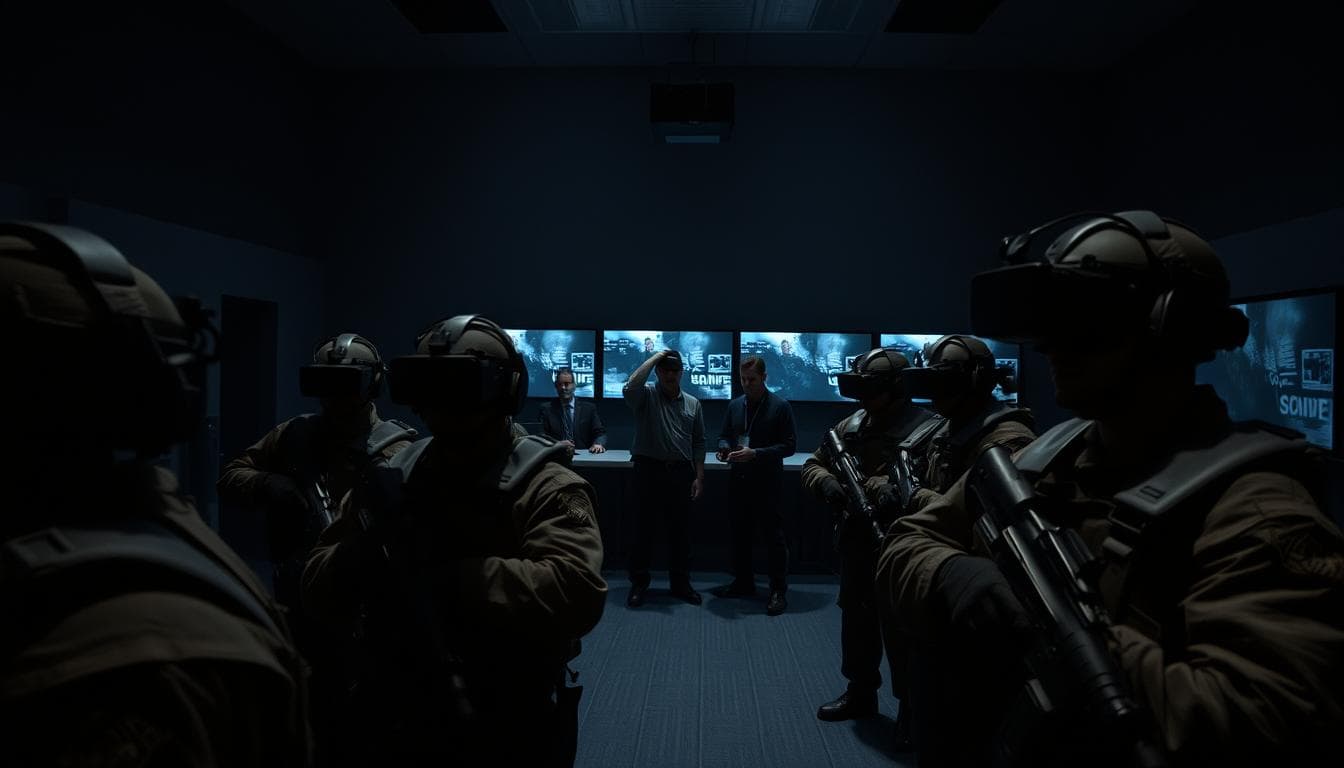
Safety and compliance training are critical components of the onboarding process, particularly in industries with high-risk environments. VR is being used to simulate hazardous situations, allowing employees to learn how to respond effectively without being exposed to actual danger.
High-Risk Environment Training
Training in high-risk environments is a significant challenge for many organizations. VR provides a solution by allowing employees to experience and respond to dangerous scenarios in a virtual setting. For example, companies in the manufacturing sector can use VR to simulate equipment operation and emergency response procedures.
| Industry | VR Application | Benefits |
| Manufacturing | Equipment operation simulation | Improved safety, reduced accidents |
| Healthcare | Surgical training simulations | Enhanced precision, better patient outcomes |
| Retail | Customer service simulations | Increased customer satisfaction, improved sales |
As VR technology continues to evolve, its applications in employee onboarding are expected to expand, offering even more innovative solutions for enhancing the training experience.
Implementing VR Onboarding: A Strategic Approach
The successful adoption of VR onboarding hinges on a well-planned strategy that addresses specific business needs. To implement VR onboarding effectively, organizations must consider several key factors that contribute to its success.
Assessing Organizational Needs and Training Objectives
Before implementing VR onboarding, it's crucial to assess the organization's specific needs and training objectives. This involves identifying the skills and knowledge required for new employees and determining how VR can best support these goals.
Selecting the Right VR Hardware and Software Solutions
Choosing the appropriate VR hardware and software is vital for a seamless onboarding experience. Organizations should consider factors such as cost, ease of use, and compatibility with existing systems when selecting VR solutions.
Developing Custom VR Onboarding Content
Developing custom VR content tailored to the organization's specific needs can significantly enhance the onboarding experience. This may involve creating simulations, interactive modules, or virtual tours that reflect the company's culture and work environment.
Integration with Existing Learning Management Systems
To maximize the effectiveness of VR onboarding, it's essential to integrate it with existing Learning Management Systems (LMS). This integration enables seamless tracking of employee progress and ensures that VR training is part of a cohesive learning strategy.
| Integration Aspect | Benefits | Considerations |
| Technical Compatibility | Ensures smooth data exchange between VR platform and LMS | API compatibility, data format consistency |
| User Experience | Provides a seamless learning experience for employees | User interface consistency, single sign-on functionality |
| Data Analytics | Enables comprehensive tracking of employee performance | Data synchronization, reporting capabilities |
By carefully assessing organizational needs, selecting the right VR technology, developing custom content, and integrating VR with existing LMS, organizations can implement a successful VR onboarding program that enhances employee engagement and accelerates the onboarding process.
Measuring the ROI of VR Training Initiatives
The growing investment in VR training initiatives necessitates a thorough evaluation of their ROI. To justify the costs associated with implementing VR training, organizations must assess its impact on their operations.
Key Performance Indicators for VR Onboarding
To measure the effectiveness of VR training, companies should track key performance indicators (KPIs) such as employee engagement, training completion rates, and knowledge retention. These metrics provide insights into how well the VR training is received and its overall effectiveness.
Data Collection and Analysis Methodologies
Effective data collection and analysis are crucial for understanding the ROI of VR training. Organizations can use various methodologies, including surveys, quizzes, and performance assessments, to gather data on the impact of VR training. Advanced analytics tools can then be employed to analyze this data and identify trends.

Calculating Cost Savings and Efficiency Gains
One of the primary benefits of VR training is its potential to reduce costs and improve efficiency. By automating certain training processes and reducing the need for physical training facilities, VR training can lead to significant cost savings. Additionally, VR training can accelerate the onboarding process, enabling new employees to become productive more quickly.
Employee Retention Impact Assessment
VR training can also have a positive impact on employee retention. By providing a more engaging and effective onboarding experience, organizations can improve job satisfaction and reduce turnover rates. This, in turn, can lead to cost savings associated with recruiting and training new employees.
Overcoming Barriers to VR Onboarding Adoption
Implementing VR onboarding requires addressing specific challenges that can impact its effectiveness. Organizations must navigate these obstacles to fully leverage the benefits of VR technology in their onboarding processes.
Budget Considerations and Cost Management Strategies
One of the primary barriers to VR adoption is the cost associated with implementing this technology. To manage these costs, organizations can explore various strategies, such as leasing VR equipment or partnering with VR solution providers to share costs.
Technical Implementation Challenges and Solutions
Technical challenges, including hardware and software compatibility issues, can also hinder VR onboarding adoption. To overcome these challenges, organizations should invest in robust IT infrastructure and ensure that their VR solutions are compatible with existing systems.
Addressing Employee Resistance to New Technology
Employee resistance is another significant barrier to VR onboarding adoption. To address this, organizations should provide comprehensive training and support to help employees feel comfortable using VR technology.
Creating Buy-in Across Organizational Levels
Creating buy-in across different organizational levels is crucial for successful VR onboarding adoption. This can be achieved by demonstrating the value of VR training to stakeholders and involving employees in the implementation process.
By addressing these challenges and creating a supportive environment, organizations can successfully implement VR onboarding and reap its benefits.
Case Studies: Transformative VR Onboarding Success Stories
Several pioneering companies have successfully implemented VR onboarding programs, revolutionizing their training processes. These implementations have shown significant benefits across various industries, including manufacturing, healthcare, and retail.
Manufacturing Industry Applications
In the manufacturing sector, companies like Siemens and Boeing have adopted VR onboarding to enhance their training programs. For instance, Siemens used VR to train new employees on complex machinery, resulting in a 30% reduction in training time and a 25% decrease in equipment damage.
- Improved familiarity with equipment
- Enhanced safety protocols
- Faster integration of new hires
Healthcare Sector Implementations
Healthcare organizations, such as hospitals and medical device manufacturers, have also benefited from VR onboarding. For example, a leading hospital implemented VR training for surgical staff, which led to a 40% improvement in surgical precision and a 20% reduction in operation preparation time.
Retail and Customer Service Examples
Retail companies have utilized VR to enhance customer service training. Walmart, for instance, used VR to train employees in customer service scenarios, resulting in improved customer satisfaction scores and more confident employees.
Measurable Outcomes and Lessons Learned
The case studies across these industries have shown that VR onboarding leads to measurable improvements in employee performance and retention. Key lessons include the importance of customizing VR content to specific job roles and the need for continuous evaluation of training effectiveness.

By examining these case studies, organizations can gain insights into the successful implementation of VR onboarding programs and apply these lessons to their own training initiatives.
Emerging Trends in Virtual Reality Training Technology
Emerging trends in VR training technology are redefining the corporate training landscape, providing more engaging, personalized, and efficient onboarding processes. As organizations continue to adopt VR solutions, several key trends are emerging that promise to further enhance the effectiveness of VR-based training.
Advancements in VR Hardware and Software
The continuous advancement in VR hardware and software is a significant trend. Improved resolution, increased field of view, and more comfortable wearables are making VR experiences more immersive and accessible. Software advancements are also enabling more sophisticated training simulations.
Integration with AI and Machine Learning
The integration of Artificial Intelligence (AI) and Machine Learning (ML) with VR is another emerging trend. This combination allows for personalized learning paths and real-time feedback, enhancing the learning experience. AI-driven analytics can also provide insights into trainee performance and areas for improvement.
| Trend | Description | Impact |
| Advancements in VR Hardware | Improved resolution and comfort | More immersive experiences |
| AI and ML Integration | Personalized learning and real-time feedback | Enhanced learning effectiveness |
| The Metaverse | Virtual environments for interaction | Increased collaboration and engagement |
The Metaverse and Next-Generation Onboarding Experiences
The concept of the metaverse is gaining traction, offering virtual environments where trainees can interact with each other and with digital objects. This trend is expected to revolutionize onboarding by providing immersive, interactive, and collaborative experiences.
Augmented Reality and Mixed Reality Applications
Augmented Reality (AR) and Mixed Reality (MR) are also being integrated into training programs. These technologies overlay digital information onto the real world, providing contextual and interactive learning experiences. AR and MR can enhance traditional training methods by making them more engaging and relevant.
Conclusion: Building the Future of Onboarding with VR
As organizations continue to evolve and grow, the need for effective employee onboarding processes becomes increasingly important. Virtual Reality (VR) is revolutionizing the way companies approach onboarding, providing immersive and engaging experiences that enhance information retention and accelerate skill development.
The future of VR onboarding is promising, with advancements in VR technology and the integration of Artificial Intelligence (AI) and Machine Learning (ML) expected to further enhance its capabilities. Companies like Walmart and UPS are already leveraging VR to improve their training programs, demonstrating the potential for widespread adoption across various industries.
By adopting VR onboarding, organizations can create a consistent training experience across multiple locations, reduce costs associated with traditional training methods, and improve employee confidence and productivity. As the technology continues to advance, the possibilities for VR onboarding will expand, enabling companies to build a more skilled and efficient workforce.
The integration of VR in corporate training is no longer a futuristic concept, but a reality that is shaping the future of onboarding.