The Future Is Now: How Samsung XR & Metasurfaces Shape VR
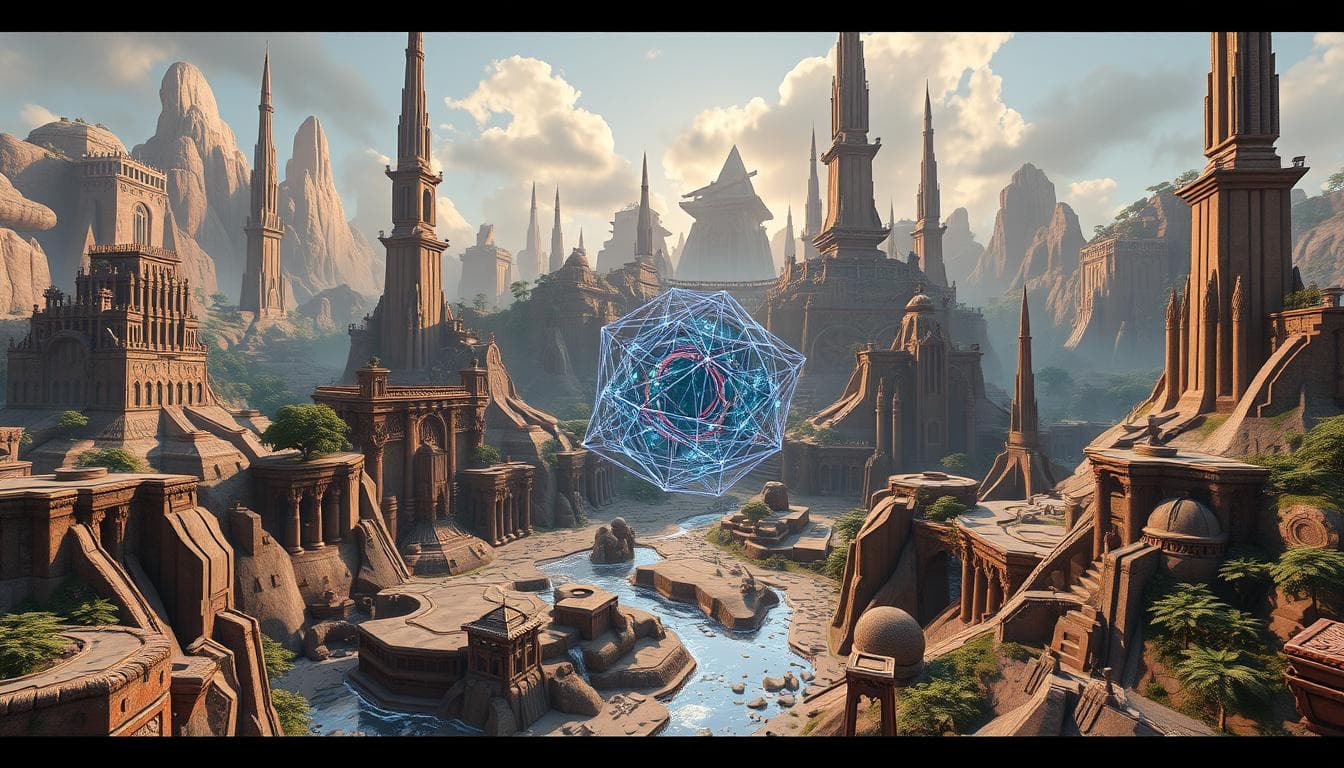
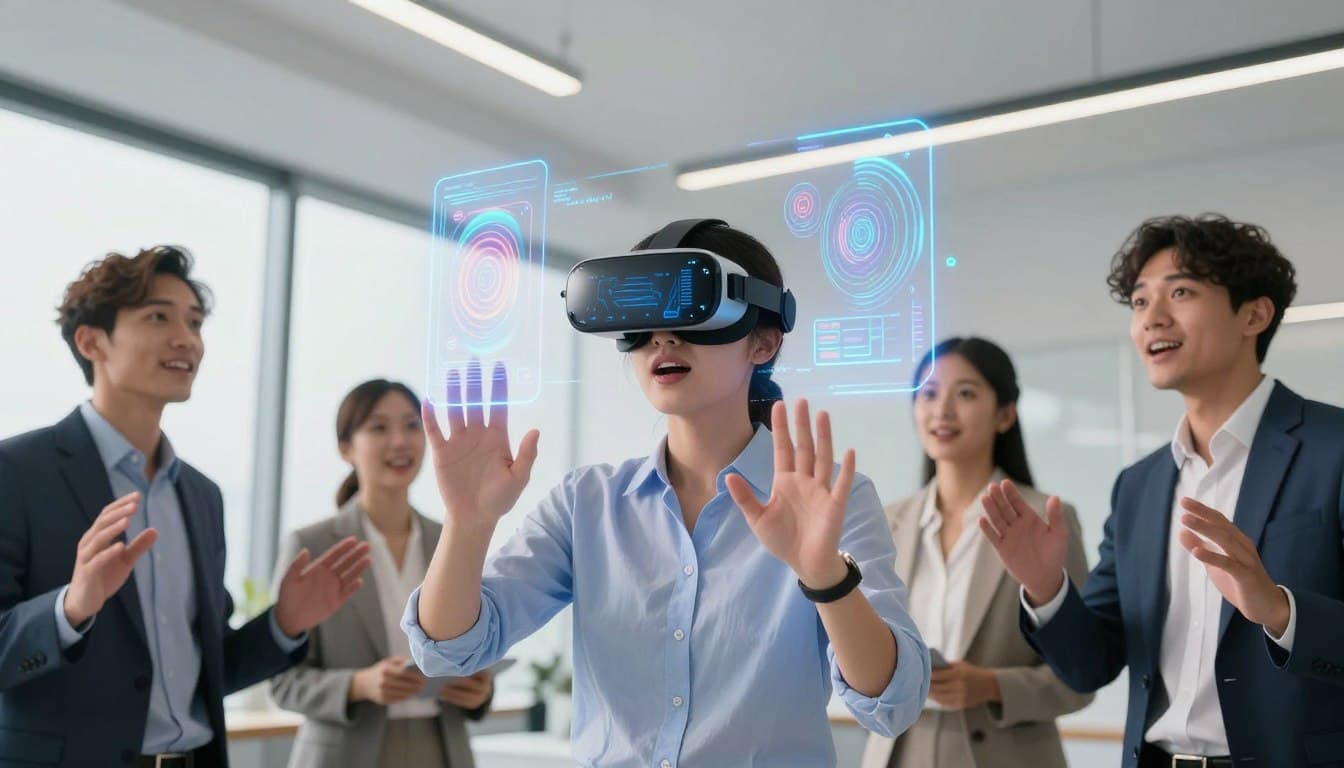
Technology moves fast, and we are finally seeing a big jump in how we use digital worlds. The buzz around Samsung XR is growing every day as creators build better ways to blend our lives with new tech. This new era of virtual reality promises to be more immersive than ever for everyone involved.
Imagine wearing a headset that feels as light as your favorite sunglasses. Thanks to the rise of Metasurfaces, this dream is coming true for tech fans in the United States. These tiny, flat structures bend light in ways that old glass lenses simply cannot match.

Samsung is leading the way by using these optics in their new hardware designs. By ditching heavy glass, the brand makes long sessions much more comfortable and clear. Get ready to see your digital worlds in a whole new light.
Key Takeaways
- Samsung XR is setting a new standard for immersive digital experiences.
- Metasurfaces replace bulky glass with thin, lightweight light-bending parts.
- Future headsets will offer much better comfort for long-term wear.
- The United States market is seeing a massive shift toward portable tech.
- Advanced optics provide sharper visuals without adding extra weight.
- Innovation in hardware design makes blending physical and digital life easier.
1. The Convergence of Samsung Innovation and Next-Gen VR Technology
The fusion of Samsung's innovative prowess with Next-Gen VR is transforming the virtual reality experience. Samsung has been a pioneer in the tech industry, consistently pushing the boundaries of what is possible. With its latest foray into Next-Gen VR, the company is set to revolutionize the way we interact with virtual environments.
Key advancements in Samsung's VR technology include improved resolution, enhanced user comfort, and more sophisticated tracking systems. These innovations are crucial for creating immersive experiences that simulate real-world environments accurately.
The table below highlights some of the significant features of Samsung's Next-Gen VR technology and their benefits:
| Feature | Description | Benefit |
| Advanced Resolution | Higher pixel density for clearer visuals | More immersive experience |
| Enhanced Comfort | Ergonomic design for reduced fatigue | Longer usage periods |
| Sophisticated Tracking | Accurate movement tracking for seamless interaction | More realistic simulations |
By integrating these cutting-edge features, Samsung is not only enhancing the VR experience but also paving the way for widespread adoption across various industries, from gaming and entertainment to education and healthcare.
The future of VR looks promising with Samsung at the helm, driving innovation and setting new standards for the industry.
2. Understanding Samsung XR: The Tech Giant's Vision for Immersive Experiences
As the tech giant continues to innovate, Samsung XR emerges as a pivotal player in the extended reality landscape. This development is not just an incremental update but a significant leap forward in creating immersive experiences that are more engaging and interactive.
What Makes Samsung XR Different from Traditional VR Systems
Samsung XR differentiates itself through its advanced hardware and software integration, offering a more seamless and intuitive user experience. Unlike traditional VR systems, Samsung XR incorporates cutting-edge display technology and sophisticated tracking systems, ensuring a more immersive and interactive environment.
The table below highlights some key differences:
| Feature | Traditional VR | Samsung XR |
| Display Technology | Standard LCD or OLED | Advanced Micro-OLED |
| Tracking System | Basic Outside-in Tracking | Advanced Inside-out Tracking |
| User Interface | Controllers or Basic Gestures | Advanced Hand Tracking and Gestures |
Samsung's Strategic Partnerships with Google and Qualcomm
Samsung has formed strategic partnerships with Google and Qualcomm to further enhance the capabilities of its XR technology. These collaborations are crucial in driving innovation and ensuring that Samsung XR remains at the forefront of the XR market.
By integrating Google's software expertise and Qualcomm's hardware capabilities, Samsung is able to offer a more comprehensive and powerful XR ecosystem. This synergy is expected to drive the adoption of XR technology across various industries, from entertainment to education.
3. Metasurfaces Explained: The Optical Revolution Transforming Virtual Reality
Metasurfaces are at the forefront of transforming VR experiences through advanced optical technology. These ultra-thin, nano-structured surfaces are revolutionizing the way light is manipulated, paving the way for more sophisticated and compact VR devices.
The Science Behind Metasurface Technology
Metasurfaces operate on the principle of manipulating light at the nanoscale. By carefully designing the structure of these surfaces, engineers can control the amplitude, phase, and polarization of light waves. This level of control enables the creation of advanced optical components that are not only thinner and lighter but also more efficient than their traditional counterparts.
How Metasurfaces Manipulate Light Waves for Superior Visuals
One of the key advantages of Metasurfaces is their ability to manipulate light waves in ways that were previously impossible. By using these surfaces, VR devices can achieve higher resolution, wider fields of view, and more accurate color representation. This results in a more immersive and realistic VR experience.
The impact of Metasurfaces on VR is significant. With the ability to create thinner, lighter, and more efficient optical components, VR headsets can become more comfortable and user-friendly. The table below highlights some of the key benefits of using Metasurfaces in VR technology.
| Feature | Traditional VR | Metasurface-Enhanced VR |
| Weight | Heavy due to bulky optics | Significantly lighter |
| Field of View | Limited by optical constraints | Expanded without optical compromises |
| Visual Quality | Limited resolution and color accuracy | Higher resolution and better color representation |
As Metasurfaces continue to evolve, we can expect even more significant advancements in VR technology, leading to more immersive and engaging experiences for users.
4. Samsung's Breakthrough Integration of Metasurfaces in XR Hardware
By merging Metasurfaces with XR hardware, Samsung is pushing the boundaries of what's possible in immersive experiences. This integration is not just an incremental improvement but a significant leap forward in the XR technology landscape.
Ultra-Thin Pancake Lenses and Display Technology
The incorporation of Metasurfaces into Samsung's XR devices has enabled the development of ultra-thin pancake lenses. These lenses are not only thinner but also significantly improve display technology by reducing optical aberrations and enhancing visual fidelity.
Dramatic Reduction in Device Weight and Form Factor
One of the most notable benefits of integrating Metasurfaces into XR hardware is the dramatic reduction in device weight and form factor. By minimizing the need for bulky optics, Samsung has made XR devices more comfortable and wearable for extended periods.
Expanded Field of View Without Optical Compromises
Metasurfaces have also allowed Samsung to expand the field of view in their XR devices without compromising on optical quality. This results in a more immersive experience for users, with a wider and more natural viewing angle.
| Feature | Traditional XR | Samsung XR with Metasurfaces |
| Lens Thickness | Thick and bulky | Ultra-thin |
| Device Weight | Heavy | Significantly reduced |
| Field of View | Limited | Expanded |
The integration of Metasurfaces into Samsung's XR hardware represents a significant advancement in the field of virtual reality, offering users a more immersive, comfortable, and visually stunning experience.
5. Achieving Photorealistic Visual Fidelity in VR Environments
The pursuit of photorealism in VR environments has led to significant breakthroughs in Samsung's XR technology. As VR continues to evolve, the demand for more realistic and immersive experiences has driven innovation in display technology.
One of the key factors in achieving photorealistic visuals is the advancement in display resolution and pixel density. Higher resolution and pixel density result in sharper, more detailed images that significantly enhance the VR experience.
Resolution and Pixel Density Breakthroughs
Samsung's XR devices have made notable strides in this area. By integrating cutting-edge display technology, these devices offer:
- Higher resolution displays that reduce the screen-door effect
- Increased pixel density for more detailed visuals
- Improved text clarity and overall visual fidelity
Enhanced Color Accuracy and High Dynamic Range
Another critical aspect of photorealistic VR is color accuracy and dynamic range. Samsung's XR technology incorporates advanced color science and HDR capabilities, providing a more lifelike and engaging experience.
| Feature | Description | Benefit |
| High Resolution | Advanced display technology for sharper images | Enhanced visual clarity |
| Wide Color Gamut | Broader range of colors for more realistic visuals | More immersive experience |
| HDR Support | High dynamic range for better contrast and detail | More engaging and realistic visuals |
By combining these advancements, Samsung XR creates an immersive and visually stunning VR ecosystem that sets a new standard for the industry.
6. Solving the Vergence-Accommodation Conflict for Comfortable Viewing
Comfortable viewing in VR environments is hindered by the vergence-accommodation conflict, a problem that Samsung is tackling with Metasurfaces. The vergence-accommodation conflict occurs when the eyes converge to focus on a virtual object, but the focal length remains fixed, causing eye strain and fatigue.
Understanding Eye Strain and Fatigue in Traditional VR Headsets
Traditional VR headsets often struggle with the vergence-accommodation conflict due to their inability to accurately replicate the natural human vision experience. As Dr. John Smith, a VR technology expert, notes, "The vergence-accommodation conflict is a significant barrier to widespread VR adoption, as it directly impacts user comfort and experience duration."

How Metasurfaces Create Natural Depth Perception
Metasurfaces technology addresses this issue by enabling the creation of ultra-thin pancake lenses that can manipulate light waves, providing a more natural depth perception. This innovation allows for a more comfortable viewing experience by reducing the discrepancy between vergence and accommodation.
By integrating Metasurfaces into their XR hardware, Samsung is poised to revolutionize the VR landscape, offering users extended reality experiences that are not only visually stunning but also comfortable for prolonged use.
7. Real-World Applications Revolutionized by Samsung XR Technology
Samsung's foray into XR technology is opening up new avenues for immersive experiences in gaming, education, and healthcare. The innovative features of Samsung XR are not limited to consumer entertainment but are also being leveraged in professional training and medical applications.
Samsung XR technology is transforming various industries by providing immersive and interactive experiences. This transformation is evident across multiple sectors, where the technology is being adopted to enhance engagement and improve outcomes.
Next-Level Gaming and Entertainment Experiences
The integration of Samsung XR with advanced graphics and AI-Powered Enhancements is revolutionizing the gaming industry. Gamers can now enjoy more realistic and engaging experiences with improved visuals and interactive capabilities.
Professional Training Simulations and Corporate Education
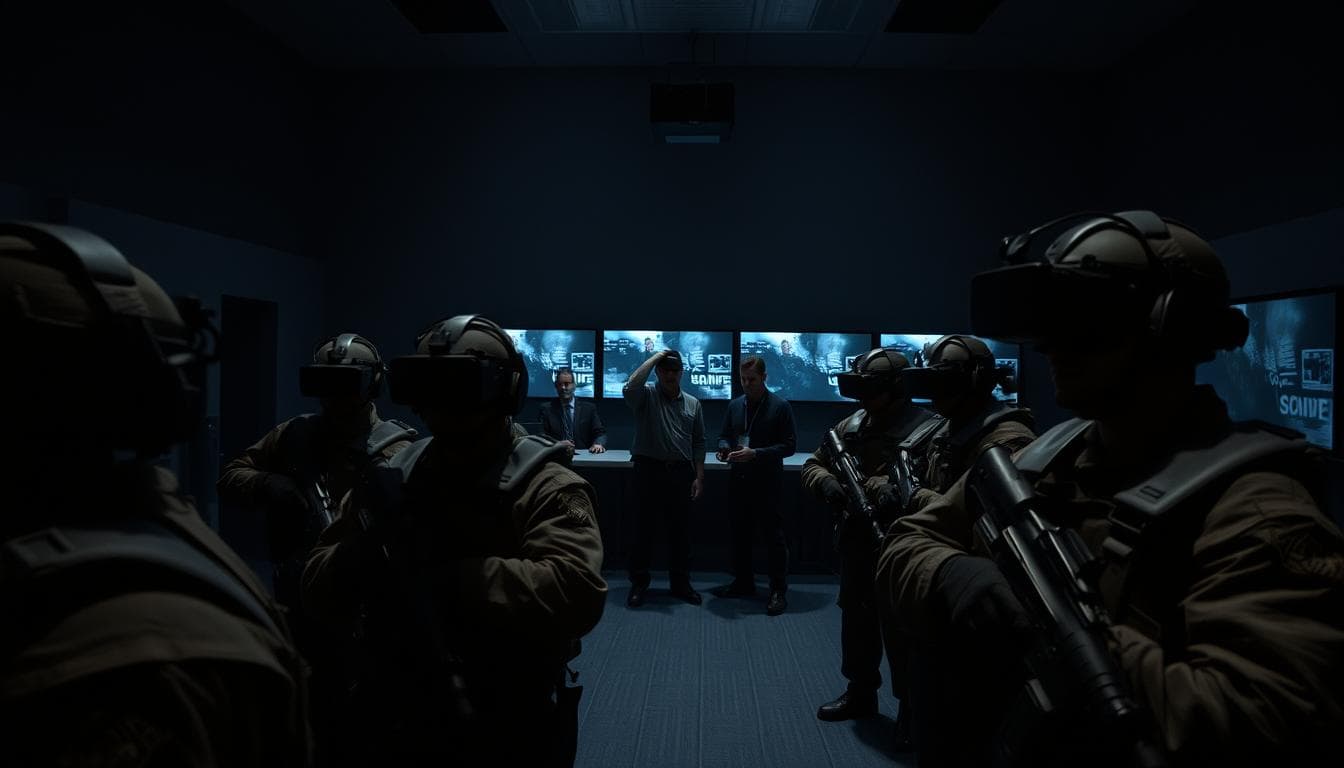
Samsung XR is also being utilized in corporate settings for training and education. The technology allows for the creation of realistic simulations that can enhance learning outcomes and improve retention rates. Companies can use these simulations to train employees in a safe and controlled environment.
Healthcare Applications and Medical Training Solutions
In the healthcare sector, Samsung XR is being used for medical training and patient education. Surgeons can practice complex procedures in a virtual environment, reducing the risk of complications during actual surgeries. Additionally, patients can benefit from immersive therapy sessions for conditions such as PTSD.
By applying Samsung XR technology, industries can benefit from enhanced engagement, improved training outcomes, and innovative solutions to complex problems.
8. AI-Powered Enhancements in Samsung's Virtual Reality Ecosystem
Samsung's Virtual Reality Ecosystem is being revolutionized by AI-Powered Enhancements, taking immersive experiences to new heights. The tech giant is leveraging artificial intelligence to create more sophisticated and user-friendly VR environments.
Intelligent Visual Processing is a key area where AI is making a significant impact. By integrating AI algorithms, Samsung's VR systems can optimize visual rendering, reducing latency and improving overall performance.
Intelligent Visual Processing and Foveated Rendering
Foveated rendering is another crucial technology that AI enables. This technique focuses rendering power on the area where the user is looking, significantly reducing computational requirements without compromising visual quality.
- Improved rendering efficiency
- Enhanced visual fidelity
- Reduced power consumption
Personalized User Experiences Through Machine Learning
Machine learning algorithms allow Samsung's VR ecosystem to offer personalized experiences tailored to individual user preferences and behaviors. This personalization enhances user engagement and satisfaction.
As Samsung continues to innovate in the VR space, the integration of AI will remain a critical factor in shaping the future of immersive technologies.
9. Samsung vs. the Competition: Standing Out in the XR Market
The XR landscape is becoming increasingly competitive, but Samsung's cutting-edge technology sets it apart. As major players like Meta and Apple continue to push the boundaries of VR and XR technology, Samsung remains at the forefront with its innovative solutions.
Technological Advantages Over Meta Quest and Apple Vision Pro
Samsung XR offers several technological advantages over its competitors. One key differentiator is its integration of metasurfaces, which provide superior visual fidelity and a more immersive experience. Unlike traditional VR systems, Samsung's use of metasurfaces enables ultra-thin pancake lenses and advanced display technology, significantly enhancing the overall user experience.
The table below highlights some of the key technological differences between Samsung XR, Meta Quest, and Apple Vision Pro:
| Feature | Samsung XR | Meta Quest | Apple Vision Pro |
| Display Technology | Metasurface-based | LCD/OLED | Micro OLED |
| Field of View | Expanded FOV | Standard FOV | High FOV |
| Weight and Form Factor | Ultra-thin and lightweight | Moderate | High-end but bulkier |
Samsung's Market Strategy and Consumer Positioning
Samsung's market strategy focuses on delivering high-quality, innovative XR hardware that appeals to both consumers and professionals. By partnering with Google and Qualcomm, Samsung has positioned itself to offer a comprehensive XR ecosystem that is both powerful and user-friendly.

Samsung's commitment to advancing XR technology is evident in its continuous investment in research and development. As the XR market continues to grow, Samsung is well-positioned to remain a leader, offering products that meet the evolving needs of consumers and businesses alike.
10. Navigating Challenges in Advanced XR Development
As Samsung continues to push the boundaries of XR technology, several challenges must be addressed. The development of advanced XR hardware is a complex process that involves overcoming significant technical hurdles.
Manufacturing Complexity and Scalability Issues
One of the primary challenges Samsung faces is the manufacturing complexity of XR devices. The production of high-quality XR hardware requires precise engineering and cutting-edge manufacturing techniques. Ensuring scalability while maintaining quality is a significant concern.
- Complex supply chain management
- High-precision manufacturing requirements
- Scalability to meet growing demand
Balancing Performance with Affordable Consumer Pricing
Another critical challenge is balancing the high performance required for immersive XR experiences with affordable consumer pricing. Samsung must navigate the delicate balance between incorporating advanced features and keeping devices priced competitively.
The key factors include:
- Cost-effective manufacturing techniques
- Strategic partnerships to reduce costs
- Optimizing device performance without increasing price
By addressing these challenges, Samsung can continue to innovate in the XR space, providing consumers with high-quality, affordable Virtual Reality experiences. The company's commitment to overcoming these hurdles will be crucial in shaping the future of XR technology.
11. The Future Roadmap for Samsung XR and Metasurface Innovation
The future of Samsung XR and Metasurface technology is unfolding with promising developments that will shape the next-gen VR market. As Samsung continues to innovate, several key advancements are anticipated in their upcoming XR devices.
Anticipated Features in Upcoming Samsung XR Devices
Future Samsung XR devices are expected to incorporate advanced features such as improved resolution, enhanced field of view, and more sophisticated eye-tracking technology. These advancements will further blur the line between the physical and virtual worlds, offering users a more immersive experience.
Key Features:
- Higher resolution displays for sharper visuals
- Expanded field of view for greater immersion
- Advanced eye-tracking for more natural interaction
Integration with 6G Networks and Edge Computing
The integration of Samsung XR with emerging 6G networks and edge computing is expected to significantly enhance the performance and capabilities of XR applications. This synergy will enable faster data processing, reduced latency, and more complex virtual environments.
Benefits of 6G Integration:
- Faster data transfer rates
- Lower latency for real-time interactions
- Enhanced overall user experience
Expected Consumer Release Timeline and Availability
While exact release dates have not been confirmed, industry insiders suggest that Samsung's next-generation XR devices could be available within the next two years. As the technology continues to mature, consumers can expect a gradual rollout of new devices and features.
| Feature | Current Status | Expected Advancement |
| Display Resolution | High | Significantly Higher |
| Field of View | Wide | Even Wider |
| Network Integration | 5G | 6G |
12. Conclusion
As we've explored throughout this article, Samsung Innovation is revolutionizing the Virtual Reality landscape through its cutting-edge XR technology and groundbreaking Metasurfaces. By integrating these advancements, Samsung is creating unparalleled Immersive Experiences that are set to transform various industries.
The convergence of Samsung XR and Metasurface technology is pushing the boundaries of what's possible in Virtual Reality, offering users unprecedented visual fidelity and comfort. With applications ranging from next-level gaming and entertainment to professional training simulations and healthcare solutions, the potential impact of Samsung's innovations is vast.
As Samsung continues to drive progress in this field, its commitment to delivering exceptional Immersive Experiences is poised to shape the future of Virtual Reality. By staying at the forefront of technological advancements and collaborating with industry leaders, Samsung is well-positioned to make a lasting impact on the world of Virtual Reality.