Saving Lives in VR: The Impact of Virtual Reality Medical Training
Medical training is undergoing a significant transformation with the integration of virtual reality (VR) technology. This innovative approach to medical education provides immersive learning experiences that simulate real-world scenarios, allowing doctors to hone their skills in a controlled environment.

The use of VR in medical training has the potential to revolutionize the way doctors learn and improve patient outcomes. By simulating complex medical procedures, VR medical training enables healthcare professionals to practice and refine their techniques without risking patient safety.
Key Takeaways
- VR technology is transforming medical education by providing immersive learning experiences.
- Simulated real-world scenarios allow doctors to practice complex medical procedures.
- VR medical training improves patient outcomes by reducing the risk of medical errors.
- Medical education is becoming more effective and engaging with VR.
- Healthcare professionals can refine their techniques in a controlled environment.
The Evolution of Medical Training: From Textbooks to Technology
The landscape of medical education has undergone significant transformations over the years, evolving from traditional textbook-based learning to more advanced technological methods. This shift reflects the broader changes in medical education, driven by advances in technology and the need for more effective training methods.
Traditional Medical Training Methods
Historically, medical training relied heavily on textbooks, lectures, and limited hands-on experience. While these methods provided a foundation in medical knowledge, they often fell short in preparing students for the complexities of real-world patient care. Traditional training methods were often criticized for being too theoretical and not providing enough practical experience. As Dr. Jane Smith, a medical educator, noted, "Traditional medical training methods were limited in their ability to prepare students for the demands of modern healthcare."
The Digital Revolution in Medical Education
The advent of digital technology has revolutionized medical education, offering new tools and platforms that enhance learning. Online resources, simulation software, and virtual learning environments have become increasingly prevalent, allowing students to engage with complex medical concepts in a more interactive and immersive way. According to a study published in the Journal of Medical Education, "The integration of digital technology in medical education has improved student outcomes and enhanced the overall learning experience."
The Need for Immersive Learning Experiences
Despite the advancements in digital medical education, there remains a need for even more immersive and engaging learning experiences. Virtual Reality (VR) technology has emerged as a promising solution, offering the potential to simulate real-world clinical scenarios in a safe and controlled environment. As medical education continues to evolve, the incorporation of immersive technologies like VR is likely to play an increasingly important role.
"The future of medical education lies in its ability to adapt and incorporate innovative technologies that enhance the learning experience," said Dr. John Doe, a leading expert in medical education technology.
Virtual Reality: Revolutionizing How Doctors Learn
Immersive virtual reality technology is changing the landscape of medical education, offering unprecedented opportunities for skill development. This revolutionary approach to training is not just an incremental improvement but a fundamental shift in how medical professionals learn and practice their skills.
The Science of Immersive Learning
Immersive learning through virtual reality engages multiple senses, creating a more effective learning experience. Research has shown that interactive and experiential learning methods significantly improve knowledge retention and skill acquisition. By simulating real-world scenarios, VR training allows medical professionals to practice and hone their skills in a controlled environment.
- Enhanced knowledge retention
- Improved skill acquisition
- Safe and controlled practice environment
How VR Differs from Other Educational Technologies
Unlike traditional educational technologies such as e-learning platforms or video tutorials, VR provides a fully immersive experience. It simulates the sights, sounds, and even sensations of real-world medical scenarios, making it a more engaging and effective training tool. The interactivity of VR sets it apart from passive learning methods, allowing learners to actively participate in their training.
"VR technology has the potential to revolutionize medical education by providing a realistic, interactive, and immersive learning experience."
The Psychological Impact of Immersive Training
The psychological impact of immersive VR training is significant. By reducing the stress and anxiety associated with real-life medical procedures, VR training can improve a learner's confidence and competence. Studies have shown that the immersive nature of VR can lead to a more profound emotional connection to the training material, enhancing the overall learning experience.
As the medical field continues to adopt VR technology, understanding its psychological impact will be crucial in optimizing training programs for maximum effectiveness.
Life-Saving Benefits of VR Medical Training
VR medical training is at the forefront of a new era in healthcare education, offering unparalleled opportunities for skill development and patient safety. By providing a realistic and immersive learning environment, VR training enables healthcare professionals to gain valuable experience without the risks associated with real-life patient care.
Practice Without Patient Risk
One of the most significant advantages of VR medical training is the ability to practice complex procedures without putting patients at risk. This not only enhances patient safety but also allows trainees to make mistakes and learn from them in a controlled environment.
Accelerated Skill Development
VR training accelerates skill development by providing repetitive practice and immediate feedback. This immersive learning experience helps trainees to quickly grasp and retain complex skills, leading to improved clinical performance.
Consistent Training Experiences
VR medical training ensures consistent training experiences across different locations and training programs. This consistency is crucial for maintaining high standards in healthcare education and ensuring that all trainees have the same level of preparation.
Long-Term Cost Benefits for Medical Institutions
In addition to improving training outcomes, VR medical training offers long-term cost benefits for medical institutions. By reducing the need for physical training facilities and equipment, VR training can help institutions allocate resources more efficiently.
In conclusion, VR medical training offers a range of life-saving benefits, from enhanced patient safety to accelerated skill development and consistent training experiences. As the healthcare industry continues to adopt VR technology, we can expect to see significant improvements in clinical outcomes and patient care.
Virtual Reality Applications Across Medical Specialties
The versatility of VR in medical education is evident in its broad applications across different medical specialties. As medical training continues to evolve, VR technology is being adopted in various fields, providing healthcare professionals with the skills and confidence needed to excel in their respective domains.
Surgical Training Simulations
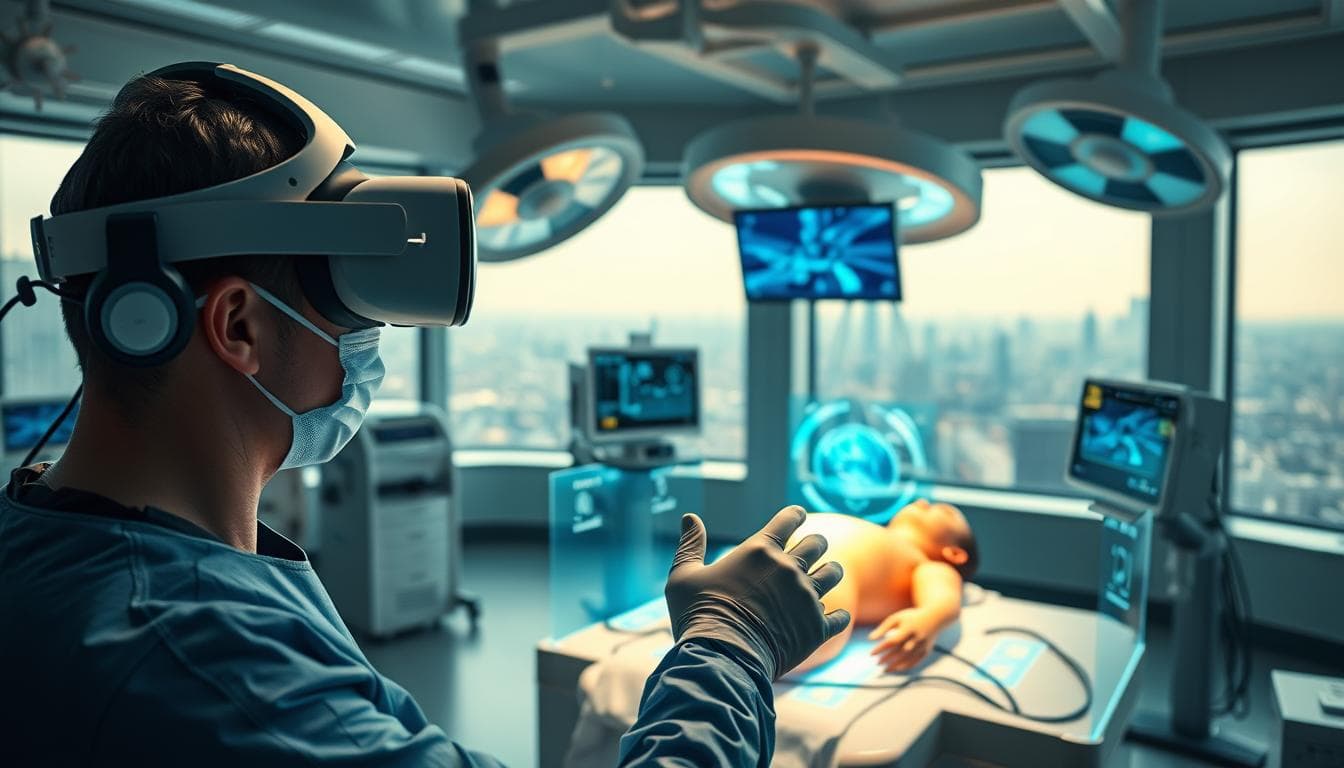
Surgical training is one of the most significant areas where VR is making an impact. By providing realistic and immersive simulations, VR helps surgeons practice and hone their skills in a risk-free environment.
Laparoscopic and Robotic Surgery Training
VR simulations for laparoscopic and robotic surgery allow surgeons to practice complex procedures, improving their dexterity and precision. These simulations can be customized to mimic various surgical scenarios, preparing surgeons for the challenges they may face in real operations.
Neurosurgical Procedure Practice
Neurosurgery requires extreme precision, and VR provides a platform for neurosurgeons to practice intricate procedures. By simulating the complexities of brain and spinal surgery, VR training helps reduce the risk of complications and improves patient outcomes.
Emergency Medicine and Trauma Response
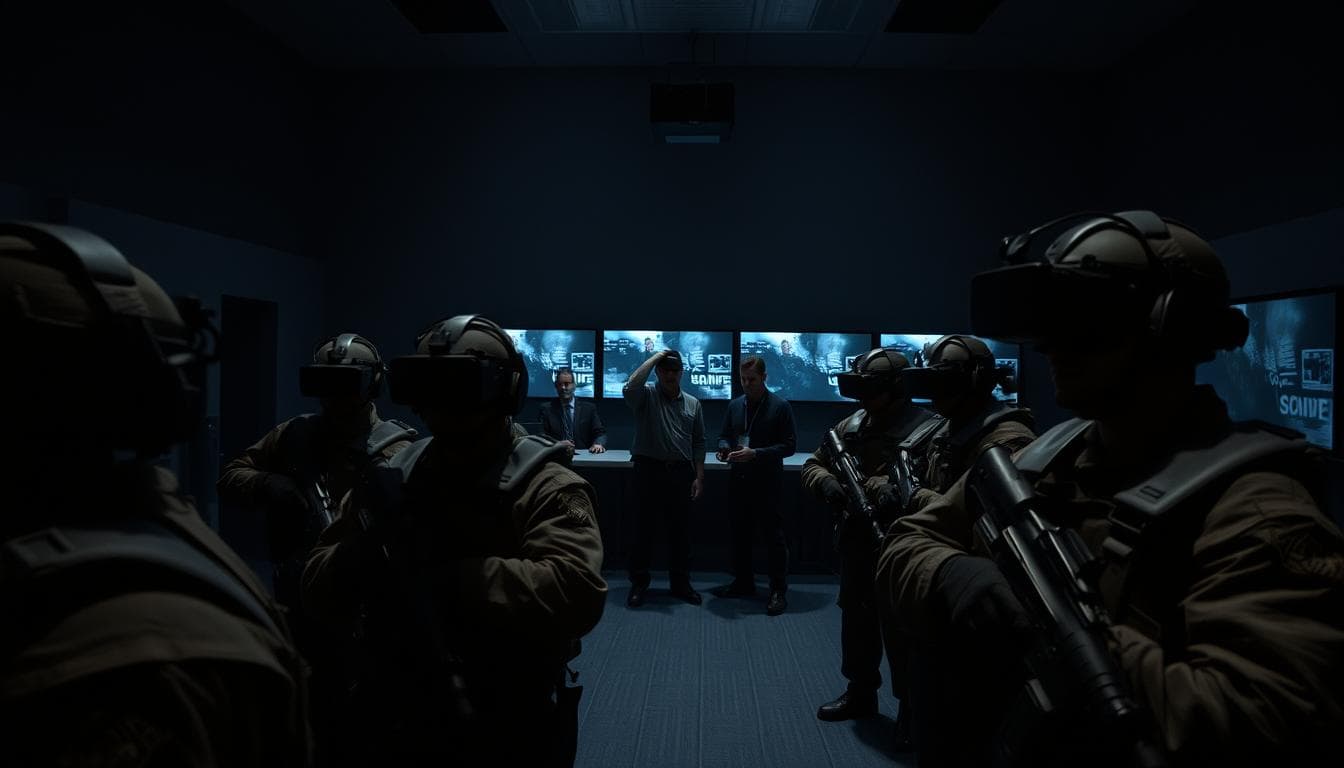
VR is also being used to train emergency responders and medical staff in trauma response and emergency medicine. Simulations can mimic the chaos of emergency situations, allowing responders to practice their decision-making and coordination skills in a controlled environment.
Some key benefits of VR in emergency medicine training include:
- Improved response times
- Enhanced teamwork and communication
- Practice in managing rare but critical conditions
Anatomical Education and Visualization
Understanding human anatomy is fundamental to medical education, and VR is enhancing this understanding by providing interactive 3D models of the body. Students can explore anatomical structures in detail, gaining a deeper insight into the human body.
VR anatomical education offers several advantages, including:
- Interactive learning experiences
- Enhanced visualization of complex structures
- Personalized learning paths
Patient Communication and Empathy Building
Beyond procedural training, VR is being used to improve patient communication and empathy among healthcare providers. By simulating patient interactions, VR helps medical professionals develop the soft skills necessary for effective patient care.
Using VR for patient communication training can lead to:
- Better patient understanding and compliance
- Improved patient satisfaction
- Enhanced empathy among healthcare providers
Real-World Success Stories: VR Training in Action
Hospitals are leveraging VR technology to revolutionize their training programs, yielding impressive outcomes. This shift towards immersive learning has shown significant promise in enhancing medical education and, ultimately, patient care.
Major Hospital Implementation Case Studies
Several prestigious medical institutions have adopted VR training, achieving noteworthy results. Let's examine a couple of these pioneering programs.
Stanford Medical Center's VR Program
Stanford Medical Center has integrated VR into their surgical training curriculum. Residents participate in simulated surgeries, honing their skills in a risk-free environment. This program has led to a marked improvement in their technical proficiency.
Mayo Clinic's Training Innovations
The Mayo Clinic has also embraced VR, developing customized training modules for various medical specialties. Their program focuses on enhancing decision-making and hand-eye coordination among trainees. Initial results indicate a significant reduction in training time and an increase in overall competence.
Measurable Improvements in Clinical Outcomes
The true measure of VR training's success lies in its impact on clinical outcomes. Studies have shown that VR-trained professionals exhibit improved performance in real-world settings. For instance, a study on VR-trained surgeons found they had a 30% higher success rate in complex procedures compared to traditionally trained counterparts.
Moreover, VR training has been linked to a decrease in medical errors and an improvement in patient satisfaction scores. As more hospitals adopt this technology, the data supporting its efficacy continues to grow, reinforcing the potential of VR to transform medical education.
Challenges and Limitations in Medical VR Training
The adoption of VR in medical training is hindered by several key challenges that require careful consideration. While VR technology holds immense potential for revolutionizing medical education, its implementation is not without obstacles.

Technical Barriers and Hardware Constraints
One of the primary challenges facing VR medical training is the technical barriers and hardware constraints. High-quality VR experiences require sophisticated hardware, including advanced headsets and high-performance computers. These requirements can be a significant barrier for institutions with limited budgets or resources.
Key technical challenges include:
- High hardware costs
- Need for frequent hardware updates
- Compatibility issues between different VR systems
Content Development Complexity
Developing high-quality VR content for medical training is a complex and resource-intensive process. It requires collaboration between medical experts, educators, and VR developers to create accurate and effective training simulations.
| Content Development Aspect | Challenge | Potential Solution |
| Medical Accuracy | Ensuring content is up-to-date and accurate | Collaboration with medical experts |
| Educational Effectiveness | Creating engaging and informative content | Incorporating educational best practices |
| Technical Requirements | Optimizing content for various VR platforms | Using versatile development tools |
Integration with Traditional Medical Curricula
Another significant challenge is integrating VR training into existing medical curricula. This requires careful planning and coordination to ensure that VR training complements traditional teaching methods effectively.
Effective integration strategies include:
- Aligning VR content with curriculum objectives
- Providing training for educators on VR technology
- Continuously assessing the effectiveness of VR training
The Future of Virtual Reality in Healthcare Education
The integration of VR in healthcare education is paving the way for a new era in medical training. As technology advances, we can expect significant improvements in how medical professionals are trained.
Emerging Technologies and Innovations
Several emerging technologies are enhancing VR's capabilities in medical education. These include:
- Advanced graphics processing for more realistic simulations
- Improved tracking systems for better user experience
- Innovative software solutions for creating customized training scenarios
Haptic Feedback Advancements
Haptic feedback technology is crucial for creating realistic surgical simulations. Recent advancements have made it possible to provide more nuanced tactile feedback, allowing trainees to feel the resistance and texture of tissues. This technology is particularly valuable for training in delicate procedures.
AI-Driven Scenario Adaptation
The integration of Artificial Intelligence (AI) with VR is enabling the creation of adaptive training scenarios. AI can adjust the difficulty level and complexity of simulations based on a trainee's performance, providing a more personalized learning experience.
Predicted Trends for the Next Decade
Looking ahead, several trends are expected to shape the future of VR in healthcare education:
- Increased adoption of VR across various medical specialties
- More sophisticated haptic feedback systems
- Greater integration of AI for personalized learning paths
- Expansion of VR training to include more complex procedures
As these trends unfold, VR is likely to become an indispensable tool in medical education, offering unparalleled learning experiences that enhance both skill development and patient care.
Implementing VR Training Programs: A Practical Guide
To successfully integrate VR into medical education, institutions must address several critical components. Implementing VR training programs requires a thoughtful approach to ensure effective adoption and meaningful outcomes.
Budget Planning and ROI Analysis
When planning a VR training program, budget considerations are paramount. Institutions must assess the costs of VR hardware, software, and maintenance, as well as the potential return on investment (ROI). A thorough ROI analysis should consider factors such as reduced training costs, improved patient outcomes, and enhanced student engagement. "Investing in VR training is not just about the initial cost; it's about the long-term benefits it brings to medical education and patient care," as noted by VR education experts.

Faculty Training and Adoption Strategies
For VR training programs to succeed, faculty must be adequately trained to integrate this technology into their curricula. This involves providing educators with the necessary technical skills and pedagogical support. Effective adoption strategies include workshops, peer mentoring, and ongoing technical assistance to ensure that faculty feel confident and comfortable using VR in their teaching practices.
Measuring Program Success and Effectiveness
To evaluate the success of VR training programs, institutions must establish clear metrics for assessment. This may include student performance outcomes, user satisfaction surveys, and comparative studies with traditional training methods. By systematically measuring program effectiveness, medical institutions can refine their VR training initiatives and maximize their impact on medical education.
Conclusion: Transforming Medical Education Through Virtual Reality
Virtual reality is revolutionizing medical education by providing immersive, interactive learning experiences that enhance skill development and patient care. As highlighted throughout this article, VR medical training offers numerous benefits, including practice without patient risk, accelerated skill development, and consistent training experiences.
The integration of virtual reality into medical curricula is transforming the way doctors learn and prepare for real-world challenges. By leveraging VR technology, medical institutions can improve clinical outcomes, reduce costs, and enhance the overall quality of care. As VR continues to evolve, its potential to impact medical education transformation will only continue to grow.
Embracing virtual reality in medical training is not just a step forward; it's a leap toward a future where medical professionals are better equipped to save lives. With its ability to simulate complex procedures and emergency scenarios, VR is poised to play a critical role in shaping the next generation of medical professionals.