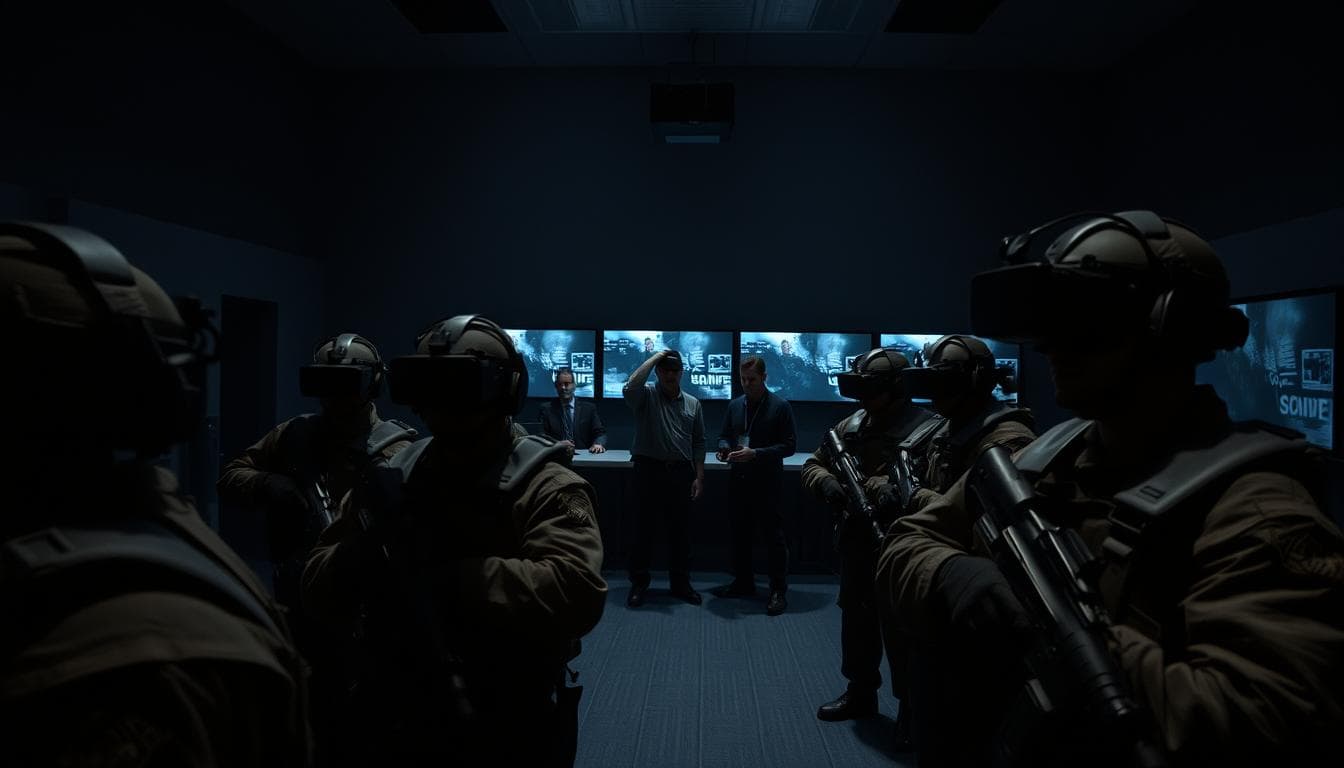
Meta's Metaverse: $100 Billion Later, Where Does VR Stand?
Meta has been investing heavily in its metaverse ambitions, with a staggering $100 billion spent so far. But what does this mean for the future of virtual reality?
The concept of the metaverse has been gaining traction, promising a more immersive and interactive online experience. As Meta continues to push the boundaries of this technology, the question remains: where does VR stand now?

With significant investments in the metaverse, Meta is shaping the future of online interactions. The current state of VR is a crucial aspect of this vision.
Key Takeaways
- Meta's investment in the metaverse totals $100 billion.
- The metaverse promises a more immersive online experience.
- VR is a crucial component of Meta's metaverse vision.
- The current state of VR is evolving rapidly.
- Meta's metaverse ambitions are shaping the future of online interactions.
The Birth of Meta's Metaverse Vision
The metaverse vision of Meta was born out of a strategic pivot from its origins as Facebook. This transformation was not merely a change in name but a comprehensive shift in the company's focus and direction.
From Facebook to Meta: A Strategic Pivot
The rebranding announcement in October 2021 marked a significant milestone in Meta's history. Mark Zuckerberg announced the change, emphasizing the company's new focus on building the metaverse.
The Rebranding Announcement
The decision to rebrand was made to reflect the company's expanded scope beyond social media. Meta's new identity was designed to encompass a broader range of technologies and services.
Strategic Reasons Behind the Change
The strategic reasons behind the rebranding included a desire to realign the company's brand identity with its evolving business scope. This change was also driven by the need to differentiate Meta from its social media roots.
Zuckerberg's $100 Billion Gamble
Mark Zuckerberg's investment in the metaverse is a significant bet on the future of technology. The initial investment projections were substantial, with estimates suggesting over $100 billion in expenditure.
Initial Investment Projections
| Year | Investment | Focus Area |
| 2021 | $10 Billion | VR Hardware |
| 2022 | $15 Billion | Software Development |
| 2023 | $20 Billion | Infrastructure |
Stakeholder Reactions
Stakeholder reactions to the massive investment were mixed, with some investors expressing concern over the high costs. However, Zuckerberg remained committed to the metaverse vision.
Understanding the Metaverse Concept
The metaverse, a term that's gained significant traction, represents a shared, immersive and interactive virtual real where users can create their own avatars and environments. This concept has been touted as the next evolution of the internet, promising a more engaging and interactive experience.
Defining the Metaverse
The metaverse is often described as a collective virtual shared space, merging physical and digital reality. It's designed to be a persistent, interactive, and immersive environment where users can engage in various activities, from socializing to entertainment.
Meta's Interpretation vs. Industry Definitions
Meta's interpretation of the metaverse focuses on its potential as a comprehensive virtual world, emphasizing social interaction and immersion. While this aligns with some industry definitions, others propose a more decentralized approach to the metaverse concept.
Historical Context of Virtual Worlds
The idea of virtual worlds isn't new; it has roots in science fiction and early online communities. Understanding this historical context is crucial to grasping the current state and future potential of the metaverse.
Meta's VR Hardware Evolution
Meta's foray into virtual reality began with a significant milestone: the acquisition of Oculus in 2014. This move marked the beginning of Meta's journey in developing VR technology that would eventually become a cornerstone of its metaverse vision.
From Oculus Acquisition to Quest
The acquisition of Oculus was a strategic move that brought in innovative VR technology and talent. Oculus had already made waves with its Oculus Rift headset, a PC-based VR solution.
The Oculus Rift Era
The Oculus Rift was one of the first high-end VR headsets available to consumers. It set a new standard for VR experiences with its advanced graphics and motion tracking.
Standalone VR Development
Meta then shifted its focus to developing standalone VR headsets, leading to the release of the Oculus Quest. This device represented a significant advancement, offering a VR experience without the need for a PC or console.
Quest 3 and Beyond: Current Offerings
The latest in Meta's VR lineup is the Quest 3, which boasts improved graphics, a more comfortable design, and enhanced functionality. This progression demonstrates Meta's commitment to advancing VR technology.
Sales Figures and Market Penetration
Meta's VR hardware has seen varying degrees of success. The original Quest was well-received, but specific sales figures are not publicly disclosed. However, we can analyze the market penetration through available data.
| Device | Release Year | Key Features |
| Oculus Rift | 2016 | High-end VR, PC-based |
| Oculus Quest | 2019 | Standalone VR, No PC required |
| Quest 3 | 2023 | Improved graphics, Comfortable design |
The Current State of Virtual Reality Technology
In 2023, VR technology is witnessing substantial advancements across various fronts. The technical capabilities of modern VR systems have improved significantly, offering users more immersive and interactive experiences.
Technical Capabilities in 2023
The current VR technology boasts impressive specifications. Display resolution has seen a notable increase, providing clearer and more detailed visuals. For instance, high-end VR headsets now offer resolutions that rival those of high-definition TVs.
Display Resolution and Field of View
Modern VR headsets have made significant strides in display resolution, with some models offering 4K resolution per eye. This enhancement, coupled with an increased field of view, allows for a more immersive experience. "The advancements in display technology are pushing the boundaries of what's possible in VR," says a leading VR hardware engineer.
Processing Power and Battery Life
Processing power is another area where VR technology has seen considerable improvements. More powerful processors enable smoother performance and more complex virtual environments. However, this increased power comes at the cost of battery life, which remains a challenge for many VR devices.
Comparing Meta's VR Tech to Competitors
Meta's VR technology, particularly with its Quest series, has been a significant player in the market. When compared to competitors like HTC and Valve, Meta's offerings stand out for their accessibility and user-friendly design. However, other manufacturers may offer more advanced technical specifications.
Key Technical Challenges Remaining
Despite the advancements, several technical challenges remain. These include improving battery life, reducing latency, and enhancing user comfort. Addressing these challenges will be crucial for the widespread adoption of VR technology.
As VR technology continues to evolve, we can expect to see further innovations that address these challenges and push the boundaries of what's possible in virtual reality.
Meta's Software Ecosystem
Meta's software ecosystem is a crucial component in the development of its metaverse vision. A robust ecosystem can drive user engagement and foster a community around Meta's VR platforms. This section will explore the key elements of Meta's software ecosystem, including its social VR platforms and content creation tools.
Horizon Worlds and Social VR Platforms
Horizon Worlds is a central part of Meta's social VR strategy, allowing users to interact in virtual environments. User engagement metrics are crucial in understanding the adoption and success of such platforms.
User Engagement Metrics
User engagement in Horizon Worlds is measured through various metrics, including time spent on the platform and interactions with other users.
- Daily active users have shown a steady increase since its launch.
- The platform has seen a significant rise in user-generated content.
Content Creation Tools
Horizon Worlds provides content creation tools that allow users to build and share their own experiences. These tools are designed to be user-friendly, encouraging more users to create content.
- Users can create and customize their own avatars and environments.
- The platform supports a wide range of user-generated content types.
App Store Performance and Developer Adoption
Meta's app store performance is another indicator of the health of its software ecosystem. The adoption of Meta's VR platforms by developers is crucial for the availability of diverse content.
Integration with Meta's Existing Platforms
The integration of Meta's VR platforms with its existing social media platforms can enhance user experience and drive adoption.
By focusing on its software ecosystem, Meta aims to create a comprehensive and engaging metaverse experience. The success of this ecosystem will be crucial in determining the overall success of Meta's metaverse vision.
Financial Reality Check: ROI on Meta's Investment
As Meta continues to pour billions into its metaverse vision, the financial returns remain a topic of debate. Reality Labs, Meta's division focused on VR and AR, has been at the center of this significant investment.
Reality Labs' Financial Performance
Quarterly Losses and Spending Patterns
Reality Labs has consistently reported substantial quarterly losses. In the most recent quarter, the division reported a loss of $4.8 billion, bringing the total loss for the year to $16.1 billion. This spending pattern indicates Meta's commitment to developing its metaverse capabilities, despite the short-term financial strain.
Revenue Streams and Growth Areas
Despite the losses, Reality Labs has seen growth in certain revenue streams. The Quest series of VR headsets has been particularly successful, with sales figures contributing significantly to the division's revenue. Other growth areas include enterprise solutions and VR software development.
| Year | Revenue | Losses |
| 2022 | $2.2 billion | $10.2 billion |
| 2023 | $3.5 billion | $16.1 billion |
Investor Reactions and Market Sentiment
Investor reactions to Reality Labs' financial performance have been mixed. While some investors remain confident in Meta's long-term strategy, others have expressed concern over the scale of the losses. Market sentiment has been cautious, with many analysts calling for greater transparency regarding the financials of Reality Labs.
Cost-Cutting Measures and Strategic Adjustments
In response to the financial pressures, Meta has implemented cost-cutting measures across Reality Labs. These include restructuring efforts and a focus on more profitable projects. Strategic adjustments have also been made to prioritize areas with higher growth potential, such as enterprise VR solutions.

Consumer Adoption Challenges
Despite significant investments in VR technology, consumer adoption remains a significant challenge for Meta's metaverse ambitions. Several factors contribute to this challenge, including high price points, accessibility barriers, and user experience issues.
Price Points and Accessibility Barriers
The cost of VR headsets and compatible hardware remains a significant barrier to adoption. High-end VR devices are often expensive, making them inaccessible to many potential users. Additionally, the requirement for powerful computers or gaming consoles to run VR applications can further increase the overall cost.
User Experience Issues
User experience plays a crucial role in VR adoption. Issues such as motion sickness and comfort during extended use are significant concerns.
Motion Sickness and Comfort
Motion sickness in VR is caused by the disconnect between what the user sees and what their body feels. Improving comfort during extended VR sessions is essential for increasing adoption rates.
Interface and Usability Concerns
The complexity of VR interfaces can also deter users. Intuitive and user-friendly interfaces are crucial for making VR technology more accessible to a broader audience.
Content Availability and Quality
The availability and quality of VR content are vital for sustaining user interest. A diverse range of high-quality content can encourage more users to adopt VR technology.
Virtual Reality in Enterprise and Education
The enterprise and education sectors are increasingly adopting virtual reality technology, driven by its potential to revolutionize training, collaboration, and learning experiences. This shift is part of a broader trend where VR is being recognized for its ability to provide immersive, interactive environments that can significantly enhance both business operations and educational outcomes.
Business Applications and Adoption Rates
Businesses are leveraging VR for various purposes, including training and simulation, as well as remote collaboration.
Training and Simulation Use Cases
VR is being used to create realistic training simulations that can reduce costs and improve outcomes in industries such as healthcare, manufacturing, and aviation.
Remote Collaboration Tools
VR enables teams to collaborate more effectively, regardless of their physical location, by creating virtual workspaces that simulate in-person interactions.
Educational Use Cases and Potential
In education, VR is being explored for its potential to enhance learning experiences by providing interactive, immersive environments that can make complex concepts more accessible.
Meta's Enterprise Strategy
Meta is focusing on developing its VR technology to cater to the enterprise sector, recognizing the significant potential for growth in this area. By providing robust VR solutions, Meta aims to support businesses and educational institutions in their adoption of this technology.
Competing Visions: Apple, Microsoft, and Others
As Meta continues to invest heavily in its metaverse vision, other tech giants are emerging as significant competitors in the VR and AR space. The landscape is diversifying, with various companies bringing their unique approaches to immersive technologies.
Apple Vision Pro: A Different Approach
Apple's entry into the VR market is highly anticipated, with the Apple Vision Pro expected to set new standards. Key features include advanced eye-tracking technology and high-resolution displays.
Technical Specifications and Positioning
- High-resolution OLED displays
- Advanced eye-tracking system
- Integration with other Apple devices
Pricing Strategy and Target Market
Apple is known for premium pricing, and the Vision Pro is expected to follow suit, targeting consumers who are deeply invested in the Apple ecosystem.
Microsoft's Mixed Reality Strategy
Microsoft is taking a different approach with its Mixed Reality (MR) platform, focusing on enterprise applications. Their technology integrates virtual objects with the real world, offering unique solutions for businesses.
Other Key Players in the Space
Other significant players are also making their mark:
Sony's PSVR 2
Sony's PSVR 2 is a major contender in the consumer VR market, offering high-quality VR experiences for gamers.
HTC, Pico, and Other Competitors
- HTC Vive: Known for high-end VR solutions
- Pico: Focuses on consumer VR with a range of devices

The competition in the VR and AR space is heating up, with each player bringing unique strengths to the table. As these technologies continue to evolve, consumers and businesses alike stand to benefit from the innovations being driven by this competition.
The Metaverse Beyond VR: AR and Mixed Reality
Beyond virtual reality, Meta's metaverse encompasses a broader spectrum of technologies, including augmented reality and mixed reality. These technologies are crucial for creating a seamless and interactive experience that blends the digital and physical worlds.
Augmented Reality Integration
Augmented reality (AR) overlays digital information onto the real world, enhancing the user's experience by providing interactive and real-time data. Meta is actively working on integrating AR into its metaverse, aiming to revolutionize how users interact with their surroundings.
The Spectrum of Immersive Technologies
The metaverse is built on a spectrum of immersive technologies, ranging from fully immersive VR to AR and mixed reality (MR). MR combines elements of both AR and VR, allowing for more complex interactions between the digital and physical worlds. Understanding this spectrum is key to grasping Meta's overall strategy.
Meta's Ray-Ban Smart Glasses and AR Strategy
Meta's release of Ray-Ban Smart Glasses is a significant step in its AR strategy. These glasses represent a more subtle and accessible form of AR, merging everyday eyewear with advanced technology. This move indicates Meta's commitment to making AR a mainstream component of its metaverse vision.
Future Outlook: Where Virtual Reality Is Headed
The virtual reality landscape is on the cusp of a significant transformation, driven by advancements in technology and shifting market dynamics. As we look to the future, several key areas are poised for significant development.
Technological Roadmap
The next generation of VR hardware is expected to bring significant improvements in resolution, field of view, and user comfort. Next-generation VR headsets are likely to incorporate advanced technologies such as eye-tracking, improved controllers, and enhanced graphics processing.
Next-Generation Hardware Expectations
- Higher resolution displays for more realistic visuals
- Advanced haptic feedback systems for improved immersion
- Longer battery life and more comfortable designs
Software and Content Evolution
As VR hardware improves, we can expect to see more sophisticated software and content. This includes more complex and interactive virtual environments, as well as a broader range of applications beyond gaming.
Market Projections
The VR market is expected to grow significantly in the coming years, driven by increasing adoption in both consumer and enterprise sectors. Market research suggests that the global VR market could reach $44.7 billion by 2024, up from $6.1 billion in 2020.
Potential Breakthrough Applications
Some of the most promising applications for VR include education, healthcare, and remote collaboration. For instance, VR can be used to create immersive training simulations or virtual therapy sessions.
Conclusion: Has Meta's Bet Paid Off?
Meta's $100 billion investment in the metaverse and VR represents a significant gamble on the future of technology and social interaction. As the company continues to evolve its VR hardware and software, the question remains: has Meta's bet paid off?
The current state of VR technology shows promising advancements, with Meta's Quest series leading the consumer market. However, challenges such as high price points, limited content, and user experience issues continue to hinder widespread adoption. Despite these hurdles, Meta's focus on enterprise and education has shown potential for growth.
The metaverse outcome is still uncertain, with competing visions from Apple, Microsoft, and other tech giants. Meta's bet on VR and the metaverse is a long-term play, with the company's technological roadmap and market projections indicating a future where immersive technologies become increasingly integral to daily life.
While it's too early to declare Meta's bet a definitive success, the company's pioneering efforts in VR and the metaverse are likely to play a crucial role in shaping the future of these technologies. As VR conclusion draws near, one thing is clear: Meta's investment will continue to influence the trajectory of the metaverse outcome.