Master Your Interview: Practice with Virtual Reality Job Simulations
Anonymous
Master Your Interview: Practice with Virtual Reality Job Simulations
Walking into a big job interview often feels like stepping onto a stage without a script. Your heart races, and your palms get sweaty while you wait for that first tough question. Luckily, modern technology now offers a way to calm those nerves before you even step foot in the office.
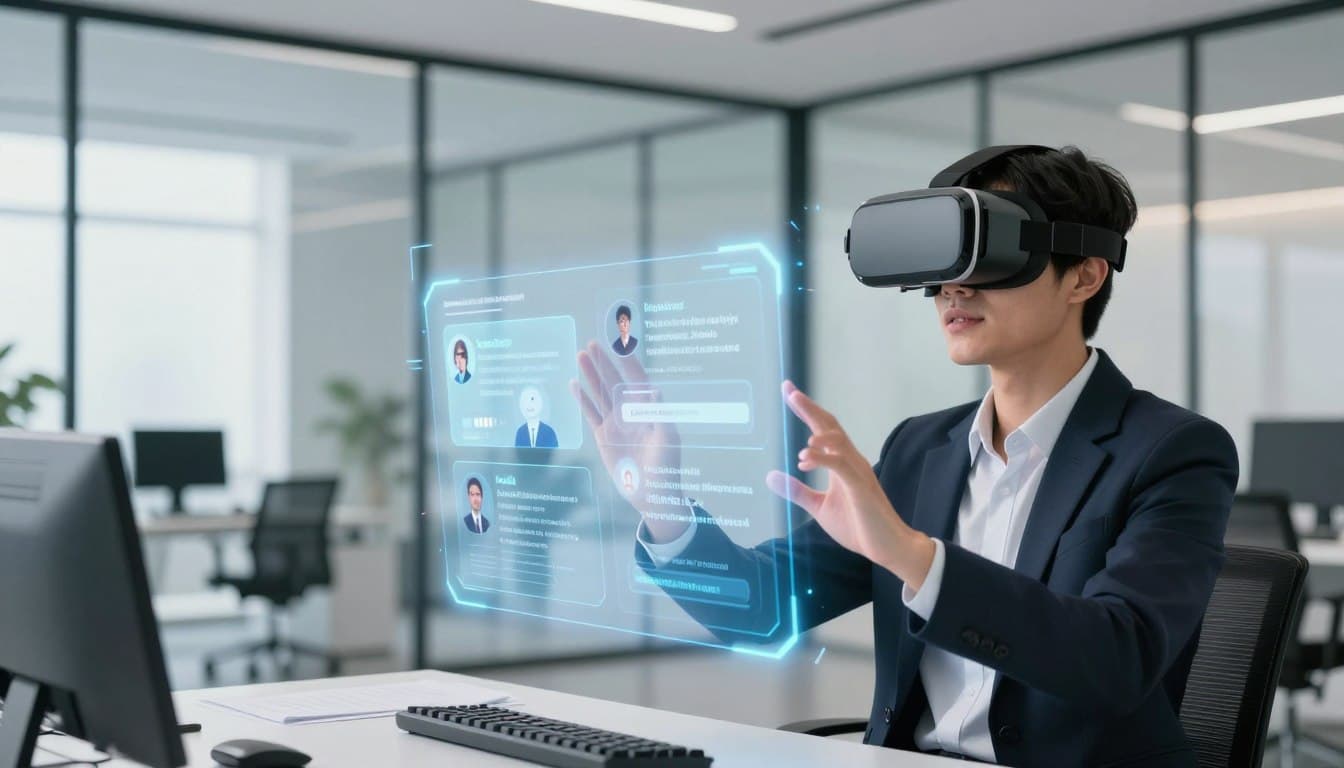
Using virtual reality is changing how we approach our career goals today. These VR job simulations allow you to practice in a safe space that feels incredibly real. You can face a panel of digital bosses and refine your answers until they are perfect.

This new method of interview preparation helps you build genuine confidence. Instead of just reading tips, you get to live the experience. It makes the actual meeting feel like a second visit rather than a scary first encounter.
Embrace this tool to ensure you stand out from the crowd and land your dream role. With the right practice, you can turn any high-pressure conversation into a major success.
Key Takeaways
- Reduce anxiety by practicing in a realistic digital environment.
- Improve your interview preparation with hands-on experience.
- Get comfortable with difficult questions before the real meeting.
- Build muscle memory for better body language and eye contact.
- Master your professional pitch in a low-risk setting.
- Gain a competitive edge by using the latest career technology.
1. Why Traditional Interview Preparation Isn't Enough Anymore
The traditional approach to interview preparation is no longer enough to guarantee success in modern job interviews. As job markets evolve and become more competitive, candidates need more effective tools to stand out.
The Practice-Performance Gap
Traditional interview preparation often involves reviewing common interview questions and perhaps conducting a mock interview with a friend or mentor. However, this method creates a practice-performance gap. The controlled environment of a mock interview rarely simulates the stress and unexpected questions of a real interview.
The practice-performance gap refers to the difference between a candidate's performance in a simulated interview setting and their performance in an actual job interview. This gap occurs because traditional preparation methods lack the realism and unpredictability of real interviews.
Interview Anxiety and Its Real-World Impact
Interview anxiety is a significant barrier to success for many job candidates. Traditional preparation methods often fail to address this anxiety effectively, leading to poor performance in actual interviews. Research has shown that high levels of anxiety can impair cognitive function, making it harder for candidates to respond effectively to interview questions.
The Missing Element in Standard Preparation
Standard interview preparation typically lacks immersive, realistic practice. This is where innovative technologies like Virtual Reality (VR) can make a significant difference. VR job interview simulations offer a realistic and immersive environment for candidates to practice their interview skills.
Here's a comparison of traditional interview preparation methods versus VR-based preparation:
| Aspect | Traditional Preparation | VR-Based Preparation |
| Realism | Limited | High |
| Customization | Limited | High |
| Anxiety Reduction | Limited | Significant |
| Feedback | Subjective | Data-Driven |
In conclusion, traditional interview preparation methods have significant limitations, including the practice-performance gap and inadequate addressing of interview anxiety. Innovative approaches like VR job interview simulations can provide a more effective and immersive preparation experience.
2. Understanding VR Job Interview Simulations
VR job simulations offer a cutting-edge approach to interview preparation, making it more immersive and effective. These simulations are designed to mimic real-life interview scenarios, providing a realistic and engaging experience for job seekers.
What Makes VR Training Different
Unlike traditional interview preparation methods, VR training immerses candidates in a simulated environment that closely replicates the actual interview experience. This immersive nature helps in reducing anxiety and improving performance.
Key features of VR training include:
- Realistic scenarios that mimic actual interviews
- Interactive elements that engage the candidate
- Personalized feedback based on the candidate's performance
The Technology Creating Realistic Interview Experiences
The technology behind VR interview simulations involves advanced graphics, AI, and sometimes even eye-tracking and voice analysis.
This combination creates a highly realistic and interactive environment.
These technologies work together to provide a comprehensive assessment of a candidate's interview skills, including body language, tone of voice, and responses to questions.
From Gaming to Professional Development
Originally developed for gaming, VR technology has evolved to be used in various professional fields, including education and training. Its application in job interview simulations is a significant step forward in preparing candidates for the job market.
The transition from gaming to professional development has made VR a versatile tool, capable of adapting to different training needs, including interview preparation.
3. Powerful Benefits of Using Virtual Reality for Interview Preparation
Virtual reality is transforming the way we prepare for job interviews by offering a unique set of benefits that traditional methods can't match. This innovative technology provides a comprehensive and immersive experience that can significantly enhance one's interview skills and overall career development.
Practice Without Pressure or Judgment
One of the most significant advantages of VR interview simulations is the ability to practice in a completely judgment-free environment. This allows individuals to make mistakes and learn from them without the fear of real-world consequences, thereby reducing interview anxiety and improving their performance over time.
Data-Driven Insights on Your Performance
VR interview tools provide detailed analytics and feedback on various aspects of a candidate's performance, such as body language, tone of voice, and response times. This data-driven approach enables individuals to identify areas for improvement and work on them effectively.
Repetition That Builds Genuine Confidence
Repetition is key to mastering any skill, and interview skills are no exception. VR simulations allow for repeated practice, helping build genuine confidence by familiarizing candidates with different interview scenarios and formats.
Affordable Access to High-Quality Training
Traditionally, high-quality interview preparation required expensive coaching or training programs. VR technology makes it possible to access similar, if not superior, training at a fraction of the cost, democratizing access to effective interview preparation.
| Benefit | Description | Impact |
| Practice Without Pressure | Judgment-free environment for interview practice | Reduced anxiety, improved performance |
| Data-Driven Insights | Detailed analytics on performance aspects | Targeted improvement areas |
| Repetition for Confidence | Repeated practice in various scenarios | Enhanced confidence and preparedness |
| Affordable Training | Cost-effective access to high-quality training | Democratized access to effective preparation |
4. How VR Interview Simulations Actually Work
The mechanics of VR interview simulations involve advanced AI and real-time analysis to provide a comprehensive preparation experience. These simulations are designed to mimic real-life interview scenarios, allowing candidates to practice and improve their skills in a controlled environment.
Getting Started: The Initial Setup
To begin using VR interview simulations, users typically need to set up a VR headset and download the relevant software or application. The initial setup process is usually straightforward and guided by on-screen instructions.
AI Interviewers and Adaptive Scenarios
One of the key features of VR interview simulations is the use of AI interviewers that can conduct mock interviews. These AI systems are capable of adapting to the user's responses, providing a more realistic and challenging experience.

Real-Time Analysis and Feedback Systems
During the simulation, the AI system analyzes the user's performance in real-time, providing instant feedback on aspects such as body language, tone of voice, and content of answers. This real-time feedback is invaluable for identifying areas for improvement.
Video Review and Self-Assessment Tools
After the simulation, users can review their performance through video recordings. This allows for self-assessment and further refinement of their interview skills. Many platforms also offer additional tools for tracking progress over time.
| Feature | Description | Benefit |
| AI Interviewers | Conduct realistic mock interviews | Improves confidence and preparedness |
| Real-Time Feedback | Analyzes performance during the simulation | Identifies areas for improvement instantly |
| Video Review | Allows users to review their performance | Enhances self-assessment capabilities |
5. Types of Interview Scenarios You Can Practice
VR technology allows job seekers to engage in diverse interview scenarios, from behavioral questions to technical assessments. This versatility is crucial in preparing for the unexpected nature of real interviews.
Behavioral and Competency-Based Interviews
Behavioral interviews focus on past experiences as a way to predict future performance. VR simulations can recreate these types of interviews, allowing candidates to practice telling their stories effectively. Competency-based interviews assess specific skills required for the job, and VR can help candidates fine-tune these skills in a simulated environment.
Technical and Skills Assessment Simulations
For technical roles, VR can simulate coding challenges, software demonstrations, or other technical assessments. This hands-on practice helps candidates become more comfortable with the format and content of technical interviews.
Panel and Group Interview Settings
VR can also simulate panel interviews, where multiple interviewers ask questions, and group interviews, where candidates are assessed alongside other applicants. Practicing these scenarios can help reduce anxiety and improve performance in actual interviews.
Industry-Specific Interview Scenarios
Different industries have unique interview processes and challenges. VR training can be tailored to specific industries, providing a more relevant and effective preparation experience.
Corporate Office Environments
For corporate roles, VR can simulate a professional office setting, complete with a conference room interview or a casual chat with a potential supervisor.
Healthcare and Medical Settings
Healthcare professionals can practice interviews in a simulated hospital or clinical environment, making the experience more relatable and realistic.
Retail and Customer-Facing Roles
For those in retail or customer-facing positions, VR can mimic a store environment or a customer service scenario, helping candidates prepare for the interpersonal aspects of the job.
As noted by career development experts, "Practicing in an environment that closely mimics the actual interview setting can significantly boost a candidate's confidence and performance."
"The key to acing an interview is not just knowing the right answers, but also being comfortable with the format and setting."
— Career Coach Insights
| Interview Scenario | VR Simulation Benefit |
| Behavioral Interviews | Improves storytelling and experience sharing |
| Technical Assessments | Enhances technical skill demonstration |
| Panel Interviews | Reduces anxiety with multiple interviewers |
6. Getting Started with VR Interview Practice
To get started with VR interview practice, you'll need to understand both the hardware and software options available. This knowledge will help you make informed decisions about the tools that best suit your needs.
Essential Hardware You'll Need
Choosing the right VR hardware is crucial for an effective interview practice experience. The market offers various options, ranging from standalone headsets to PC-powered and console-based systems.
Standalone Headsets: Meta Quest 3 and Meta Quest 2
Standalone headsets, such as the Meta Quest 3 and Meta Quest 2, offer convenience and portability. They don't require a PC or console to operate, making them highly accessible.
PC-Powered Options: HTC Vive Pro 2 and Valve Index
For a more advanced VR experience, PC-powered headsets like the HTC Vive Pro 2 and Valve Index provide higher resolution and more complex tracking capabilities.
Console-Based: PlayStation VR2
Console-based VR systems, such as the PlayStation VR2, are another viable option, especially for those already invested in a gaming ecosystem.
Top VR Interview Training Platforms
Beyond the hardware, the right training platform is essential for effective VR interview practice. Several platforms specialize in interview preparation.
Mursion: Avatar-Based Human Interaction
Mursion offers avatar-based human interaction, allowing users to practice interviews with realistic, AI-driven avatars.
Talespin: AI-Powered Conversation Practice
Talespin provides AI-powered conversation practice, helping users improve their responses to common interview questions.
VirtualSpeech: Public Speaking and Interview Skills
VirtualSpeech focuses on both public speaking and interview skills, offering a comprehensive training solution.
| Platform | Key Features | Specialization |
| Mursion | Avatar-based interaction, realistic scenarios | Human interaction |
| Talespin | AI-powered conversations, personalized feedback | Conversation practice |
| VirtualSpeech | Public speaking, interview skills, virtual environments | Public speaking and interviews |
7. Proven Strategies to Maximize Your VR Training
To get the most out of your VR interview practice, it's essential to implement a strategic approach that maximizes your training effectiveness. By doing so, you can significantly enhance your performance and confidence in real interviews.
Define Specific Improvement Goals
Before you begin your VR training, identify the areas you need to improve. Are you struggling with answering behavioral questions, or do you need to work on your body language? Setting specific, measurable goals will help you focus your practice and track your progress.
Analyze Your Performance Data
One of the key benefits of VR training is the ability to receive detailed feedback on your performance. Use this data to understand your strengths and weaknesses. Analyze your responses, body language, and speech patterns to identify areas for improvement.
Progress from Easy to Challenging Scenarios
Start with simpler interview scenarios and gradually move to more complex ones. This progressive training approach helps build your confidence and prepares you for a variety of interview situations.
Integrate VR with Real-World Practice
While VR training is highly effective, it's essential to complement it with real-world practice. Practice your interview skills with friends, family, or mentors to apply what you've learned in VR simulations.
By incorporating these strategies into your VR training, you can maximize your improvement and achieve better results in your interviews.
8. Choosing the Best VR Platform for You
As you explore VR solutions for interview practice, it's essential to evaluate their features and pricing models. With several platforms available, each offering unique tools and experiences, making an informed decision is crucial.
Features and Customization
When comparing VR platforms, consider the range of features they offer. Some key aspects to look for include:
- Customizable interview scenarios that match your industry or job role.
- Real-time feedback and performance analysis.
- User-friendly interfaces that simplify navigation and setup.
These features can significantly enhance your practice experience and effectiveness.
Pricing and Subscription Models
Understanding the pricing structure of VR platforms is vital. Some platforms offer:
- Monthly subscriptions for ongoing access.
- One-time purchase options for permanent access.
- Free trials or demos to test the platform.
Consider your budget and how often you plan to use the platform when choosing a pricing model.
User Experiences and Success Rates
Reading reviews and success stories from other users can provide valuable insights. Look for:
- Testimonials from users who have achieved positive outcomes.
- Reviews that highlight the platform's strengths and weaknesses.

By carefully evaluating these factors, you can select a VR platform that best suits your interview preparation needs and enhances your chances of success.
Transform Your Interview Experience with Virtual Reality
Virtual reality is revolutionizing the way we prepare for job interviews. By providing a realistic and immersive experience, VR interview simulations help individuals build confidence and improve their performance.
Through VR training, you can practice without pressure, receive data-driven insights on your performance, and develop the skills needed to succeed in your desired career. Whether you're preparing for a technical interview or a behavioral assessment, VR interview simulations offer a comprehensive and effective way to enhance your interview skills.
As the job market continues to evolve, it's essential to stay ahead of the curve. By incorporating virtual reality into your interview preparation, you can gain a competitive edge and achieve your career development goals.