Master New Skills: VR Job Training Simulations Explained
The modern workforce is constantly evolving, and companies are looking for innovative ways to train their employees. One technology that's gaining traction is VR training, which provides immersive and interactive experiences.

Job training simulations are becoming increasingly popular across various industries, allowing employees to practice and learn new skills in a controlled environment. This approach not only enhances knowledge retention but also reduces the risk of errors in real-world situations.
As the demand for skilled workers continues to grow, VR job training simulations are poised to play a crucial role in workforce development.
Key Takeaways
- VR training provides immersive and interactive experiences for employees.
- Job training simulations are becoming increasingly popular across various industries.
- VR training enhances knowledge retention and reduces errors in real-world situations.
- VR job training simulations are crucial for modern workforce development.
- Companies are adopting VR training to stay ahead in the competitive market.
The Evolution of Workplace Training
The evolution of workplace training reflects broader changes in technology, learner expectations, and organizational needs. As businesses strive to stay competitive, the methods used to train employees have become increasingly sophisticated.
Traditional Training Methods and Their Limitations
Traditional training methods, such as classroom instruction and on-the-job training, have been the cornerstone of workforce development for decades. However, these methods have several limitations, including limited engagement and lack of personalization. Classroom training can be costly and may not accommodate different learning styles, while on-the-job training can be hit-or-miss, depending on the quality of supervision.
The Digital Transformation of Learning
The digital transformation of learning has revolutionized workplace training, offering more immersive and interactive experiences. Technologies like Virtual Reality (VR) are at the forefront of this change, providing simulated environments where employees can practice and learn without the risks associated with real-world training. This shift not only enhances learning outcomes but also improves workforce development by making training more accessible and effective.
By embracing digital transformation, organizations can create a more agile and adaptable workforce, better equipped to meet the challenges of a rapidly changing business environment.
What is Virtual Reality and How Does It Transform Learning?
Virtual reality (VR) is revolutionizing the way we learn by providing immersive experiences that simulate real-world environments. This technology is not just about gaming; it's increasingly being used in educational and training contexts to enhance learning outcomes.
Defining Virtual Reality Technology
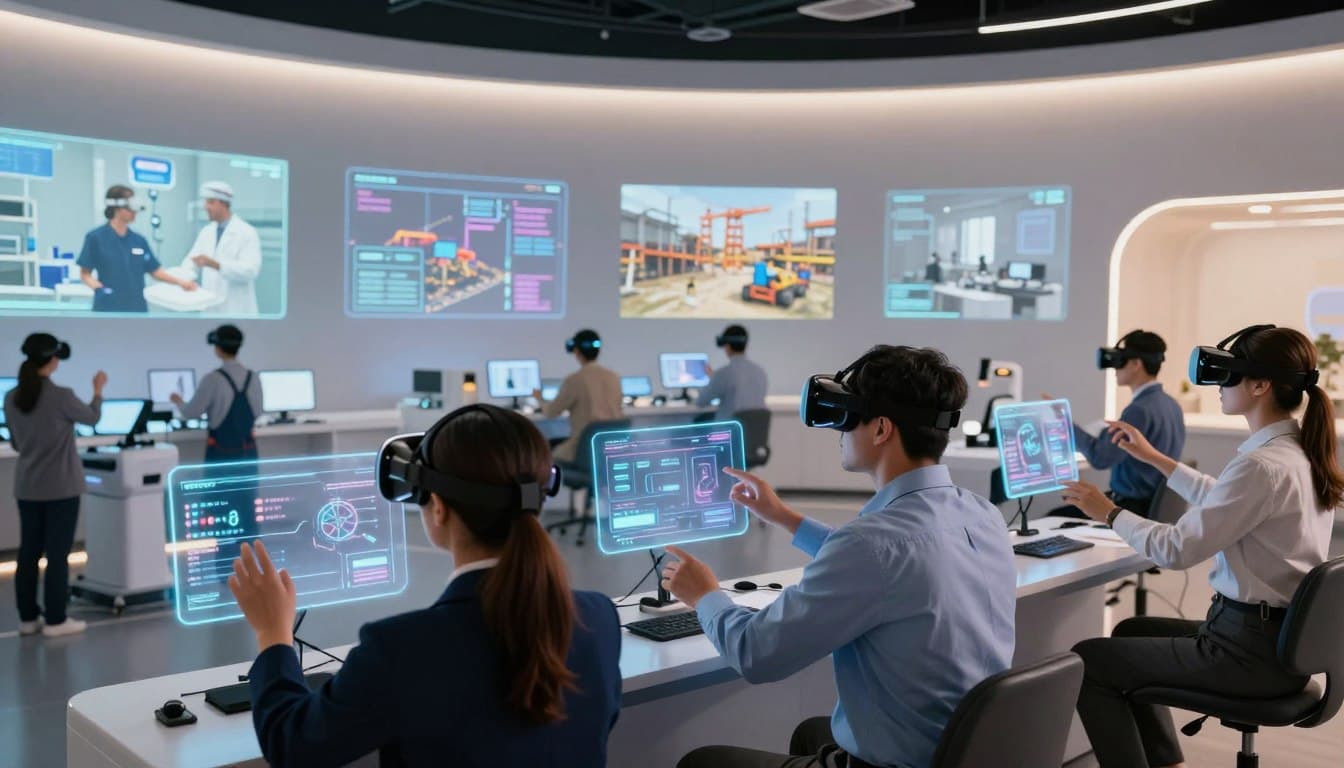
Virtual reality technology involves the use of computer-generated simulations of three-dimensional environments that can be experienced and interacted with in a seemingly real or physical way. VR headsets and controllers are commonly used to create an immersive experience, allowing users to manipulate objects and navigate through virtual spaces.
The Psychology of Immersive Learning
The psychology behind immersive learning suggests that when learners are fully engaged in an interactive environment, their ability to absorb and retain information improves. Immersive experiences can enhance emotional connection and motivation, leading to a more effective learning process.
VR vs. AR vs. Mixed Reality in Training
While VR creates a fully virtual environment, Augmented Reality (AR) overlays digital information onto the real world. Mixed Reality (MR) combines elements of both, allowing real-world and virtual objects to interact. Each technology has its unique applications in training, depending on the specific needs and objectives.
Understanding the differences between VR, AR, and MR is crucial for organizations looking to implement the most appropriate technology for their training needs. By choosing the right technology, organizations can create more engaging, effective, and safe training environments.
Key Benefits of VR Training Simulations
VR training simulations offer a multitude of benefits that enhance the learning experience. These benefits are transforming the way organizations approach training and development.
Enhanced Retention and Engagement
VR training simulations increase learner engagement through immersive and interactive experiences. This leads to higher retention rates as learners are more likely to remember information presented in an engaging and interactive manner.
Risk-Free Practice Environment
VR provides a safe and controlled environment for learners to practice and apply their skills without the risk of real-world consequences. This is particularly valuable in high-stakes professions where mistakes can have serious repercussions.
Cost and Time Efficiency
By reducing the need for physical equipment and travel, VR training simulations can significantly lower training costs and reduce the time required for training. This makes it an attractive option for organizations looking to optimize their training programs.
Personalized Learning Experiences
VR training allows for personalized learning paths tailored to the individual learner's needs and pace. This ensures that learners can focus on areas where they need improvement, making the training more effective.
Industries Revolutionized by Virtual Reality Training
The impact of VR on job training is being felt across multiple sectors, revolutionizing traditional methods. Various industries are now leveraging VR to create immersive, engaging, and effective training simulations for their employees.
Healthcare and Medical Training
VR is being used in healthcare to train medical professionals in a risk-free environment. Simulations can mimic surgeries, patient care scenarios, and emergency responses, allowing for realistic training without real-world consequences.
Manufacturing and Industrial Skills
In manufacturing, VR training simulations are used to teach complex assembly processes, equipment operation, and safety procedures. This immersive training enhances worker competence and reduces on-the-job errors.
Aviation and Transportation
Aviation and transportation industries utilize VR for training pilots, drivers, and maintenance personnel. Simulations can recreate various scenarios, including emergency situations, to prepare employees for real-world challenges.
Military and Defense Applications
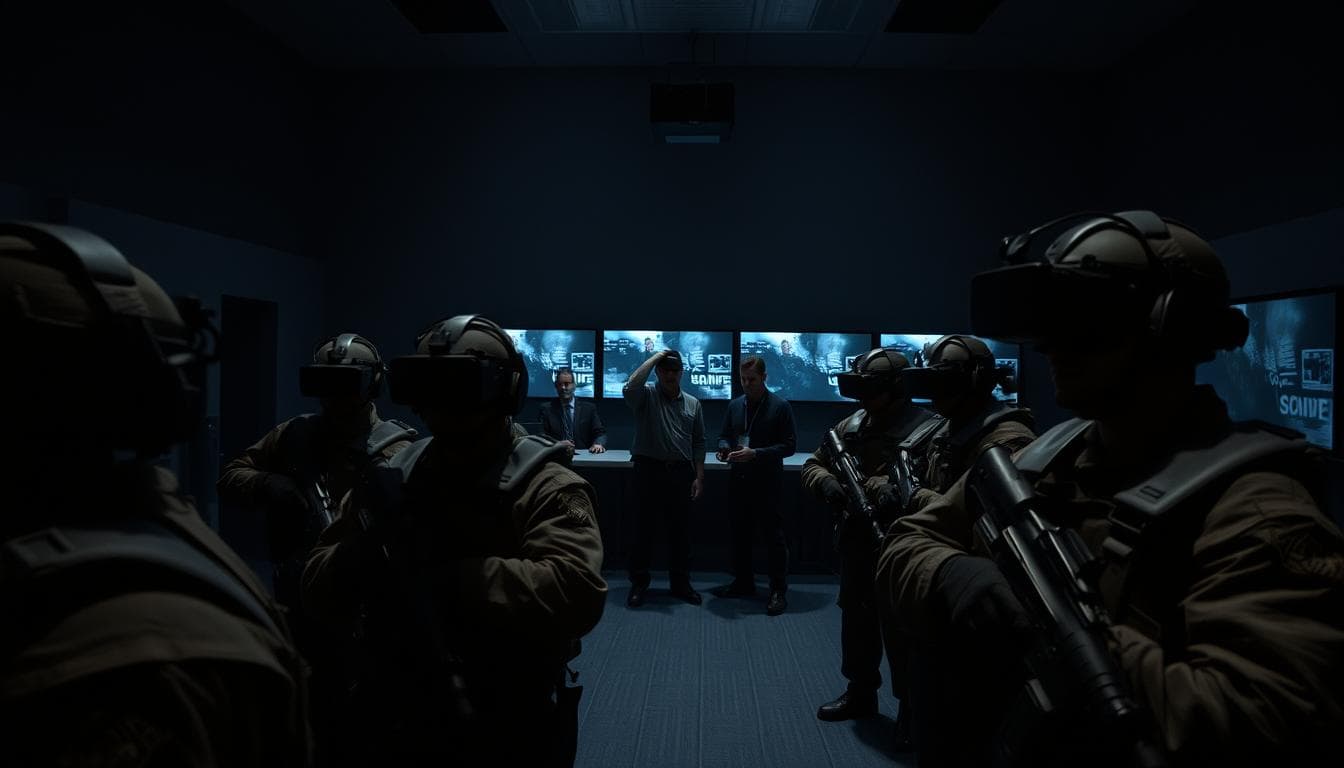
The military uses VR for training in combat scenarios, tactical operations, and equipment handling. VR simulations provide a realistic and immersive environment for soldiers to practice and hone their skills.
Retail and Customer Service
Retailers are adopting VR to train customer service representatives in handling various customer scenarios, improving their response to different situations and enhancing overall customer experience.
| Industry | VR Training Applications | Benefits |
| Healthcare | Surgical simulations, patient care | Risk-free training, improved competence |
| Manufacturing | Assembly processes, equipment operation | Enhanced worker skills, reduced errors |
| Aviation & Transportation | Pilot training, driver training | Improved safety, preparedness for emergencies |
The Anatomy of Effective VR Training Programs
The anatomy of successful VR training simulations involves several key components. Effective VR training programs are designed to provide immersive, interactive experiences that enhance learning and retention.
Scenario Design and Development
Scenario design is crucial in VR training. It involves creating realistic environments that simulate real-world conditions.
Creating Realistic Environments
Realistic environments in VR training help learners become fully immersed in the experience. This can be achieved through detailed graphics and accurate sound design, making the simulation feel more authentic.
Designing Learning Objectives
Clear learning objectives are essential in VR training scenario design. These objectives guide the development of the simulation, ensuring it meets specific educational goals and outcomes.
Performance Metrics and Feedback Systems
To ensure the effectiveness of VR training, it's crucial to have robust performance metrics and feedback systems in place. These systems track learner performance, providing valuable insights into their progress and areas for improvement.
By incorporating these elements, VR training programs can offer personalized learning experiences that are both engaging and effective. The use of performance metrics allows for continuous improvement of the training simulations.
Implementing Virtual Reality Training in Your Organization
As organizations look to enhance their training programs, integrating VR technology has become an increasingly attractive option. The key to successful implementation lies in understanding the requirements and potential benefits of VR training.
Hardware and Software Requirements
To implement VR training, organizations need to invest in the right hardware and software. This includes VR headsets, controllers, and compatible computers or gaming consoles. The choice of hardware depends on the specific training needs and the level of immersion required. For instance, high-end VR headsets like Oculus or HTC Vive offer advanced features such as hand tracking and spatial audio, enhancing the training experience.
On the software side, organizations can choose from a variety of VR training platforms and content development tools. Some popular options include Unity and Unreal Engine, which allow for the creation of customized VR experiences. When selecting software, it's essential to consider factors such as ease of use, compatibility with existing systems, and the level of support provided by the vendor.
| Hardware Component | Description | Cost Estimate |
| VR Headset | High-resolution display for immersive experience | $500-$1,000 |
| Controllers | Handheld devices for interacting with VR environment | $100-$300 |
| Computer/Console | Processing unit for VR applications | $800-$2,000 |
Integration with Existing Training Programs
One of the significant advantages of VR training is its ability to complement existing training programs. Organizations can integrate VR simulations with traditional training methods to create a blended learning approach. This can involve using VR for specific skills training, while other aspects are covered through classroom instruction or online modules.

Measuring ROI on VR Training Investments
To justify the investment in VR training, organizations need to measure its effectiveness. Key performance indicators (KPIs) such as training time, error rates, and employee satisfaction can be used to assess the ROI. For example, a company might track the reduction in training time or the improvement in task completion rates after implementing VR training. By analyzing these metrics, organizations can determine the impact of VR training on their operations and make informed decisions about future investments.
By carefully planning and executing VR training implementation, organizations can reap significant benefits, including enhanced employee performance and reduced training costs.
Overcoming Challenges in VR Training Adoption
While VR training offers numerous benefits, its adoption is not without obstacles. Organizations must navigate several challenges to successfully integrate VR training into their programs.
Technical Barriers and Solutions
One of the primary challenges is technical barriers, including hardware and software compatibility issues. To overcome these, organizations can invest in scalable VR solutions and ensure that their IT infrastructure can support VR applications. Regular updates and maintenance are also crucial.
| Technical Barrier | Solution |
| Hardware Compatibility | Invest in scalable VR hardware |
| Software Compatibility | Ensure VR software is compatible with existing systems |
Employee Resistance and Change Management
Employee resistance is another significant challenge. To address this, organizations should implement comprehensive change management strategies, including training sessions and clear communication about the benefits of VR training. Involving employees in the implementation process can also help reduce resistance.
Effective change management is key to overcoming employee resistance.
Accessibility and Inclusivity Considerations
Ensuring that VR training is accessible and inclusive is crucial. Organizations should consider developing VR content that caters to diverse needs, including those with disabilities. This can involve incorporating features such as audio descriptions or customizable settings.
Prioritizing accessibility can enhance the overall effectiveness of VR training programs.
Case Studies: Success Stories of VR Job Training
The effectiveness of VR in job training is best illustrated through real-world examples. Several leading companies have adopted VR training simulations, achieving significant improvements in employee performance and safety.
Walmart's VR Employee Training Initiative
Walmart has implemented VR training for its employees, focusing on customer service and operational skills. Using VR, Walmart aims to enhance the shopping experience and improve employee confidence. Results include improved customer satisfaction and reduced training time.
UPS Driver Safety Training
UPS has developed a VR training program to improve driver safety. The simulation focuses on potential hazards and safe driving practices. This innovative approach has led to a reduction in accidents and improved driver performance.

Medical Professionals Using VR for Surgical Training
Medical institutions are utilizing VR to train surgeons, allowing for practice in a risk-free environment. VR training has been shown to improve surgical skills and reduce complications.
Boeing's Aircraft Assembly Training
Boeing has implemented VR training for aircraft assembly, enhancing the precision and efficiency of their assembly processes. The use of VR has resulted in significant time savings and improved accuracy.
These case studies demonstrate the versatility and effectiveness of VR job training across various industries. By adopting VR training, companies can achieve improved performance, safety, and efficiency.
The Future of Virtual Reality in Workforce Development
As we look to the future, virtual reality is poised to revolutionize workforce development in unprecedented ways. The continuous advancements in VR technology are not only enhancing the learning experience but also making it more accessible and effective.
The future of VR in workforce development is closely tied to emerging technologies and their integration. One of the key areas of focus is the incorporation of new technologies that can further enhance the immersive learning experience.
Emerging Technologies and Integration
The integration of 5G technology with VR is expected to significantly improve the quality and accessibility of VR training simulations. This combination will enable faster data transfer rates, reducing latency and enhancing the overall user experience.
AI and Machine Learning in VR Training
Artificial Intelligence (AI) and Machine Learning (ML) are playing an increasingly important role in VR training. These technologies can personalize the learning experience, adapt to individual learner's needs, and provide real-time feedback.
Predictions for the Next Decade
Over the next decade, we can expect VR to become an integral part of workforce development across various industries. As VR technology continues to evolve, we will see more sophisticated training simulations that closely mimic real-world scenarios.
Conclusion: Embracing VR as the New Standard for Job Training
As we've explored throughout this article, Virtual Reality (VR) is revolutionizing the way we approach job training. By providing immersive, interactive, and risk-free environments, VR training simulations are enhancing retention, improving skill acquisition, and reducing costs associated with traditional training methods.
The future of job training is undoubtedly linked to the continued adoption and advancement of VR technology. As VR becomes the new standard, organizations that embrace this innovation will be better positioned to develop a skilled and adaptable workforce, ready to meet the challenges of an ever-evolving job market.
With industry leaders like Walmart, UPS, and Boeing already leveraging VR for training, it's clear that this technology is not just a trend but a significant shift in workforce development strategies. As we look to the future, the integration of VR with emerging technologies like AI and Machine Learning will further enhance its potential, making VR an indispensable tool for job training.
By adopting VR training, organizations can stay ahead of the curve, ensuring their workforce is equipped with the skills needed for the jobs of tomorrow. The future of job training is here, and it's time to embrace VR as the new standard.