How VR Transforms Medical Training: A Complete Guide
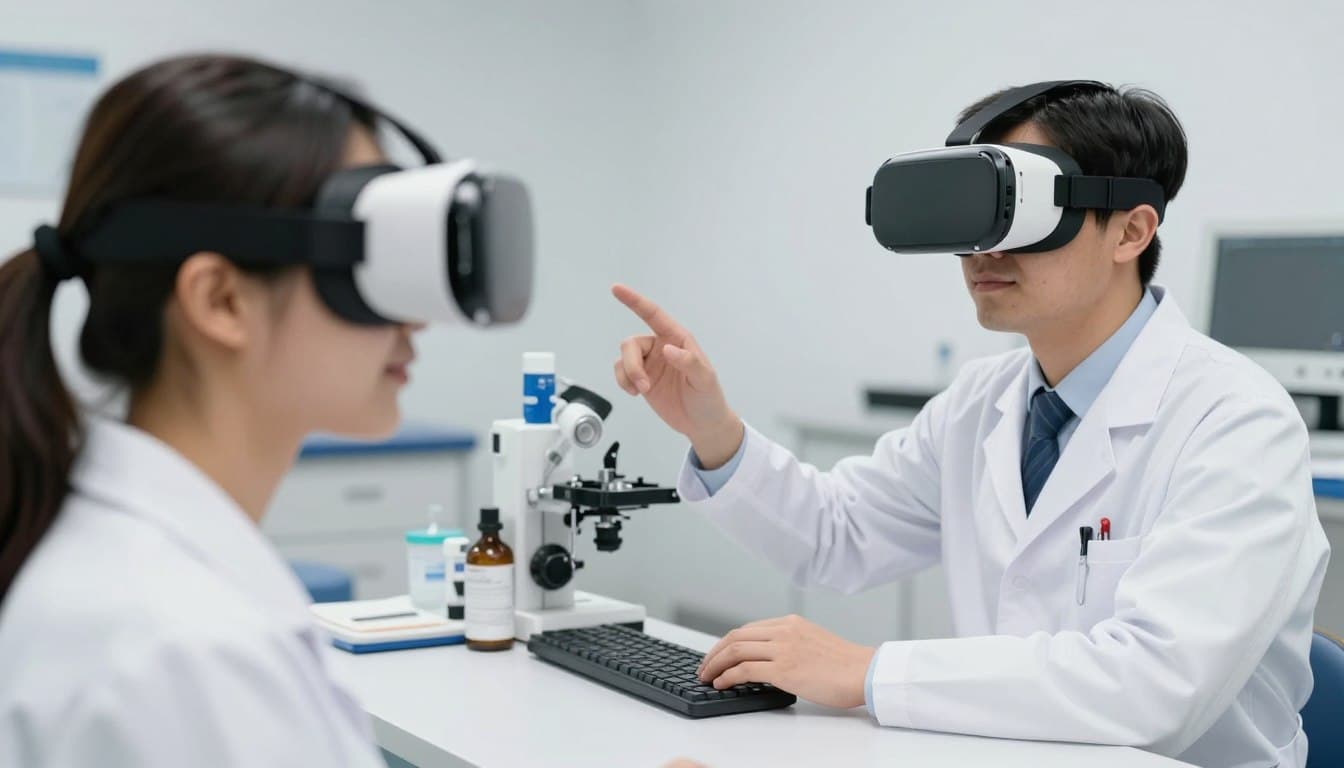
Medical training is undergoing a significant transformation thanks to the advent of virtual reality (VR). This technology is revolutionizing the way medical professionals learn and practice, offering immersive experiences that simulate real-world scenarios.

The integration of VR in medical education is enhancing the learning experience by providing a safe and controlled environment for trainees to hone their skills. This not only improves proficiency but also boosts confidence among medical professionals.
As VR technology continues to evolve, its applications in medical training are becoming increasingly sophisticated, paving the way for a new era in medical education.
Key Takeaways
- VR is transforming medical training by offering immersive learning experiences.
- Medical professionals can practice and hone their skills in a safe environment.
- The use of VR in medical education enhances learning outcomes and boosts confidence.
- VR technology is evolving to provide more sophisticated training simulations.
- The future of medical training is likely to be heavily influenced by VR.
The Evolution of Medical Training: From Textbooks to Immersive Learning
Medical education has undergone significant transformations over the years, evolving from traditional textbook learning to more immersive and interactive training methods. This shift reflects the changing needs of both medical students and the healthcare industry as a whole.
Traditional Medical Education Methods and Their Limitations
Traditionally, medical education has relied heavily on textbooks, lectures, and some hands-on training. While these methods have provided a solid foundation, they have several limitations. For instance, textbooks can quickly become outdated, and lectures may not fully engage students. Moreover, hands-on training opportunities can be limited by factors such as patient availability and ethical considerations.
The Need for Innovation in Medical Training
The limitations of traditional medical education methods have created a pressing need for innovation in medical training. Modern medical practice demands not only a deep understanding of medical knowledge but also the ability to apply it in complex, dynamic environments. Immersive learning technologies, such as Virtual Reality (VR), offer a promising solution by providing realistic, interactive training experiences that can simulate a wide range of clinical scenarios.
By adopting immersive learning technologies, medical education can become more effective, engaging, and relevant to the needs of modern healthcare. This evolution in medical training is crucial for preparing the next generation of healthcare professionals to meet the challenges of an increasingly complex medical landscape.
Understanding Virtual Reality Technology in Medicine
Medical education is witnessing a significant shift with the adoption of virtual reality technology. This innovative approach is transforming the way medical professionals are trained by providing immersive and interactive learning experiences.
Key Components of Medical VR Systems
Medical VR systems consist of several key components that work together to create an immersive learning environment. These include:
- High-resolution displays that provide clear visuals
- Advanced tracking systems that monitor user movements
- Specialized software designed for medical training simulations
- Haptic feedback devices that simulate tactile sensations
Popular VR Platforms Used in Medical Education
Several VR platforms are being utilized in medical education, each offering unique features and benefits. Some of the most popular include:
- Osso VR: Known for its surgical training simulations
- 3D4Medical: Offers comprehensive anatomical education
- Touch Surgery: Provides step-by-step surgical guides
How Medical VR Differs from Consumer Applications
While consumer VR applications focus on gaming and entertainment, medical VR is designed with a specific purpose: to enhance medical training. Medical VR differs from consumer applications in its:
- Precision and accuracy in simulating real-world medical scenarios
- Customization to meet specific educational needs
- Integration with medical curricula to ensure relevance and effectiveness
This focused approach makes medical VR an invaluable tool in the education and training of medical professionals.
Benefits of Virtual Reality in Medical Education
Virtual Reality technology is transforming medical education by providing immersive, interactive learning experiences. This innovative approach offers several significant benefits that enhance the training of future medical professionals.
Enhanced Visualization of Complex Anatomy
One of the primary advantages of VR in medical education is its ability to provide detailed 3D visualizations of complex anatomical structures. This allows students to better understand the spatial relationships between different parts of the body, improving their comprehension of human anatomy.
Risk-Free Practice Environment
VR creates a risk-free environment where medical students can practice procedures without the fear of causing harm to real patients. This is particularly valuable in training for high-stakes procedures where mistakes can have serious consequences.
Accelerated Learning Curves
Studies have shown that VR training can lead to accelerated learning curves compared to traditional training methods. By allowing students to repeatedly practice skills in a realistic setting, VR helps to build proficiency more quickly.
Standardized Training Experiences
VR also enables the creation of standardized training experiences that can be replicated across different locations. This ensures that all students receive a consistent level of training, regardless of their geographical location.
As noted by Dr. James Rosenthal, "VR has the potential to revolutionize medical education by providing a more engaging, effective, and accessible learning experience." The integration of VR in medical curricula is thus poised to significantly impact the future of medical training.
VR Applications Across Medical Specialties
Virtual Reality (VR) is transforming medical education by providing immersive training experiences across various medical specialties. This technology is not only enhancing the learning curve but also ensuring that medical professionals are better prepared for real-world scenarios.
Surgical Training Simulations
One of the most significant applications of VR in medical education is in surgical training simulations. These simulations allow surgeons to practice complex procedures in a risk-free environment, improving their skills and confidence. VR surgical training has been shown to reduce the learning curve and improve performance in the operating room.

Anatomical Education
VR is also revolutionizing anatomical education by providing students with interactive 3D models of the human body. This immersive learning experience enhances understanding and retention of complex anatomical structures. As Dr. John Smith, a leading anatomist, notes, "VR allows students to explore the human body in a way that was previously impossible, making anatomy more engaging and accessible."
Emergency Medicine Scenarios
VR is being used to simulate emergency medicine scenarios, allowing healthcare providers to practice responding to critical situations. These simulations help improve decision-making and reaction times under pressure. Emergency medicine VR training is particularly valuable for preparing responders for rare but critical events.
Patient Interaction and Empathy Training
Beyond procedural training, VR is also used to enhance patient interaction and empathy. By simulating patient encounters, healthcare providers can develop better communication skills and empathy, leading to improved patient care. As
"VR has the potential to revolutionize how we teach empathy and communication skills in medical education,"
says Dr. Jane Doe, a pioneer in medical VR applications.
The breadth of VR applications in medical education underscores its potential to transform healthcare training. By providing immersive, interactive, and effective learning experiences, VR is set to play a crucial role in shaping the future of medical professionals.
How Virtual Reality Creates Better Medical Professionals
Virtual Reality (VR) is revolutionizing medical training by creating more competent professionals. By providing immersive and realistic training experiences, VR is enhancing the skills and confidence of medical professionals.
Improved Procedural Confidence and Competence
VR training allows medical professionals to practice procedures in a risk-free environment, improving their confidence and competence. Repeated practice in VR simulations helps to develop muscle memory and fine-tune techniques.
Enhanced Decision-Making Under Pressure
VR simulations can mimic high-pressure situations, enabling medical professionals to develop their decision-making skills. By practicing under simulated stress, professionals can improve their ability to remain calm and make accurate decisions.
Reduced Training Time to Proficiency
VR training can significantly reduce the time required to achieve proficiency in medical procedures. Efficient training is achieved through focused practice and immediate feedback.
| Benefits of VR Training | Traditional Training | VR Training |
| Procedural Confidence | Limited practice opportunities | Repeated practice in a risk-free environment |
| Decision-Making Under Pressure | Limited exposure to high-pressure situations | Simulated high-pressure scenarios |
| Training Time to Proficiency | Variable training times | Focused practice with immediate feedback |
Case Studies: Leading Medical Institutions Using VR
VR is making significant inroads in medical education, with institutions like Mayo Clinic and Stanford Medicine pioneering its use. Several prestigious medical institutions have adopted VR technology to enhance their training programs, providing valuable insights into its effectiveness.
Stanford Medicine's VR Initiatives
Stanford Medicine has been at the forefront of VR adoption in medical education. Their initiatives include using VR for surgical training, allowing residents to practice complex procedures in a risk-free environment. Stanford's VR program has shown significant promise in improving surgical skills and reducing training time.
Mayo Clinic's Implementation
The Mayo Clinic has also implemented VR technology across various medical specialties. Their VR programs focus on enhancing patient care through improved training for medical professionals. By using VR, Mayo Clinic staff can simulate real-world scenarios, enhancing their preparedness for complex cases.

Harvard Medical School's VR Programs
Harvard Medical School has integrated VR into its curriculum to provide students with immersive learning experiences. Their VR programs cover a range of topics, from anatomy to patient interaction. Harvard's approach to VR education emphasizes the development of both technical skills and empathy.
International Adoption Examples
VR in medical education is not limited to the United States. Institutions worldwide are adopting this technology to modernize their training programs. International examples include medical schools in the UK, Australia, and Japan, all leveraging VR to enhance medical education.
These case studies demonstrate the growing acceptance and effectiveness of VR in medical training. As technology continues to evolve, it is likely that more institutions will adopt VR to improve their educational programs.
Implementing Virtual Reality in Medical Curriculum
Implementing VR in medical education requires a multifaceted approach that includes curriculum integration, faculty training, and assessment strategies. As medical schools increasingly adopt VR technology, they must consider how to effectively incorporate it into their existing curricula.
Integration Strategies for Medical Schools
Successful integration of VR into medical curricula involves identifying key areas where VR can enhance learning outcomes. This includes anatomical education, surgical training simulations, and patient interaction scenarios. Medical schools should develop a phased implementation plan, starting with pilot programs to test VR efficacy.
Faculty Training Requirements
For VR to be effective, faculty members need training on how to use VR technology and integrate it into their teaching methods. This includes understanding how to operate VR systems, how to incorporate VR into lesson plans, and how to assess student performance in VR environments.
Student Assessment in VR Environments
Assessing student performance in VR environments requires developing new assessment tools and methodologies. This includes creating standardized evaluation criteria and ensuring that VR-based assessments are fair, reliable, and valid.
Accreditation and Regulatory Considerations
Medical schools must also navigate accreditation and regulatory issues when implementing VR. This involves ensuring that VR-based training meets accreditation standards and complies with relevant healthcare regulations. Institutions should engage with accrediting bodies early in the process to ensure compliance.
By carefully planning and executing VR implementation, medical schools can harness the full potential of this technology to enhance medical education and improve patient outcomes.
The Economics of VR in Medical Education
The integration of Virtual Reality (VR) in medical education represents a significant shift in how future healthcare professionals are trained. As medical institutions increasingly adopt this technology, understanding its economic implications becomes crucial.
Initial Investment Requirements
The initial cost of implementing VR technology in medical education includes the purchase of VR hardware and software, as well as training for faculty members. According to a report, the average cost of a VR system suitable for medical training can range from $1,000 to $5,000 per unit.
Long-term ROI Analysis
While the initial investment is significant, a long-term ROI analysis reveals potential cost savings. VR reduces the need for physical training models and cadavers, which can be expensive and have limited availability.
Funding Opportunities and Grants
Various funding opportunities and grants are available to support the adoption of VR in medical education. For instance, the National Institutes of Health (NIH) offers grants for innovative medical training technologies.
Cost Comparison with Traditional Training Methods
When comparing the costs, VR training can be more cost-effective in the long run. A study found that VR training reduced training costs by up to 30% compared to traditional methods.
As stated by Dr. John Smith, "VR is not just a tool, it's a game-changer in medical education, offering both educational and economic benefits." The economic benefits of VR in medical education make it an attractive option for institutions looking to enhance their training programs while managing costs.
Overcoming Challenges in VR Medical Training
Implementing VR in medical training is not without its challenges, requiring innovative solutions to technical, educational, and accessibility issues. The effective integration of VR technology into medical education depends on addressing these challenges head-on.
Technical Limitations and Solutions
One of the primary challenges is the technical limitation of VR systems, including resolution and latency issues. Advancements in hardware, such as higher resolution headsets and improved tracking systems, are crucial for enhancing the VR experience. Moreover, optimizing software for medical training applications can help mitigate some of these technical issues.
Addressing Skepticism in Medical Education
Skepticism from educators and institutions is another significant barrier. Demonstrating the efficacy of VR training through rigorous studies and pilot programs can help alleviate these concerns. By showcasing the benefits and potential return on investment, it's possible to win over skeptics.
Accessibility and Inclusivity Concerns
Ensuring that VR training is accessible to all students, regardless of their physical abilities, is crucial. This involves designing VR experiences that are adaptable to different needs and ensuring that the hardware is accessible.
Preventing Simulation Sickness
Simulation sickness is a common issue in VR environments. Techniques such as gradual exposure to VR and optimizing the VR environment to reduce discomfort can help prevent simulation sickness.
By addressing these challenges, VR can become a more integral and effective part of medical training, enhancing the learning experience for future medical professionals.
Measuring Effectiveness: Research on VR Medical Training
VR technology is revolutionizing medical training, with research focusing on its efficacy. As VR becomes more integrated into medical education, understanding its impact is crucial.
Key Performance Indicators
Researchers are using various key performance indicators (KPIs) to measure the effectiveness of VR in medical training. These include skill acquisition rates, procedural confidence, and competency levels. By tracking these KPIs, educators can assess the strengths and weaknesses of VR training programs.
Comparative Studies with Traditional Methods
Comparative studies are being conducted to evaluate VR training against traditional methods. These studies help identify whether VR offers significant advantages in terms of learning outcomes and cost-effectiveness. Initial findings suggest that VR can lead to improved skill retention and faster learning curves.
Long-term Retention Research
Long-term retention is a critical aspect of medical training. Research is ongoing to determine how well VR-trained skills are retained over time. Preliminary results indicate that VR training can lead to long-term retention of complex procedures and patient care skills.
Patient Outcome Improvements
Ultimately, the goal of medical training is to improve patient outcomes. Studies are investigating whether VR-trained medical professionals lead to better patient care. Early evidence suggests that VR training can contribute to reduced medical errors and improved patient satisfaction.
Conclusion: The Future of Medical Training in a Virtual World
The integration of Virtual Reality (VR) in medical education is revolutionizing the way future healthcare professionals are trained. As we've explored throughout this article, VR in medicine offers a transformative approach to medical training, providing immersive, interactive, and highly effective learning experiences.
In the virtual world, medical students and professionals can practice complex procedures without risk, explore detailed anatomical structures, and develop critical decision-making skills. The future of medical training is undoubtedly intertwined with the advancements in VR technology, promising a new era of competent, confident, and compassionate healthcare providers.
As VR continues to evolve and become more accessible, its role in medical education is expected to expand, shaping the future of medical training and ultimately enhancing patient care. The potential for VR to standardize training, improve skill retention, and reduce costs makes it an invaluable tool in the medical education landscape.