Future of Work: VR Training Revolutionizes Employee Skills
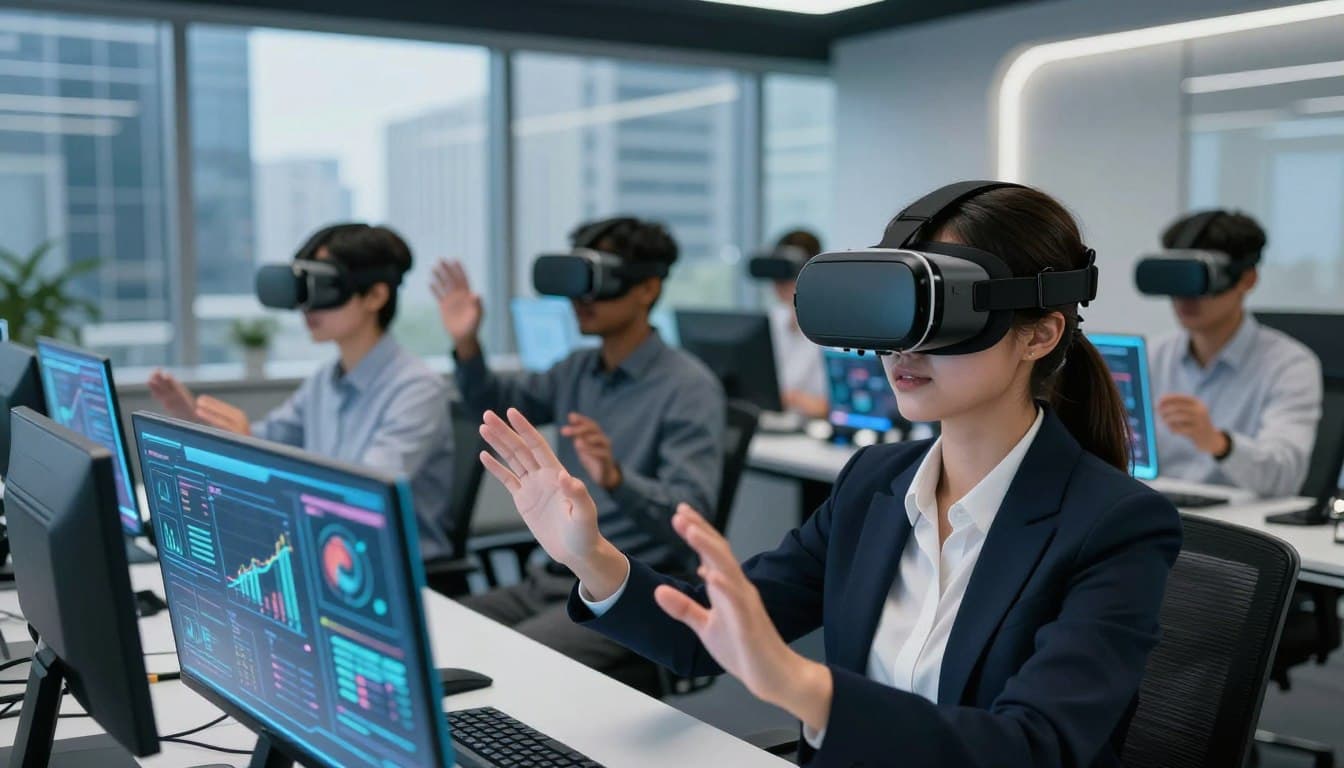
Imagine stepping into a digital world where you can master a complex task without any real-world risk. This isn't science fiction anymore; it is the new standard for professional growth in the United States. Companies now use immersive tools to help staff grow their employee skills faster than ever before.
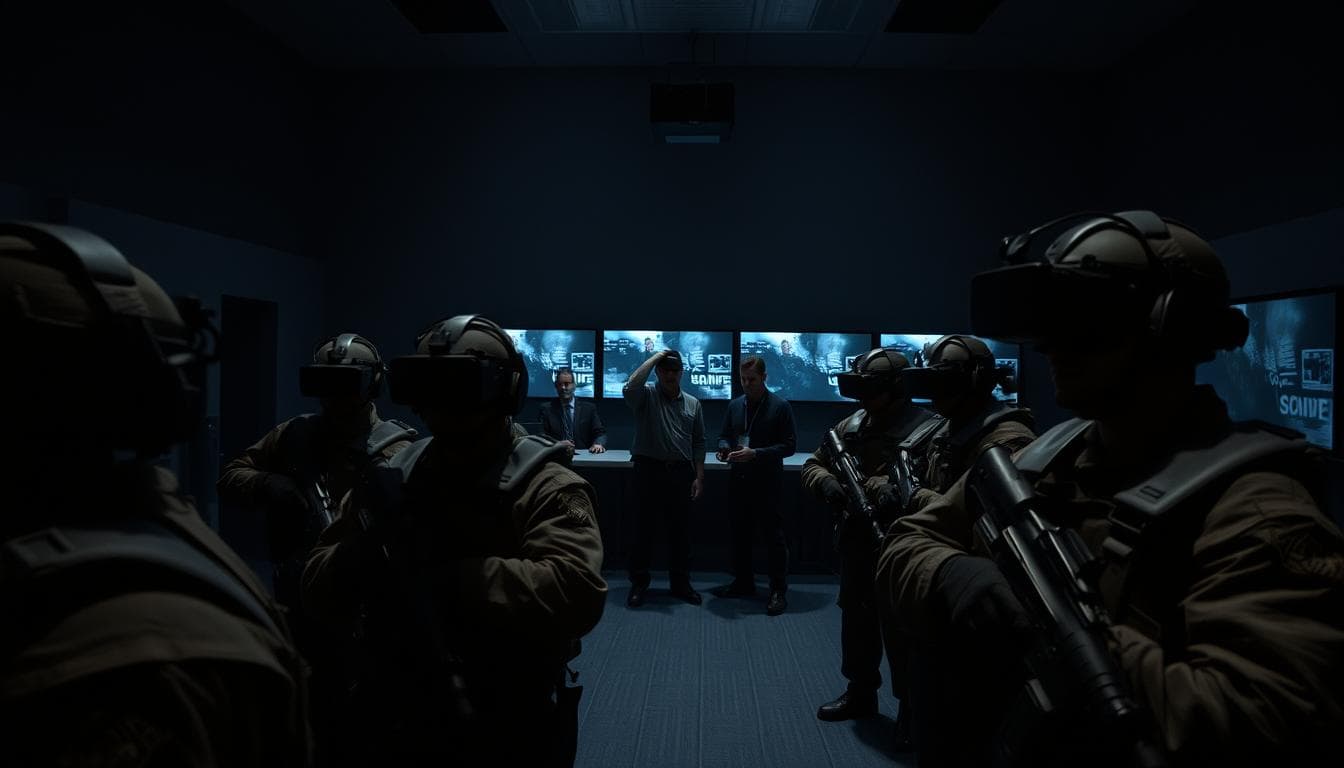
The shift toward VR training is changing how we think about the office and productivity. Instead of long lectures, workers dive into life-like simulations that feel incredibly genuine. This technology makes learning fun and helps teams retain information with high accuracy.

By using virtual reality, businesses can prepare their teams for high-pressure situations safely. It empowers individuals to practice until they feel fully confident in their daily roles. This revolutionary approach is truly reshaping the modern workforce for a better tomorrow.
Key Takeaways
- Immersive tools significantly speed up the employee learning process.
- Simulations provide a safe environment for high-risk job practice.
- Knowledge retention rates improve with hands-on digital experiences.
- Businesses reduce costs by cutting down on physical equipment and travel.
- Workers feel more confident and prepared for real-world challenges.
- The technology makes professional growth more engaging and accessible.
The Transformation of Employee Training in Modern Workplaces
Employee training in modern workplaces is being revolutionized by innovative technologies, changing the landscape of workforce development. Traditional training methods, often characterized by static presentations and passive learning, are being challenged by more immersive and interactive approaches.
The limitations of conventional training methods are well-documented. They often fail to engage employees fully, leading to lower retention rates and reduced application of learned skills on the job. Moreover, traditional training can be costly and logistically challenging, especially for organizations with dispersed workforces or those operating in high-risk environments.
Virtual Reality (VR) training is stepping in to fill this gap, offering a more engaging, effective, and efficient alternative. By simulating real-world environments and scenarios, VR training enables employees to practice and learn in a highly immersive and interactive setting.
"The use of VR in training is not just about adopting new technology; it's about creating a more engaging and effective learning experience that benefits both the employee and the organization."
The table below highlights some key differences between traditional training methods and VR training:
| Aspect | Traditional Training | VR Training |
| Engagement | Often passive | Highly interactive and immersive |
| Retention | Lower retention rates | Improved retention through practical experience |
| Cost | Can be costly due to logistics and travel | Reduces costs by minimizing the need for physical setups and travel |
As organizations continue to embrace training technology, the role of VR in corporate training is set to expand. By providing a more engaging and effective learning experience, VR training is transforming the way companies approach workforce development.
Understanding Virtual Reality Training Technology
The advent of VR training technology is revolutionizing how businesses approach employee development and skills enhancement. This technology offers a unique blend of immersive learning experiences that simulate real-world environments, allowing employees to practice and learn in a highly engaging and interactive manner.
VR training differs significantly from traditional training methods in several key ways. Let's explore these differences and the core components that make VR training so effective.
What Makes VR Training Different from Traditional Methods
Unlike conventional training methods that often rely on passive learning techniques, VR training engages employees actively through simulations and interactive scenarios. This active engagement enhances learning retention and reduces the time required to achieve proficiency.
- Immersive experiences that simulate real-world challenges
- Interactive elements that encourage active learning
- Personalized feedback and assessment tools
Core Components of VR Training Systems
A typical VR training system consists of several key components that work together to provide a seamless and effective learning experience. These include:
- VR headsets or other display devices
- Controllers or other input devices
- Software platforms that deliver the training content
Types of VR Training Experiences
VR training can be tailored to a wide range of industries and training needs, offering diverse experiences such as:
- Simulation-based training for high-risk environments
- Soft skills training through interactive role-playing
- Technical skills training using virtual equipment and tools
By understanding the capabilities and components of VR training technology, businesses can better leverage this innovative tool to enhance their training programs and improve overall employee performance.
Key Benefits of Virtual Reality Training for Businesses
As businesses continue to seek innovative methods for enhancing employee performance, VR training emerges as a game-changer. By leveraging the immersive and interactive nature of Virtual Reality, companies can significantly improve the efficacy of their training programs.
Enhanced Learning Retention and Engagement
VR training is designed to captivate learners by placing them in realistic, interactive environments that simulate real-world scenarios. This immersive experience leads to higher engagement rates and improved knowledge retention.
Studies have shown that interactive learning experiences can increase retention rates by up to 75% compared to traditional training methods. This is because VR training engages multiple senses, making the learning experience more memorable.
Safe Environment for High-Risk Training
One of the significant advantages of VR training is its ability to provide a safe and controlled environment for high-risk training. Employees can practice complex tasks without the risk of injury or damage, allowing for more comprehensive training coverage.
Cost-Effectiveness and Scalability
VR training offers a cost-effective solution for businesses, especially when it comes to training that requires expensive equipment or poses significant risks. By reducing the need for physical equipment and minimizing the risks associated with training, VR can lead to substantial cost savings.
| Training Method | Cost | Scalability |
| Traditional Training | High | Limited |
| VR Training | Low to Moderate | High |
Measurable Performance Analytics
VR training platforms often come equipped with advanced analytics tools that allow businesses to track learner performance in real-time. This capability enables organizations to identify areas where employees may need additional training, thereby optimizing their development programs.
By adopting VR training, businesses can not only enhance their employees' skills but also gain valuable insights into their training processes, leading to more informed decision-making.
Industries Leading the VR Training Revolution
VR training is being increasingly adopted across multiple sectors, revolutionizing the way companies approach employee development. This technology is not limited to a single industry; instead, its versatility allows it to be applied in various fields, each benefiting from its unique capabilities.
Healthcare and Medical Training
The healthcare industry is one of the pioneers in adopting VR training. Medical professionals are using VR to simulate surgeries, patient care scenarios, and emergency response situations. This immersive training enhances their skills and prepares them for real-world challenges without risking patient safety.
Enhanced realism and interactivity in VR training simulations allow healthcare workers to practice complex procedures and improve their decision-making skills.
Manufacturing and Industrial Operations
In manufacturing, VR training is used to teach employees about equipment operation, safety protocols, and assembly line processes. By simulating real-world environments, workers can gain hands-on experience without the risks associated with actual machinery operation.
The use of VR in manufacturing also enables companies to reduce training costs and increase efficiency by minimizing the need for physical equipment and training facilities.
Retail and Customer Service
Retail businesses are leveraging VR to train customer service representatives. Simulations can mimic various customer interactions, helping employees develop the skills needed to handle different scenarios effectively.
VR training in retail also focuses on enhancing customer experience by teaching employees how to manage queues, handle complaints, and provide personalized service.
Aviation and Transportation
The aviation industry has been an early adopter of VR training, using it to simulate flight scenarios, emergency procedures, and maintenance tasks. This immersive training is crucial for preparing pilots and maintenance personnel for the demands of their roles.
Similarly, in transportation, VR is used to train drivers and logistics personnel on safety procedures and vehicle operation, improving overall safety and efficiency.
Real-World Success Stories and Case Studies
Major corporations are leveraging VR technology to create immersive training experiences. This shift towards VR training has yielded impressive results across various industries.
Walmart's VR Customer Service Training Program
Walmart has implemented a VR customer service training program to enhance employee interaction skills. This program simulates real-world customer scenarios, allowing employees to practice and improve their responses in a controlled environment.
Walmart's VR training has shown a significant improvement in employee confidence and customer satisfaction. The program's interactive nature helps employees better understand and manage different customer behaviors.
Boeing's Aircraft Assembly Training
Boeing has utilized VR training for aircraft assembly, providing technicians with hands-on experience in a virtual environment. This approach has reduced training time and improved assembly accuracy.
Boeing's VR training program has demonstrated the potential for VR to enhance complex technical training. By simulating real-world assembly tasks, technicians can practice and refine their skills without the risks associated with physical prototypes.
Verizon's Emergency Response Simulations
Verizon has developed VR simulations for emergency response training, allowing teams to practice response strategies in a realistic, immersive environment. This training has improved response times and coordination among teams.
Verizon's use of VR for emergency response training highlights the technology's versatility and effectiveness in high-pressure scenarios. The simulations enable teams to rehearse and refine their response plans, leading to better outcomes in actual emergencies.
| Company | VR Training Application | Key Outcomes |
| Walmart | Customer Service Training | Improved employee confidence, increased customer satisfaction |
| Boeing | Aircraft Assembly Training | Reduced training time, improved assembly accuracy |
| Verizon | Emergency Response Simulations | Improved response times, enhanced team coordination |
The success stories from Walmart, Boeing, and Verizon demonstrate the potential of VR training to drive business outcomes and improve employee skills. As VR technology continues to evolve, its applications in corporate training are likely to expand.
Technical Skills Development Through VR Simulations
Technical skills training is undergoing a significant transformation with the integration of VR simulations, enabling learners to practice and hone their skills in a controlled, virtual environment. This immersive approach to training is particularly beneficial for industries that require precise technical skills, such as manufacturing, healthcare, and aviation.
Hands-On Equipment Operation Training is one of the key areas where VR simulations excel. By replicating the actual equipment and environments, VR training allows trainees to familiarize themselves with the operation of complex machinery without the risks associated with real-world training. For instance, in the manufacturing sector, VR simulations can mimic the operation of heavy machinery, allowing trainees to learn how to handle it safely and efficiently.
Hands-On Equipment Operation Training
VR provides a realistic and immersive environment for trainees to practice operating equipment. This not only enhances their technical skills but also builds confidence in their ability to handle the equipment. Companies like Boeing have already adopted VR for training purposes, such as in their aircraft assembly training programs, where technicians can practice assembly procedures in a virtual environment.

Complex Problem-Solving Scenarios
VR simulations are also effective for training in complex problem-solving scenarios. By presenting trainees with realistic challenges and scenarios, VR training helps develop critical thinking and decision-making skills. For example, in the healthcare sector, VR can simulate emergency situations, allowing medical professionals to practice their response in a safe and controlled environment.
Team Collaboration in Virtual Environments
Another significant advantage of VR training is its ability to facilitate team collaboration in virtual environments. Trainees can work together in a virtual space, practicing communication and teamwork skills that are essential for many industries. This aspect of VR training is particularly valuable for roles that require coordination among team members, such as in emergency response situations or complex manufacturing processes.
By leveraging VR simulations for technical skills development, organizations can provide their employees with comprehensive, engaging, and effective training programs. This not only enhances employee performance but also contributes to a safer and more efficient working environment.
Soft Skills Training in Virtual Reality Environments
Soft skills training is undergoing a significant transformation with the advent of virtual reality technology, offering a more engaging and effective learning experience. Traditional training methods often fall short in providing the immersive and interactive environment that soft skills development requires. Virtual reality bridges this gap by simulating real-world scenarios that employees are likely to encounter, allowing them to practice and hone their skills in a controlled yet realistic setting.
Enhancing Leadership and Management Skills through VR involves creating simulations that challenge leaders to make strategic decisions, manage teams, and navigate complex organizational dynamics. For instance, VR can simulate a crisis management scenario where leaders must make quick decisions under pressure, providing them with valuable experience and insights into their decision-making processes.
Leadership and Management Development
VR training programs for leadership development can include scenarios that test a leader's ability to motivate team members, handle conflicts, and drive projects forward. These simulations can be tailored to the specific needs of the organization, ensuring that leaders are equipped with the skills necessary to drive success.
- Simulated team management scenarios
- Crisis management and decision-making exercises
- Strategic planning and execution challenges
Communication and Presentation Skills
Effective communication and presentation skills are crucial in today's business environment. VR training can help employees improve these skills by simulating presentations to virtual audiences, handling customer complaints, or negotiating with virtual clients. This immersive practice helps build confidence and fluency, essential for successful communication.
For example, a VR training module might simulate a sales pitch, allowing the trainee to practice their presentation skills in a realistic setting. Feedback mechanisms within the VR environment can provide insights into areas for improvement, such as body language, tone of voice, and content delivery.
Conflict Resolution and Empathy Building
VR is particularly effective in conflict resolution and empathy building by placing trainees in scenarios that require them to navigate difficult conversations or resolve disputes. By experiencing different perspectives and outcomes, employees can develop a deeper understanding of the importance of empathy in the workplace.
"The most important thing in communication is hearing what isn't said." - Peter Drucker
This quote underscores the importance of empathy in effective communication, a skill that VR training can significantly enhance by providing immersive experiences that foster understanding and empathy.
By leveraging VR for soft skills training, organizations can create a more empathetic and effective workforce, equipped to handle the complexities of modern business environments.
Overcoming Challenges in VR Training Implementation
As organizations increasingly adopt VR training, they must navigate several obstacles to ensure successful implementation. The challenges associated with VR training are multifaceted, ranging from technological barriers to content-related issues.
Addressing these challenges effectively is crucial for maximizing the benefits of VR training. One of the primary hurdles organizations face is the adoption of new technology.
Addressing Technology Adoption Barriers
Technology adoption barriers can significantly hinder the successful implementation of VR training programs. Employees may be accustomed to traditional training methods and might be resistant to change. To overcome this, organizations should invest in comprehensive training for their staff on the use of VR technology.
Providing hands-on experience and demonstrating the benefits of VR training can help alleviate concerns and increase user adoption. Additionally, involving employees in the implementation process can foster a sense of ownership and reduce resistance to the new technology.
Managing Initial Investment Costs
The initial investment required for VR training can be substantial, including the cost of VR hardware, software development, and training content creation. To manage these costs effectively, organizations should conduct a thorough cost-benefit analysis to understand the potential return on investment (ROI).
Exploring different VR hardware options and considering scalable solutions can also help in managing initial costs. Furthermore, leveraging existing training content and adapting it for VR can reduce development expenses.

Ensuring Content Quality and Relevance
The quality and relevance of VR training content are paramount to its success. Content that is not aligned with the organization's training objectives or is not engaging can lead to poor learning outcomes.
To ensure high-quality content, organizations should work closely with content developers who understand their specific training needs. Regular feedback from trainees and continuous assessment of the training program can help in refining the content and making it more effective.
Dealing with Motion Sickness and User Comfort
Motion sickness and user comfort are significant concerns in VR training. Prolonged use of VR headsets can cause discomfort, nausea, or eye strain in some individuals.
To mitigate these issues, VR training programs should be designed with user comfort in mind. This includes ensuring that the VR experience is smooth and free from lag, providing regular breaks during training sessions, and offering alternative training methods for those who may be prone to motion sickness.
By addressing these challenges proactively, organizations can create a more effective and comfortable VR training environment that benefits all users.
Best Practices for Implementing VR Training Programs
Effective VR training implementation is a multifaceted process that involves assessing organizational needs, selecting the right technology, and developing relevant content. To ensure the success of VR training initiatives, organizations must adopt a strategic and well-planned approach.
Assessing Your Organization's Training Needs
Before diving into VR training, it's crucial to conduct a thorough assessment of your organization's training needs. This involves identifying skill gaps, understanding the types of training that would benefit most from VR, and setting clear objectives for what you want to achieve with VR training.
Key considerations include:
- Identifying the specific skills or knowledge areas that need improvement
- Determining the number of employees who will undergo VR training
- Assessing the current level of technological infrastructure within the organization
Choosing the Right VR Hardware and Software
Selecting the appropriate VR hardware and software is critical for the success of your VR training program. This decision should be guided by your organization's specific training needs, budget, and the level of immersion required for the training.
Factors to consider when choosing VR hardware and software include:
- Compatibility with existing systems and infrastructure
- The level of realism and interactivity required for the training
- User comfort and the potential for motion sickness
Developing Effective VR Training Content
The effectiveness of VR training largely depends on the quality and relevance of the content. It's essential to develop content that is engaging, interactive, and aligned with your training objectives.
Best practices for content development include:
- Collaborating with subject matter experts to ensure accuracy and relevance
- Using a mix of instructional methods, such as tutorials, simulations, and gamification
- Continuously testing and refining the content based on user feedback
Measuring Training Effectiveness and ROI
To justify the investment in VR training, it's vital to measure its effectiveness and return on investment (ROI). This involves setting clear metrics for success and using analytics tools to track learner progress and outcomes.
Key metrics to track include:
- Learner engagement and completion rates
- Knowledge retention and application on the job
- Cost savings compared to traditional training methods
The Future Landscape of Virtual Reality in Workforce Development
Emerging technologies are set to transform the landscape of virtual reality in workforce development, offering unprecedented opportunities for growth and innovation. As we delve into the future of VR training, it's clear that several key trends will shape the industry.
Emerging Technologies and AI Integration
The integration of Artificial Intelligence (AI) with VR is revolutionizing the training landscape. AI algorithms can now analyze user performance in real-time, providing personalized feedback and adjusting the training difficulty accordingly. This synergy between AI and VR creates a highly adaptive learning environment.
For instance, AI-powered VR training can simulate complex scenarios that require decision-making, problem-solving, and critical thinking. These simulations can be tailored to the individual's learning pace and style, enhancing the overall learning experience.
- Real-time performance analysis
- Personalized feedback mechanisms
- Adaptive difficulty adjustment
Mixed Reality and Augmented Training Solutions
Mixed Reality (MR) and Augmented Reality (AR) are emerging as significant players in the VR training ecosystem. By overlaying digital information onto the real world, MR and AR provide a more immersive and interactive training experience.
For example, AR can be used to provide step-by-step instructions for complex machinery operation, enhancing the training process for manufacturing and industrial operations. MR, on the other hand, can create interactive simulations that blend the physical and digital worlds.
Personalized Learning Pathways
The future of VR training lies in its ability to offer personalized learning pathways. By leveraging AI and data analytics, VR training programs can be tailored to meet the individual needs of each learner.
"The future of learning is not just about technology; it's about using that technology to create a more personalized, effective, and engaging learning experience."
– A leading expert in VR training
Personalized learning pathways ensure that employees receive the most relevant and effective training, improving knowledge retention and job performance. As VR technology continues to evolve, we can expect to see even more sophisticated personalization capabilities.
Conclusion
As businesses continue to navigate the complexities of the modern workplace, the role of VR training in shaping the future of work becomes increasingly evident. By providing immersive, interactive, and effective training experiences, VR technology is transforming employee skills development across various industries.
The future of work is closely tied to the ability of organizations to adapt and innovate, and VR training is at the forefront of this innovation. With its potential to enhance learning retention, provide a safe environment for high-risk training, and offer measurable performance analytics, VR training is poised to play a critical role in workforce development.
As companies like Walmart, Boeing, and Verizon have demonstrated through their successful VR training implementations, this technology is not just a novelty but a powerful tool for driving business success. By embracing VR training, organizations can stay ahead of the curve and ensure their workforce is equipped with the skills needed to thrive in an ever-evolving business landscape.
## FAQ
### Q: How does virtual reality training differ from traditional classroom or video-based methods?
A: Unlike traditional methods that rely on passive observation, virtual reality training creates an immersive learning environment where employees learn by doing. By using headsets like the Meta Quest 3, users are transported into 360-degree simulations that require active participation. This hands-on approach significantly boosts knowledge retention and engagement compared to simply watching a presentation or reading a manual.
### Q: Which major brands are currently leading the way in VR workforce development?
A: Several industry giants have already seen massive success. Walmart uses VR to prepare associates for the chaos of Black Friday, while Boeing utilizes the technology to train technicians on complex aircraft assembly. Additionally, Verizon has implemented VR simulations to help employees practice emergency response and de-escalation tactics in high-pressure retail situations.
### Q: Can VR training really help with soft skills like leadership and empathy?
A: Absolutely! While VR is great for technical tasks, it is incredibly effective for soft skills development. Simulations allow managers to practice difficult conversations, conflict resolution, and public speaking in a safe, repeatable environment. By experiencing a scenario from a customer's or colleague’s perspective, employees can build genuine empathy and improve their interpersonal communication.
### Q: Is motion sickness a common problem for employees using VR headsets?
A: While some users may experience initial discomfort, modern hardware like the HTC Vive and Meta Quest systems have high refresh rates that drastically reduce motion sickness. By following best practices—such as ensuring high-quality content relevance, keeping sessions brief, and allowing users to stay seated—most organizations find that user comfort is easily managed.
### Q: How do companies measure the Return on Investment (ROI) for VR training?
A: One of the biggest advantages of digital training is the ability to capture measurable performance analytics. Companies can track exactly where a trainee struggled, how long a task took, and how many errors were made. When compared to the costs of travel, equipment downtime, and traditional instructor fees, the cost-effectiveness and scalability of VR often result in a much higher ROI for large-scale upskilling initiatives.
### Q: Will Artificial Intelligence be integrated into future VR training programs?
A: Yes, the integration of Artificial Intelligence (AI) is the next big frontier. AI can create personalized learning pathways that adapt to a student's progress in real-time. In the future, you can expect to interact with AI-driven avatars that respond dynamically to your voice and body language, making simulations feel even more lifelike and effective.
### Q: Can VR training be integrated with our existing Learning Management System (LMS)?
A: Most modern VR training platforms are designed to be compatible with standard LMS software. This allows HR departments to sync training data, track completions, and manage certifications just as they would with any other digital course, ensuring a seamless experience for both the employer and the employee.
### Q: What is the role of haptic feedback in technical skills development?
A: Haptic feedback involves using specialized gloves or controllers that provide tactile sensations, such as vibrations or resistance. This is crucial for technical skills training, such as surgical procedures or manufacturing, as it allows the trainee to "feel" the tools and machinery, creating a more realistic and effective muscle-memory response.