Boost Skills: Virtual Reality for Corporate Training
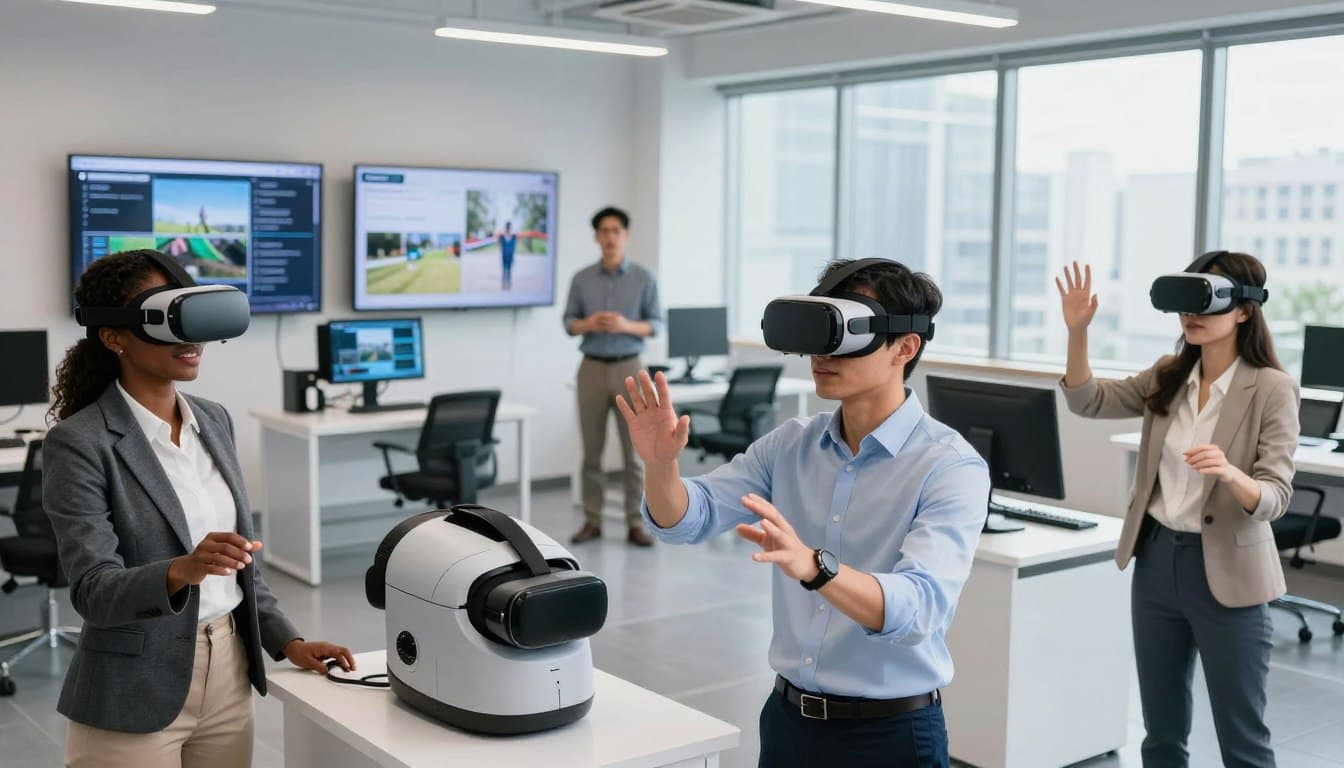
Corporate training has come a long way since the traditional classroom approach. With the advent of technology, companies are now turning to innovative methods to boost employee skills. One such method is VR training, which is revolutionizing the way employees learn and develop.

The use of virtual reality in corporate training offers a more immersive and engaging experience, allowing employees to practice and learn in a simulated environment. This not only enhances their skills but also improves retention rates.
Key Takeaways
- VR training is transforming corporate training methods.
- It offers a more immersive and engaging experience.
- Employees can practice and learn in a simulated environment.
- VR training enhances employee skills and improves retention rates.
- It's a innovative approach to employee development.
The Evolution of Corporate Training Methods
The landscape of corporate training has undergone significant changes over the years, driven by technological advancements and changing workforce needs. As businesses strive to stay competitive, their training methods have had to adapt to new challenges and opportunities.
Traditional Training Approaches and Their Limitations
Traditional training methods, such as classroom instruction and manual on-the-job training, have been the cornerstone of corporate development for decades. However, these approaches have significant limitations.
Cost and Scalability Issues
Traditional training methods are often costly and difficult to scale, particularly for large or dispersed workforces. The expense of physical training facilities, travel, and instructor fees can be prohibitive.
Engagement and Retention Challenges
Moreover, traditional training methods often struggle to engage learners and retain information over time. This can lead to a lack of knowledge retention and reduced training effectiveness.
The Digital Transformation of Learning and Development
The digital transformation has revolutionized corporate training, offering more flexible and effective solutions. E-learning platforms have become increasingly popular, providing accessible and self-paced learning opportunities.
From E-Learning to Immersive Technologies
The progression from e-learning to immersive technologies like virtual reality (VR) has further enhanced training experiences. VR offers interactive and engaging training environments that simulate real-world scenarios.
The Pandemic's Impact on Training Innovation
The COVID-19 pandemic accelerated the adoption of digital training solutions, forcing companies to innovate and adapt quickly to remote work environments. This shift has driven investment in VR and other immersive technologies.
What is Virtual Reality and How Does It Work?
Understanding virtual reality technology is essential for organizations looking to revolutionize their training methods. Virtual reality (VR) is an immersive technology that simulates real-world environments, allowing users to interact with virtual objects and scenarios in a highly realistic manner.
Core Virtual Reality Technology Explained
At its core, VR technology relies on a combination of hardware and software to create an immersive experience. The hardware components include head-mounted displays (HMDs), sensors, and controllers, while the software platforms provide the virtual environments and interactions.
Hardware Components and Systems
The hardware components of VR systems are crucial for delivering a seamless experience. Key components include:
- Head-Mounted Displays (HMDs): Devices worn on the head that display the virtual environment.
- Sensors: Track the user's movements and adjust the virtual environment accordingly.
- Controllers: Allow users to interact with virtual objects.
Software Platforms for Corporate Training
Software platforms play a vital role in creating and delivering VR training content. These platforms offer a range of features, including:
- Content Creation Tools: Enable developers to create custom training scenarios.
- Simulation Environments: Provide realistic settings for training exercises.
- Analytics and Reporting: Help track user performance and training effectiveness.
The Difference Between VR, AR, and Mixed Reality
While VR creates a fully immersive virtual environment, Augmented Reality (AR) overlays digital information onto the real world. Mixed Reality (MR) combines elements of both VR and AR, allowing real and virtual objects to interact.
| Technology | Description | Application in Corporate Training |
| Virtual Reality (VR) | Fully immersive virtual environment | Simulation-based training, soft skills development |
| Augmented Reality (AR) | Overlays digital information onto the real world | On-the-job training, equipment operation guidance |
| Mixed Reality (MR) | Combines VR and AR elements | Complex task training, interactive presentations |
Choosing the Right Immersive Technology for Training Goals
Selecting the appropriate immersive technology depends on the specific training objectives. Factors to consider include the type of skills being trained, the level of interactivity required, and the available resources.
The Science Behind Virtual Reality Learning
Immersive learning through virtual reality is grounded in cognitive science, offering a powerful tool for enhancing memory and skill acquisition. By simulating real-world environments, VR training allows learners to engage in experiential learning that is both memorable and effective.
Immersive Learning and Memory Retention
Immersive experiences in VR have been shown to significantly improve memory retention. This is because VR engages multiple senses, creating a more impactful learning experience.
The Cognitive Science of Experiential Learning
Experiential learning in VR is backed by cognitive science, which suggests that hands-on experiences lead to better knowledge retention. By interacting with virtual objects and environments, learners can develop a deeper understanding of complex concepts.
Neurological Impact of Experiential Training
The neurological impact of VR training is significant, as it fosters emotional engagement and enhances skill development. By simulating real-world scenarios, VR training prepares learners for actual situations, reducing anxiety and improving performance.
Emotional Engagement and Skill Development
Emotional engagement is a critical factor in the effectiveness of VR training. When learners are emotionally invested, they are more likely to retain information and develop skills more efficiently.
Key Benefits of Virtual Reality for Corporate Training
Virtual Reality is emerging as a powerful tool in corporate training, offering immersive and interactive learning experiences. This technology is transforming the corporate training landscape by providing numerous benefits that traditional training methods cannot match.
Enhanced Engagement and Focus
One of the primary advantages of VR in corporate training is its ability to enhance learner engagement and focus. By creating an immersive environment, VR minimizes distractions and keeps trainees fully engaged in the learning process.
Minimizing Distractions Through Immersion
VR technology surrounds the learner with a virtual environment, reducing the likelihood of distractions and increasing the focus on the training content. This immersive experience leads to a more effective learning process.
Risk-Free Practice Environments
VR provides a safe and controlled environment for employees to practice skills without the risk of real-world consequences. This is particularly valuable in high-stakes professions where mistakes can have significant repercussions.
Simulating High-Stakes Scenarios Safely
By simulating high-pressure scenarios in a virtual setting, employees can develop and refine their skills in a risk-free environment. This prepares them for real-world challenges without exposing them to potential dangers.
Data-Driven Performance Analysis
VR training systems can track learner performance and provide detailed analytics. This data-driven approach enables organizations to assess training effectiveness and identify areas for improvement.
Tracking and Measuring Learning Outcomes
The ability to track and measure learning outcomes is crucial for evaluating the success of training programs. VR training solutions offer comprehensive analytics, helping organizations refine their training strategies.

| Benefit | Description | Impact |
| Enhanced Engagement | Immersive VR experiences | Increased learner focus |
| Risk-Free Practice | Simulated environments | Reduced risk of mistakes |
| Data-Driven Analysis | Performance tracking | Improved training effectiveness |
Industries Revolutionized by Virtual Reality Training
VR training is making significant inroads into diverse industries, enhancing the way companies approach employee development. By providing immersive and interactive learning experiences, VR is revolutionizing the corporate training landscape.
Healthcare and Medical Training
The healthcare industry has seen substantial benefits from VR training, particularly in surgical simulation and patient care. Medical professionals can practice complex procedures in a risk-free environment, improving their skills and reducing the likelihood of errors in real-life situations.
Surgical Simulation and Patient Care
VR technology allows surgeons to rehearse surgeries, enhancing their technique and confidence. This not only improves patient outcomes but also reduces the training time for new medical professionals.
Manufacturing and Industrial Safety
In the manufacturing sector, VR training is used to teach equipment operation and hazard recognition, significantly improving workplace safety. Employees can learn to navigate complex machinery and respond to potential hazards without being exposed to real danger.
Equipment Operation and Hazard Recognition
Through VR, workers can gain hands-on experience with equipment operation, learning to identify and mitigate risks. This proactive approach to safety training has led to a reduction in workplace accidents.
Retail and Customer Service
Retail companies are leveraging VR to enhance customer service skills through virtual interactions. Employees can practice handling various customer scenarios, improving their communication and problem-solving abilities.
Soft Skills Development Through Virtual Interactions
VR enables retail staff to develop essential soft skills, such as empathy and conflict resolution, in a controlled environment. This leads to better customer experiences and increased employee confidence.
Financial and Professional Services
The financial sector is also benefiting from VR training, particularly in complex scenario training and decision-making. Professionals can navigate simulated financial scenarios, making informed decisions and developing strategic thinking.
Complex Scenario Training and Decision-Making
VR training allows financial professionals to engage with realistic scenarios, honing their decision-making skills under pressure. This prepares them for real-world challenges, enhancing their performance and reducing risk.
| Industry | VR Training Application | Benefits |
| Healthcare | Surgical Simulation | Improved surgical skills, reduced errors |
| Manufacturing | Equipment Operation Training | Enhanced safety, reduced accidents |
| Retail | Customer Service Training | Better customer experiences, improved soft skills |
| Financial Services | Complex Scenario Training | Informed decision-making, strategic thinking |
Implementing Virtual Reality Training Programs
The successful integration of VR training programs involves several critical steps. Organizations must first assess their training needs and objectives to determine where VR can add the most value.
Assessing Training Needs and Objectives
Identifying high-value VR training opportunities is crucial. This involves analyzing current training methods and pinpointing areas where VR can enhance learning outcomes or reduce costs.
Identifying High-Value VR Training Opportunities
Companies should look for training scenarios that are complex, dangerous, or costly to replicate in real life. For instance, VR is particularly useful for training in hazardous environments or for practicing high-stakes procedures.
Hardware and Software Considerations
Choosing the right VR hardware and software is vital for the success of the training program. Organizations must decide between standalone and tethered VR systems.
Standalone vs. Tethered VR Systems
Standalone VR headsets offer greater mobility and ease of use, while tethered systems provide more advanced graphics and processing power. The choice depends on the specific training requirements and available resources.
Content Development Platforms and Options
Selecting the appropriate content development platform is also critical. Some platforms offer user-friendly interfaces for creating custom VR content, while others provide pre-made training modules.

Integration with Existing Learning Management Systems
Seamless integration with existing LMS is essential for tracking learner progress and ensuring that VR training is part of a cohesive learning strategy.
Data Synchronization and Progress Tracking
Organizations should ensure that their VR training data can be synchronized with their LMS, enabling comprehensive tracking of learner performance and progress.
Pilot Programs and Scaling Strategies
Starting with a pilot program allows organizations to test and refine their VR training initiatives before scaling up.
Testing and Iterative Improvement
Continuous testing and evaluation are crucial for identifying areas for improvement and ensuring that the VR training program meets its objectives.
As VR technology continues to evolve, its potential to revolutionize corporate training will only grow. By carefully planning and implementing VR training programs, organizations can reap significant benefits in terms of learner engagement and training effectiveness.
"The best way to predict the future is to invent it." - Alan Kay
Cost Analysis: ROI of VR Training Solutions
As companies explore VR training, analyzing the cost and ROI becomes essential for informed decision-making. Understanding the financial implications of adopting VR training solutions is crucial for businesses to make strategic decisions.
Initial Investment Requirements
The initial investment for VR training includes several key components. Hardware, software, and content development costs are the primary expenses.
Hardware, Software, and Content Development Costs
Hardware costs involve purchasing VR headsets and compatible devices. Software costs include licensing VR training programs. Content development can be a significant expense, especially if custom content is required.
- VR headsets and equipment
- Software licensing fees
- Custom content creation
Long-term Cost Benefits
While the initial investment in VR training can be substantial, the long-term cost benefits often outweigh these expenses. One of the significant advantages is reduced travel and physical training expenses.
Reduced Travel and Physical Training Expenses
VR training eliminates the need for travel to training sessions, reducing costs associated with transportation, accommodation, and venue rental. Additionally, VR training can be conducted in-house, reducing the need for external trainers.
Case Studies: Companies Saving Through VR
Several major corporations have reported significant savings through the adoption of VR training. These case studies provide quantifiable results that demonstrate the ROI of VR training.
Quantifiable Results from Major Corporations
| Company | Industry | Cost Savings |
| Walmart | Retail | $114 million in travel savings |
| UPS | Logistics | Reduced training costs by 40% |
| Boeing | Aerospace | Reduced training time by 75% |
Overcoming Challenges in VR Training Adoption
The integration of VR into corporate training programs is not without its hurdles, including technological and cultural barriers. As organizations seek to leverage VR for enhanced learning experiences, understanding and addressing these challenges is crucial for successful adoption.
Technological Barriers and Solutions
One of the primary challenges in adopting VR training is overcoming technological barriers. These can include hardware limitations, software compatibility issues, and the need for high-quality VR content.
Addressing Technical Limitations
To address these technical limitations, organizations can take several steps:
- Invest in scalable hardware that can support a growing number of users.
- Develop or acquire VR content that is compatible with existing systems and meets training objectives.
- Ensure robust IT support to troubleshoot and resolve technical issues promptly.
Employee Resistance and Change Management
Another significant challenge is employee resistance to adopting new training methods. This resistance can stem from unfamiliarity with VR technology or skepticism about its effectiveness.
Creating Buy-in Across Generations
To overcome this resistance, organizations should focus on change management strategies that include:
- Clear communication about the benefits and objectives of VR training.
- Involvement of employees in the development and testing phases to foster a sense of ownership.
- Training sessions that are tailored to different age groups and learning preferences.
Accessibility and Inclusivity Considerations
Ensuring that VR training is accessible and inclusive for all employees is also critical. This involves considering the diverse needs of the workforce, including those with disabilities.
Designing for Diverse Learning Needs
To achieve inclusivity, organizations should:
- Conduct needs assessments to identify potential barriers to access.
- Design VR experiences that are adaptable to different learning styles and abilities.
- Provide alternative training options for employees who may not be able to use VR technology.
Future Trends in Virtual Reality Corporate Training
Virtual reality corporate training is evolving rapidly, with emerging trends set to redefine the learning experience. As technology advances, we can expect to see significant developments in several key areas.
AI Integration and Personalized Learning
The integration of Artificial Intelligence (AI) with Virtual Reality (VR) is creating more personalized learning experiences. AI algorithms can analyze learner behavior and adjust the training content accordingly.
Adaptive Training Experiences
Adaptive training experiences use AI to tailor the learning environment to individual needs, enhancing engagement and retention. This approach ensures that learners are challenged appropriately and supported where necessary.
Social and Collaborative VR Experiences
Social and collaborative VR experiences are becoming increasingly popular, allowing multiple users to interact within virtual environments. This trend is particularly significant for corporate training, as it enables teams to work together more effectively.
Multi-User Training Environments
Multi-user training environments allow learners to practice teamwork and communication skills in a simulated setting. This can be particularly beneficial for industries that require high levels of coordination and collaboration.
The Metaverse and Corporate Learning
The concept of the metaverse is gaining traction, promising to revolutionize corporate learning by creating persistent, interactive virtual worlds. These environments can host a wide range of training activities and events.
Persistent Virtual Training Worlds
Persistent virtual training worlds offer a continuous learning environment that can be accessed at any time. This allows learners to engage in training activities at their own pace, reducing the pressure associated with traditional training schedules.
| Trend | Description | Benefit |
| AI Integration | Personalized learning through AI analysis | Enhanced learner engagement |
| Social VR | Multi-user interactive environments | Improved teamwork and communication |
| The Metaverse | Persistent virtual worlds for training | Flexible, self-paced learning |
Conclusion: Embracing the Virtual Reality Revolution in Corporate Development
The VR revolution is transforming the landscape of corporate development, offering unprecedented opportunities for growth and innovation. As discussed throughout this article, virtual reality technology has the potential to revolutionize corporate training by providing immersive, interactive, and highly effective learning experiences.
By embracing VR, organizations can enhance employee skills, improve knowledge retention, and drive business success. The benefits of VR training, including enhanced engagement, risk-free practice environments, and data-driven performance analysis, make it an attractive solution for companies looking to stay ahead of the curve.
As the VR revolution continues to gain momentum, it is essential for businesses to consider how this technology can be leveraged to achieve their corporate development goals. With the right implementation strategy, VR can help organizations unlock new levels of performance, productivity, and innovation, ultimately driving long-term success.