Beyond Gaming: How VR Tech is Revolutionizing Health
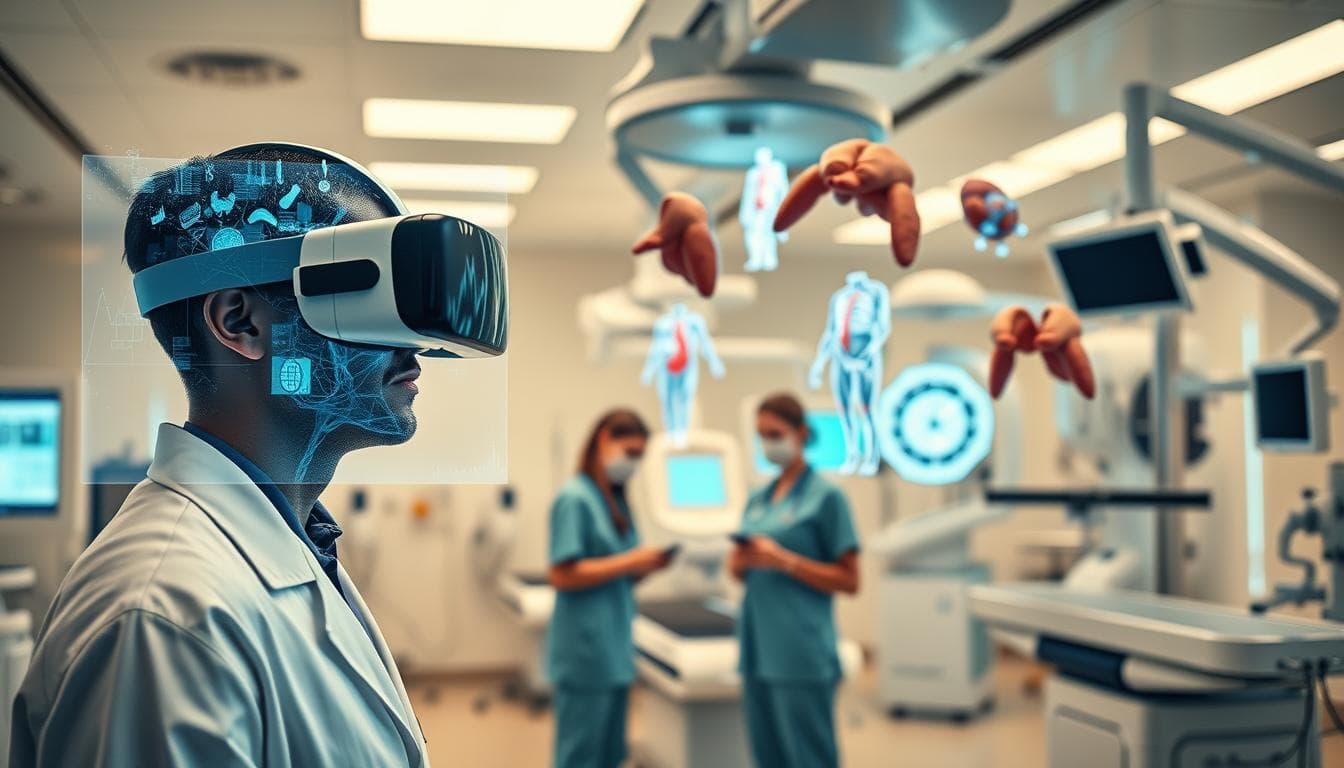
The world of VR tech is rapidly expanding beyond the realm of gaming into various aspects of our lives, particularly in healthcare. The concept of virtual reality is transforming the way medical professionals approach patient care, treatment, and therapy.

By leveraging VR technology, healthcare providers are creating innovative solutions to improve patient outcomes, enhance the treatment experience, and streamline clinical workflows. From pain management and exposure therapy to surgical training and patient education, VR tech is being utilized in diverse medical applications.
Key Takeaways
- VR tech is being increasingly adopted in healthcare for various medical applications.
- It enhances patient care and treatment outcomes.
- VR technology improves the treatment experience for patients.
- It streamlines clinical workflows for healthcare providers.
- VR tech has diverse applications in pain management, exposure therapy, and surgical training.
The Transformation of Healthcare Through Technology
The healthcare industry is on the cusp of a revolution, driven by technological advancements. As we embrace this change, it's clear that technology is not just improving existing practices but is fundamentally transforming the way healthcare is delivered.
The Digital Revolution in Medical Practice
The digital revolution is bringing about significant changes in medical practice. With the adoption of electronic health records (EHRs) and telemedicine, healthcare providers can now offer more personalized and accessible care. Immersive technologies, such as Virtual Reality (VR), are also being integrated into treatment plans, enhancing patient outcomes.
Why Immersive Technologies Matter in Healthcare
Immersive technologies are making a substantial impact in healthcare by providing innovative solutions for patient care and medical training. For instance, VR is being used for pain management, allowing patients to immerse themselves in calming environments that reduce their perception of pain. As noted by a healthcare expert, "Immersive technologies are not just a novelty; they are becoming a critical component of modern healthcare."
As healthcare continues to evolve, the role of technology will only continue to grow. By embracing these advancements, we can look forward to improved patient care and more efficient healthcare systems.
Understanding Virtual Reality in Medical Contexts
As VR technology advances, its applications in healthcare are becoming increasingly diverse, ranging from surgical simulations to pain management. This expansion is driven by the unique capabilities of VR to provide immersive, interactive experiences that can significantly impact patient care and medical training.
Key Components of Medical VR Systems
Medical VR systems consist of several key components, including high-resolution displays, motion tracking devices, and sophisticated software. High-resolution displays are crucial for creating realistic environments that simulate real-world conditions. Motion tracking devices allow for precise monitoring of the user's movements, enabling a more immersive experience.
How VR Differs from AR and MR in Healthcare
While VR creates a completely virtual environment, Augmented Reality (AR) overlays digital information onto the real world. Mixed Reality (MR) combines elements of both, allowing real and virtual objects to interact. In healthcare, VR is often used for simulations and training, whereas AR is used for guidance during procedures.
Hardware Considerations for Medical Applications
The hardware used in medical VR applications must meet stringent requirements, including high-resolution graphics and precise motion tracking. Key considerations include:
- High-resolution head-mounted displays (HMDs)
- Advanced motion tracking systems
- Specialized controllers for interactive simulations
Software Development for Healthcare Needs
Software development for medical VR involves creating realistic simulations and interactive training programs. This requires collaboration between healthcare professionals and software developers to ensure that the applications meet clinical needs.
| Technology | Application in Healthcare | Key Benefits |
| Virtual Reality (VR) | Surgical simulations, pain management | Improved training, reduced pain |
| Augmented Reality (AR) | Guidance during procedures | Enhanced precision, real-time data |
| Mixed Reality (MR) | Interactive anatomy lessons | Engaging education, interactive learning |
As VR technology continues to evolve, its role in healthcare is likely to expand, offering new opportunities for improving patient care and medical education.
Medical Training and Education Revolution
VR is revolutionizing medical training by providing a realistic and risk-free environment for healthcare professionals to hone their skills. This technological advancement is transforming the landscape of medical education, offering immersive experiences that enhance learning and retention.
Surgical Simulation and Skill Development
Surgical simulation is a critical component of medical training, allowing surgeons to practice complex procedures without risking patient safety. VR technology enables the creation of highly realistic simulations that mimic real-world surgical scenarios.
Risk-Free Practice for Complex Procedures
With VR, surgeons can rehearse intricate operations multiple times, refining their techniques and building confidence. This risk-free practice environment is invaluable for preparing surgeons for rare or complicated cases.
Performance Metrics and Feedback Systems
Advanced VR systems provide detailed performance metrics and feedback, helping surgeons identify areas for improvement. This data-driven approach to skill development enhances the learning process and accelerates the acquisition of surgical proficiency.
Anatomy Visualization and Learning
Understanding human anatomy is fundamental to medical practice. VR technology offers an immersive and interactive way to explore the human body, enhancing comprehension and retention of complex anatomical structures.
Remote Medical Education Opportunities
VR also facilitates remote medical education, allowing healthcare professionals to participate in training programs from anywhere in the world. This expands access to high-quality educational resources, bridging geographical gaps and fostering global collaboration.
The integration of VR in medical training is not only enhancing the quality of education but also making it more accessible. As this technology continues to evolve, it is likely to play an increasingly important role in shaping the future of medical training and education.
Pain Management and Distraction Therapy
Virtual reality (VR) is transforming pain management by providing immersive distraction therapy. This innovative approach has shown significant potential in reducing pain and discomfort for patients undergoing various medical procedures.
VR for Chronic Pain Patients
Chronic pain affects millions of people worldwide, often leading to decreased quality of life. VR offers a promising solution by providing immersive experiences that distract patients from their pain. Studies have shown that VR can significantly reduce chronic pain by promoting relaxation and reducing stress.
Procedural Pain Reduction in Hospital Settings
In hospital settings, VR is being used to reduce procedural pain during treatments such as wound care and physical therapy. By immersing patients in a virtual environment, VR helps to divert their attention away from the pain, making the experience more tolerable.
"VR has been a game-changer for our patients undergoing painful procedures. It's amazing to see how effectively it reduces their pain and anxiety." - Dr. Jane Smith, Pain Management Specialist
Case Studies from Leading Medical Centers
Several leading medical centers have conducted studies on the effectiveness of VR in pain management. These case studies have highlighted the benefits of VR, particularly in burn treatment and pediatric care.
Burn Treatment Applications
For burn patients, VR has proven to be especially beneficial during dressing changes and physical therapy sessions. The immersive nature of VR helps to reduce the perceived pain and anxiety associated with these procedures.
Pediatric Pain Management Success Stories
In pediatric care, VR has been used to manage pain and anxiety during treatments. Interactive VR experiences have been particularly effective in engaging young patients and making medical procedures less intimidating.
As VR technology continues to evolve, its applications in pain management are expected to expand, offering new hope for patients suffering from chronic and procedural pain.
Physical Rehabilitation Enhanced by Virtual Reality
Virtual reality (VR) is transforming the landscape of physical rehabilitation by offering innovative solutions for patients and therapists alike. By providing immersive and interactive environments, VR enhances the rehabilitation process, making it more engaging and effective.
Stroke Recovery Applications
VR technology is particularly beneficial for stroke recovery, allowing patients to practice movements and activities in a simulated environment. This can lead to improved motor function and reduced disability.
Physical Therapy Gamification
Gamification of physical therapy through VR makes the rehabilitation process more enjoyable and motivating. Patients are more likely to adhere to their therapy regimens when they are engaged in game-like activities.
Measuring and Tracking Patient Progress
Advanced VR systems enable therapists to measure and track patient progress accurately. This data is invaluable for adjusting therapy plans and ensuring optimal recovery.
Motivation and Adherence Improvements
The interactive nature of VR therapy significantly boosts patient motivation and adherence to treatment plans. By making rehabilitation more engaging, VR helps patients stay committed to their recovery goals.
Remote Rehabilitation Monitoring
With VR, remote rehabilitation monitoring becomes possible, allowing therapists to track patient progress from a distance. This expands access to quality care, especially for those in remote or underserved areas.
As VR technology continues to evolve, its applications in physical rehabilitation are expected to grow, offering new hope and improved outcomes for patients undergoing rehabilitation.
Mental Health Treatment Breakthroughs
Mental health treatment is witnessing a significant shift with the advent of VR, enabling more effective and engaging therapeutic interventions. This technology is being harnessed to address a range of mental health conditions, from PTSD to depression.
PTSD and Exposure Therapy
One of the most promising applications of VR in mental health is exposure therapy for PTSD patients. By recreating traumatic environments in a controlled and safe manner, VR allows patients to confront their fears without the risks associated with real-world exposure.
- Immersive Experience: Patients are immersed in simulated environments that trigger memories of the traumatic event, helping them process their experiences.
- Controlled Environment: Therapists can control the level of exposure, ensuring the patient's comfort and safety throughout the process.
Anxiety and Phobia Treatment
VR is also being used to treat various anxiety disorders and phobias. By gradually exposing patients to the sources of their anxiety in a virtual setting, therapists can help them overcome their fears.
Fear of Heights and Flying Applications
For instance, VR exposure therapy has been successfully used to treat acrophobia (fear of heights) and aviophobia (fear of flying). Patients are gradually exposed to simulated environments that trigger their phobias, helping them become desensitized to the stimuli.
Social Anxiety Interventions
Additionally, VR is being explored for treating social anxiety disorder. Simulated social interactions allow patients to practice social skills in a safe and controlled environment.
Depression and Mood Disorders
VR is also being investigated for its potential in treating depression and other mood disorders. By creating positive and uplifting virtual environments, therapists can help patients improve their mood and reduce symptoms of depression.

These breakthroughs in mental health treatment underscore the versatility and potential of VR technology. As research continues to evolve, we can expect to see even more innovative applications of VR in the mental health field.
Surgical Planning and Execution Advancements
Virtual reality (VR) is transforming the landscape of surgical planning and execution, offering unprecedented precision and improved outcomes. The integration of VR technology in surgical procedures has opened new avenues for surgeons to plan and execute complex operations with greater accuracy.
Pre-surgical Mapping and Preparation
VR enables detailed pre-surgical mapping, allowing surgeons to visualize the surgical site in 3D. This enhanced visualization helps in identifying potential complications and planning the best approach.
Intraoperative Guidance Systems
Intraoperative guidance systems utilize VR to provide real-time feedback during surgery. This real-time data is crucial for making adjustments on the fly, ensuring that the procedure stays on track.
Training the Next Generation of Surgeons
VR is not only beneficial for planning and execution but also plays a significant role in surgical training. It allows young surgeons to practice and hone their skills in a simulated environment.
Complex Case Preparation
For complex cases, VR provides an invaluable tool for preparation. Surgeons can rehearse the procedure multiple times, reducing the risk of complications during the actual surgery.
Team Coordination in Virtual Environments
VR also enhances team coordination by allowing the surgical team to practice together in a virtual environment. This improves communication and coordination, leading to better surgical outcomes.
| Benefits of VR in Surgery | Description |
| Pre-surgical Planning | Detailed 3D visualization of the surgical site |
| Intraoperative Guidance | Real-time feedback during surgery |
| Surgical Training | Simulated environment for skill development |
Cognitive Assessment and Neurological Applications
The application of VR in cognitive assessment is enhancing our understanding of neurological conditions and improving patient outcomes. By utilizing immersive VR technology, healthcare professionals can conduct more accurate and engaging assessments.
Diagnosing Cognitive Impairments
VR technology is being used to diagnose cognitive impairments more effectively. It provides a controlled environment where patients can be assessed for various cognitive functions, such as memory and attention.
Memory and Attention Training
VR-based training programs are designed to improve memory and attention in individuals with cognitive impairments. These programs offer interactive and engaging exercises tailored to the patient's needs.
Applications for Dementia and Alzheimer's Patients
For patients suffering from dementia and Alzheimer's, VR offers a promising avenue for therapy and management. It can help in reducing symptoms and improving the quality of life.
By leveraging VR technology, healthcare providers can offer more personalized and effective treatment plans for patients with neurological disorders.
Patient Education and Empowerment Tools
Virtual reality (VR) is transforming patient education by providing immersive experiences that enhance understanding and empowerment. By leveraging VR technology, healthcare providers can offer patients a more engaging and interactive way to comprehend their medical conditions and treatment options.
Understanding Medical Conditions Through Immersion
VR enables patients to visualize their medical conditions in a highly detailed and interactive manner. This immersive experience can lead to a better understanding of their health issues, making patients more informed and involved in their care.
Preparing Patients for Procedures
VR can also be used to prepare patients for upcoming medical procedures. By simulating the procedure, patients can reduce anxiety and feel more comfortable with what to expect. This can lead to a smoother recovery process and improved patient outcomes.
Improving Treatment Adherence
One of the key benefits of VR in patient education is its ability to improve treatment adherence. By educating patients about their treatment plans and the importance of adherence, VR can empower patients to take a more active role in their healthcare.
Visualizing Treatment Outcomes
VR allows patients to visualize potential treatment outcomes, helping them understand the benefits and risks associated with different treatment options. This can facilitate shared decision-making between patients and healthcare providers.
Shared Decision-Making Enhancement
By providing patients with a clearer understanding of their treatment options, VR can enhance shared decision-making. Patients can make more informed decisions about their care, leading to better health outcomes and higher patient satisfaction.

- Improved patient understanding of medical conditions
- Reduced anxiety through procedural preparation
- Enhanced treatment adherence
- Better shared decision-making
By harnessing the power of VR, healthcare providers can empower patients with the knowledge and understanding needed to take control of their health.
Telemedicine and Remote Healthcare Delivery
VR technology is playing a pivotal role in advancing telemedicine, making remote healthcare more effective and personalized. This integration is not only enhancing patient care but also expanding the reach of healthcare services.
Virtual Consultations and Examinations
Virtual consultations are becoming increasingly common, allowing patients to receive medical advice from the comfort of their homes. VR enhances these consultations by providing a more immersive experience, enabling healthcare providers to better understand patient conditions through interactive visualizations.
Remote Monitoring and Assessment
Remote monitoring is another critical aspect of telemedicine, where VR technology facilitates the continuous tracking of patient health. This allows for timely interventions and personalized care plans.
Expanding Healthcare Access Through Technology
Telemedicine, supported by VR, is breaking down geographical barriers to healthcare access. Rural areas and underserved communities are benefiting significantly from these advancements.
Rural Healthcare Applications
In rural areas, the lack of specialized healthcare services is a significant challenge. Telemedicine, with VR, is helping bridge this gap by connecting patients with specialists remotely.
Pandemic-Driven Innovations
The COVID-19 pandemic has accelerated the adoption of telemedicine. VR technology has been instrumental in this rapid expansion, enabling healthcare providers to continue delivering care while minimizing physical contact.
Challenges and Limitations of Virtual Reality in Healthcare
Despite its potential, the adoption of VR in healthcare is not without its obstacles. As VR technology becomes more prevalent in medical settings, understanding these challenges is crucial for its successful integration.
Technical Barriers and Implementation Costs
One of the primary challenges is the technical barrier, including the cost of implementing VR systems. High-end VR equipment is expensive, and healthcare facilities must weigh these costs against potential benefits. Additionally, the need for specialized personnel to manage and maintain VR systems adds to the overall expense.
Clinical Validation and Research Gaps
There's a significant need for clinical validation of VR applications in healthcare. Many VR solutions lack extensive clinical trials to support their efficacy. Research gaps exist, particularly in understanding long-term effects and comparing VR outcomes to traditional methods.
Patient Acceptance and Accessibility Issues
Patient acceptance is another hurdle. Some patients may experience motion sickness or have physical limitations that prevent them from using VR effectively.
Motion Sickness and Physical Limitations
Motion sickness can be a significant deterrent. Moreover, patients with certain physical conditions may find it difficult to use VR equipment, limiting its accessibility.
Privacy and Data Security Concerns
Data security is a critical concern. VR systems can potentially expose sensitive patient information if not properly secured. Ensuring the privacy and security of patient data is paramount.
Addressing these challenges is essential for the widespread adoption of VR in healthcare. By understanding and mitigating these limitations, healthcare providers can better harness the potential of VR technology.
Conclusion: The Future of Healthcare in a Virtual World
The integration of Virtual Reality (VR) in healthcare has opened new avenues for medical training, patient care, and treatment. As we've explored, VR technology is transforming the healthcare landscape, from enhancing surgical skills to providing immersive therapy for mental health conditions.
The future of healthcare is likely to be shaped significantly by VR, with potential advancements in remote healthcare delivery, personalized treatment plans, and more effective patient education. As VR technology continues to evolve, we can expect to see more sophisticated applications in healthcare, improving patient outcomes and streamlining clinical workflows.
In this virtual world, healthcare professionals and patients alike will benefit from the increased accessibility and flexibility that VR provides. With ongoing research and investment in VR technology, the healthcare industry is poised to make significant strides in the coming years, ultimately leading to better healthcare services and improved quality of life for patients worldwide.