Beyond Controllers: The Future of VR Hand Tracking & Immersion
The world of virtual reality is on the cusp of a revolution, driven by advancements in VR hand tracking technology. Traditional VR controllers have been a staple of the VR experience, but they can be limiting, creating a barrier between the user and the virtual world.

The introduction of hand tracking technology is changing this landscape, enabling users to interact with virtual objects in a more natural and intuitive way. This innovation is poised to take immersion to the next level, allowing users to fully engage with virtual environments.
Key Takeaways
- Advancements in VR hand tracking are revolutionizing the VR experience.
- Hand tracking technology enables more natural and intuitive interactions.
- Enhanced immersion is a key benefit of VR hand tracking.
- The future of VR is likely to be shaped by hand tracking innovations.
- Improved user experience is a driving factor behind VR hand tracking adoption.
The Evolution of Virtual Reality Input Methods
The evolution of virtual reality input methods is a critical aspect of creating a more immersive experience. As VR technology advances, the way we interact with virtual environments is becoming more sophisticated.
Traditional VR Controllers
Initially, VR experiences were mediated by traditional controllers, which, while effective, had limitations. These controllers were often cumbersome and could detract from the immersion of the VR experience. They required users to learn specific commands and gestures, which could be a barrier for some users.
A comparison of traditional VR controllers and newer input methods reveals significant differences in design and functionality.
| Feature | Traditional Controllers | Hand Tracking |
| Interaction Method | Buttons and Joysticks | Natural Hand Movements |
| Immersion Level | Moderate | High |
| User Experience | Requires Learning | Intuitive |
Shift Toward Natural Hand Interactions
The shift toward natural hand interactions represents a significant advancement in VR technology. Hand tracking allows users to interact with virtual objects in a more natural way, enhancing the sense of immersion and presence in virtual environments.
This technology has the potential to revolutionize the way we interact with virtual reality, making it more accessible and intuitive for a wider range of users.
How Hand Tracking Technology Works in VR
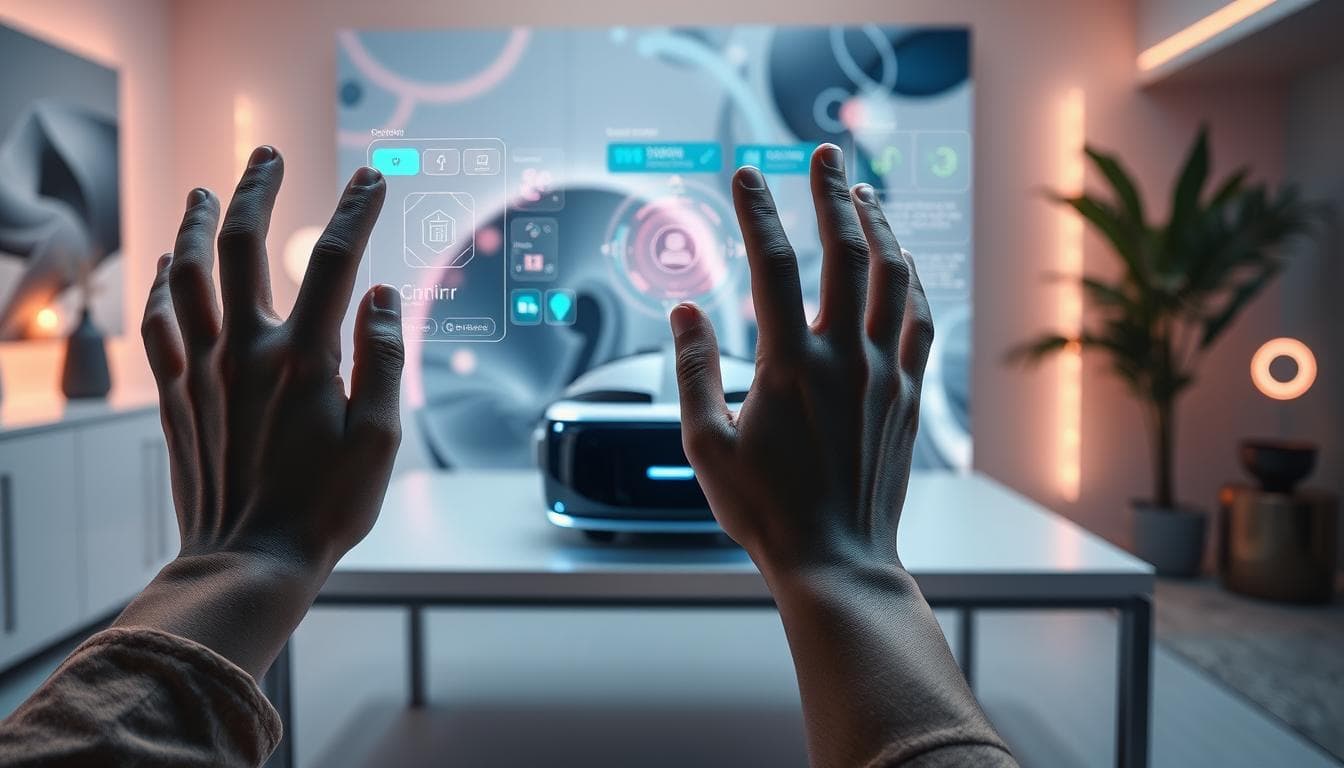
VR hand tracking technology is revolutionizing the way we interact with virtual reality environments. By leveraging advanced computer vision and machine learning algorithms, VR hand tracking enables users to manipulate virtual objects with precision and accuracy, creating a more immersive experience.
The technology uses a combination of cameras and sensors to track the movement of the user's hands, allowing for natural gestures and interactions within the virtual world. This level of immersion is crucial for applications such as gaming, education, and training, where realistic interactions can significantly enhance the overall experience.
As VR hand tracking continues to evolve, we can expect to see even more sophisticated applications, including enhanced collaboration tools and more realistic simulations. By providing a more intuitive and engaging way to interact with virtual reality, VR hand tracking is poised to take immersion to the next level.