Beyond Classrooms: VR Anatomy Education & Future of Training
For decades, students relied on flat drawings to understand the human body. Now, the way we teach health sciences is changing in exciting ways. Modern medical training is moving away from the chalkboard and into a digital space.
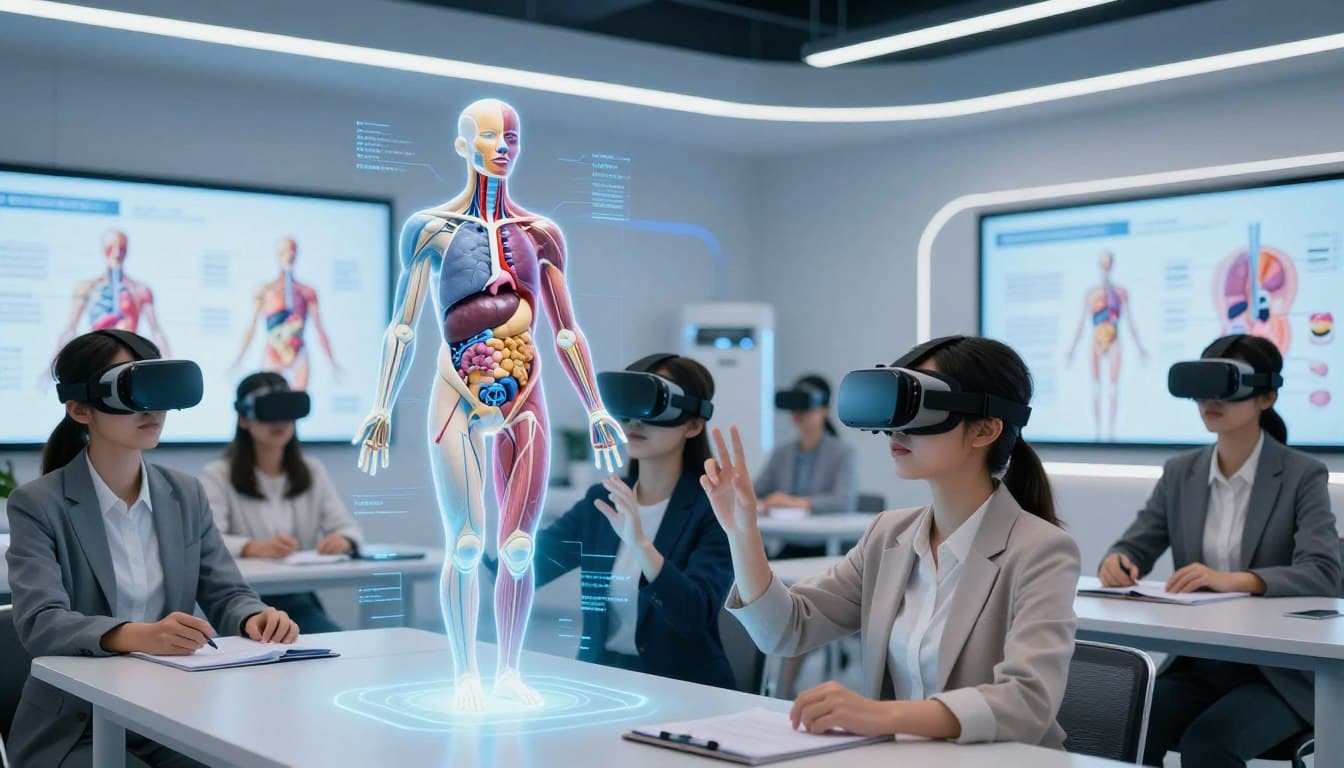
With VR anatomy education, students can interact with 3D organs and complex systems. This hands-on method makes tough concepts much simpler to learn. It gives learners a safe environment to explore and practice their skills before they ever touch a patient.

Using virtual reality helps bridge the gap between theory and practice. This technology makes lessons exciting and keeps students engaged much longer than a lecture. It is clear that the future of healthcare starts with these immersive tools in every lab.
Hospitals and schools are seeing great results from these new programs. Students feel more confident and ready for real-world challenges. This shift ensures that the next generation of doctors is better prepared than ever.
Key Takeaways
- Improves student engagement through 3D interaction.
- Provides a risk-free environment for medical practice.
- Simplifies complex anatomical structures for better learning.
- Bridges the gap between textbook theory and clinical skills.
- Prepares future healthcare professionals for high-tech environments.
- Increases information retention compared to traditional methods.
The Evolution of Medical Training in the Digital Age
The digital age has brought about a paradigm shift in how medical training is conducted. With the integration of advanced technologies, medical education is becoming more immersive, interactive, and effective.
From Textbooks to Three-Dimensional Learning
The shift from traditional textbooks to three-dimensional learning models represents a significant advancement in medical education. Three-dimensional learning allows students to visualize complex anatomical structures in detail, enhancing their understanding and retention of the material.
Key benefits of three-dimensional learning include:
- Improved spatial awareness
- Enhanced understanding of complex structures
- Better retention of information
The Shift Toward Immersive Pedagogical Models
Immersive pedagogical models, such as Virtual Reality (VR) and Augmented Reality (AR), are being increasingly adopted in medical training. These technologies provide a hands-on learning experience, allowing students to practice and learn in a simulated environment.
| Learning Method | Dimension | Interactivity | Retention Rate |
| Traditional Textbook | 2D | Low | Low |
| Three-Dimensional Models | 3D | Medium | Medium |
| Immersive VR/AR Training | 3D | High | High |
Understanding the Role of Virtual Reality in Modern Healthcare
As healthcare technology advances, virtual reality is emerging as a crucial tool for enhancing anatomy education and training. The use of VR in healthcare is not limited to just education; it extends to treatment, patient care, and surgical training.
Defining Immersive Anatomy Education
Immersive anatomy education refers to the use of virtual reality and other interactive technologies to provide a comprehensive and engaging learning experience for medical students and professionals. This approach allows learners to explore the human body in a highly detailed and interactive manner, enhancing their understanding of complex anatomical structures.
Key features of immersive anatomy education include:
- Interactive 3D models of the human body
- Real-time feedback and assessment tools
- Simulation-based learning for surgical training
Key Hardware and Software Driving the Industry
The growth of VR in anatomy education is driven by advancements in both hardware and software. Key hardware components include high-resolution head-mounted displays (HMDs) and haptic feedback devices that provide a realistic tactile experience.
Some of the leading software platforms for VR anatomy education include:
- Osso VR
- PrecisionOS
- 3D Organon
These platforms offer a range of features such as 3D modeling, simulation-based learning, and real-time collaboration tools, which are transforming the way anatomy is taught and learned.
Benefits of Using Virtual Reality for Anatomical Study
As VR technology advances, its application in anatomical study is proving to be a game-changer for medical training, enhancing spatial awareness and depth perception. The immersive nature of VR allows students to explore complex anatomical structures in a highly interactive and engaging manner.
Enhanced Spatial Awareness and Depth Perception
One of the significant advantages of VR anatomy education is its ability to improve spatial awareness and depth perception among medical students. By allowing learners to visualize and interact with 3D models of the human body, VR technology helps in developing a more nuanced understanding of anatomical relationships.
Interactive 3D models enable students to explore the human body's intricate structures from various angles, fostering a deeper comprehension of spatial relationships and enhancing their ability to visualize complex anatomy in real-world surgical scenarios.
Risk-Free Environment for Repeated Practice
VR provides a risk-free environment where students can practice and repeat anatomical dissections or surgical procedures without the constraints and ethical considerations associated with traditional cadaveric dissection. This repetitive practice is crucial for reinforcing learning and building confidence.
The ability to practice repeatedly in a controlled environment helps in reducing the cognitive load during actual surgical procedures, as the familiarity with anatomical structures and their spatial relationships has already been established.
Accessibility and Remote Learning Opportunities
Another significant benefit of VR anatomy education is its potential to make high-quality anatomical education more accessible. With VR, students can engage in remote learning opportunities, accessing detailed anatomical models and educational content from anywhere in the world.
This aspect of VR is particularly beneficial for institutions with limited resources or those in remote locations, as it bridges the gap in educational opportunities and ensures that all students have access to the same level of training.
Comparing Traditional Cadaver Labs with Digital Simulations
As medical training evolves, a critical comparison between traditional cadaver labs and digital simulations becomes increasingly relevant. This comparison is not merely about replacing old methods with new ones but understanding how each approach contributes to the training of future medical professionals.
The Limitations of Physical Dissection
Traditional cadaver labs have been the gold standard for teaching anatomy. However, they come with significant limitations. Procuring and maintaining cadavers is a complex and costly process. Moreover, the availability of cadavers is limited, and their use is subject to ethical considerations and regulations.
Physical dissection also has inherent limitations in terms of repeatability and the ability to simulate various pathological conditions. Each cadaver is unique, and the condition of the specimens can vary greatly, which may not always align with the learning objectives of the curriculum.
Cost-Effectiveness and Resource Management
Digital simulations offer a cost-effective alternative to traditional cadaver labs. The initial investment in VR technology can be substantial, but it eliminates the recurring costs associated with cadaver procurement and maintenance. Moreover, digital simulations can be repeated multiple times without additional costs, making them a resource-efficient option.
| Aspect | Traditional Cadaver Labs | Digital Simulations |
| Cost | High initial and recurring costs | High initial cost, low recurring costs |
| Accessibility | Limited by cadaver availability | Highly accessible with VR technology |
| Repeatability | Limited | Highly repeatable |
Ethical Considerations in Medical Training
The use of cadavers in medical education raises ethical considerations. While cadaveric donation is a noble act, it is subject to strict regulations and cultural sensitivities. Digital simulations, on the other hand, offer a way to circumvent these issues, providing a realistic learning experience without the ethical complexities associated with cadaver use.
In conclusion, while traditional cadaver labs have their place in medical education, digital simulations offer a compelling alternative that addresses several of the limitations associated with physical dissection. By understanding the strengths and weaknesses of each approach, medical educators can make informed decisions about how to best integrate these tools into their curricula.
Leading Platforms Transforming Anatomy Education
Advanced VR platforms are redefining the standards of anatomy education. These innovative tools are not only enhancing the learning experience but also providing a more immersive and engaging environment for medical students.
Exploring the Features of Osso VR
Osso VR is at the forefront of VR-based surgical training and anatomy education. Its platform offers a comprehensive suite of tools designed to simulate real-world surgical procedures, allowing users to practice and hone their skills in a risk-free environment.
Key Features of Osso VR:
- Realistic surgical simulations
- Hands-on training with haptic feedback
- Customizable scenarios for varied learning experiences
The Precision of PrecisionOS for Surgical Planning
PrecisionOS is another leading platform that is making significant strides in anatomy education and surgical planning. By utilizing advanced VR technology, PrecisionOS enables surgeons to plan and practice complex procedures with unprecedented precision.
The platform's precision and realism are particularly beneficial for surgical training, allowing for a more accurate representation of patient anatomy and potential complications.
Interactive Learning with 3D Organon
3D Organon offers an interactive approach to anatomy education, providing detailed 3D models that can be manipulated and explored in real-time. This level of interactivity enhances understanding and retention of complex anatomical structures.
By engaging with 3D Organon, students can develop a deeper understanding of human anatomy, preparing them for real-world clinical challenges.
The Psychological Impact of Immersive Training
The psychological impact of immersive training on medical professionals is a crucial aspect of modern medical education. Immersive training technologies, such as Virtual Reality (VR), are not only enhancing knowledge acquisition but also significantly influencing the psychological preparedness of medical trainees.
Reducing Cognitive Load During Complex Procedures
Immersive training helps in reducing cognitive load by allowing trainees to practice complex procedures in a simulated environment. This repetitive practice in a stress-free setting enables learners to automate certain tasks, thereby reducing the mental effort required during actual procedures.
By engaging in immersive training, medical professionals can better manage the complexity of procedures, as they are able to focus on decision-making rather than being overwhelmed by the multitude of tasks involved.
Studies have shown that reduced cognitive load leads to improved performance under pressure, as the trainees are more accustomed to handling complex scenarios.

Building Confidence Through Simulated Success
Another significant psychological benefit of immersive training is building confidence through simulated successes. Trainees can experience a series of successful outcomes in a controlled environment, which boosts their confidence and prepares them for real-world challenges.
Simulated success in training scenarios translates to increased self-assurance during actual medical procedures, enabling professionals to perform with greater precision and composure.
- Enhanced confidence due to repetitive successful experiences
- Better handling of high-pressure situations
- Improved overall performance in clinical settings
Integrating Haptic Feedback for Realistic Tactile Experience
As VR technology advances, the incorporation of haptic feedback is becoming a crucial element in creating a lifelike tactile experience for medical trainees. This integration is particularly significant in the field of anatomy education, where understanding the texture, consistency, and resistance of tissues is essential for surgical training.
The sense of touch is a critical component of medical training, as it allows surgeons to develop the fine motor skills necessary for precise surgical procedures. Haptic feedback technology aims to replicate this sense by providing a realistic tactile experience during VR training simulations.
Bridging the Gap Between Sight and Touch
One of the primary challenges in VR training is creating a seamless interaction between visual and tactile feedback. Haptic feedback technology addresses this challenge by allowing users to feel tactile sensations while interacting with virtual objects. This is achieved through specialized hardware that can simulate the sensations of touch, resistance, and texture.
By bridging the gap between sight and touch, haptic feedback enhances the overall realism of VR training simulations. This, in turn, can improve the transfer of skills from the virtual environment to real-world surgical settings.
Advancements in Force-Feedback Technology
Recent advancements in force-feedback technology have significantly improved the realism and effectiveness of haptic feedback in VR medical training. These advancements include the development of more sophisticated algorithms that can accurately simulate the complex interactions between surgical instruments and human tissues.
Furthermore, advancements in hardware have enabled the creation of more precise and responsive haptic devices. These devices can provide a range of tactile sensations, from the gentle touch required for delicate procedures to the firm resistance encountered during more invasive surgeries.
The continued development of haptic feedback technology is expected to play a crucial role in the evolution of VR medical training. As this technology advances, it is likely to become an increasingly integral component of surgical education, providing trainees with a more immersive and effective learning experience.
Overcoming Barriers to Widespread Adoption
Despite the promising benefits of VR in medical education, significant barriers remain that hinder its broad implementation. The adoption of VR technology in medical training is not without its challenges, and addressing these hurdles is crucial for its future success.
Addressing Hardware Costs and Infrastructure
One of the primary obstacles to the widespread adoption of VR in medical education is the cost associated with the necessary hardware and infrastructure. High-end VR systems require significant investment, which can be a barrier for many institutions. "The cost of VR equipment is one of the biggest challenges we face in implementing this technology," notes Dr. John Smith, a leading researcher in the field.
To mitigate these costs, some institutions are exploring alternative options, such as leasing VR equipment or partnering with technology companies to share resources. Additionally, advancements in technology are leading to more affordable VR solutions without compromising on quality.
Standardizing Curriculum Across Medical Schools
Another significant challenge is the standardization of VR-based curricula across medical schools. With the rapid evolution of VR technology, there is a need for a unified approach to integrating VR into medical education. This includes developing standardized curricula that can be adapted across different institutions.
"Standardization is key to ensuring that VR training is effective and consistent across different medical schools," emphasizes Dr. Jane Doe, an expert in medical education. Efforts are underway to create frameworks that can guide the development of VR-based educational content, ensuring that it meets the required standards.
By addressing these challenges, the medical education community can work towards a future where VR technology is widely adopted, enhancing the training of medical professionals and ultimately improving patient care.
The Future of Collaborative Surgical Training
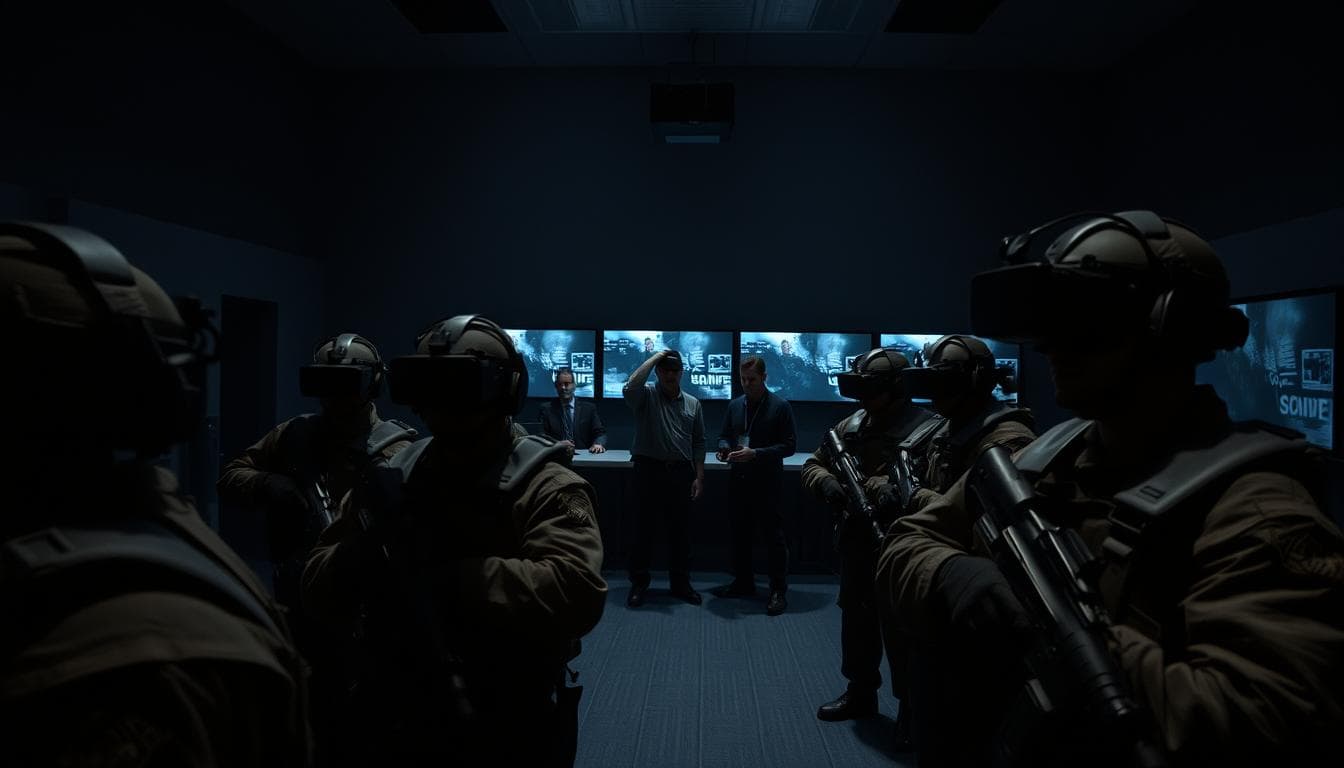
The future of surgical training is poised to undergo a significant transformation with the advent of collaborative virtual reality (VR) environments. This shift is driven by the need for more effective, team-based training solutions that can simulate the complexities of real-world surgical procedures.
As VR technology continues to evolve, it is becoming increasingly clear that its potential extends far beyond individual training. Multi-user environments are being developed to facilitate team-based training, allowing surgeons to practice and hone their skills in a collaborative, immersive setting.
Multi-User Environments for Team-Based Procedures
One of the most significant advantages of VR in surgical training is its ability to support multi-user environments. These environments enable multiple users to interact within the same virtual space, facilitating team-based training and collaboration. This is particularly valuable for surgical procedures that require coordination among multiple specialists.
By training together in a virtual environment, surgical teams can improve their communication, decision-making, and overall performance. This collaborative approach to training can help reduce errors and improve patient outcomes.

Global Knowledge Sharing Among Specialists
Beyond team-based training, collaborative VR environments also facilitate global knowledge sharing among specialists. Surgeons from around the world can connect and share their expertise, best practices, and insights into complex procedures.
This global exchange of knowledge can help to standardize surgical training and improve the overall quality of care. It also provides opportunities for surgeons to learn from one another and stay up-to-date with the latest techniques and advancements.
By leveraging VR technology, the surgical community can come together to drive innovation and excellence in patient care.
Preparing the Next Generation of Surgeons
The next generation of surgeons is on the cusp of a revolution in medical training, driven by virtual reality technology. As VR continues to advance, it's imperative that medical education evolves to incorporate these innovations.
One of the key steps in this evolution is adapting medical school curricula to include VR training. This involves not just adding VR as a supplementary tool, but integrating it into the core curriculum to provide students with a comprehensive understanding of human anatomy and surgical procedures.
Adapting Medical School Curricula for VR
To effectively integrate VR into medical education, curricula must be redesigned to leverage the unique benefits of virtual reality. This includes using VR to enhance spatial awareness and provide a risk-free environment for repeated practice.
Medical schools can start by identifying areas where VR can complement traditional teaching methods, such as in anatomy classes or surgical simulations. By doing so, they can create a more immersive and engaging learning experience.
The Role of Mentorship in Virtual Spaces
Mentorship remains a crucial element in surgical training, even as the medium shifts to virtual environments. Experienced surgeons can guide trainees through complex procedures in VR, offering real-time feedback and insights.
The role of mentorship in VR is not limited to technical skills; it also encompasses the development of decision-making and teamwork skills, essential for success in the operating room.
By combining VR training with effective mentorship, medical schools can ensure that the next generation of surgeons is well-prepared to face the challenges of their profession.
Ethical and Regulatory Challenges in Digital Training
As VR technology continues to revolutionize medical training, it's crucial to address the emerging ethical and regulatory challenges. The shift towards digital training methods, while innovative, raises significant concerns that need to be mitigated to ensure the continued safe and effective development of medical professionals.
The use of VR in medical education introduces new ethical considerations, particularly in the areas of data privacy and patient simulation ethics. Ensuring the privacy and security of sensitive patient data used in simulations is paramount. Moreover, the ethical implications of using simulated patients for training purposes must be carefully examined to avoid any potential harm or exploitation.
Data Privacy and Patient Simulation Ethics
One of the key challenges is maintaining the confidentiality and integrity of patient data used in VR simulations. This involves implementing robust data protection measures and ensuring compliance with relevant regulations such as HIPAA in the United States.
Furthermore, the use of simulated patients raises ethical questions regarding consent and the potential for bias in the simulation models. It's essential to develop guidelines that address these concerns and ensure that VR training is both effective and ethical.
Validating VR Competency for Board Certification
Another critical issue is the validation of VR training for VR competency in board certification processes. As VR becomes more prevalent in medical training, it's necessary to establish standardized metrics for assessing competency gained through VR training. This involves collaboration between medical educators, regulatory bodies, and technology developers to ensure that VR training meets the required standards for professional certification.
In conclusion, while VR offers immense potential for enhancing medical training, addressing the ethical and regulatory challenges associated with its use is crucial. By focusing on data privacy, patient simulation ethics, and the validation of VR competency, we can ensure that digital training methods contribute positively to the development of future medical professionals.
Conclusion
As medical training continues to evolve,
virtual reality is revolutionizing the field of anatomy education.
By providing immersive, interactive, and risk-free environments, VR is enhancing the learning experience for medical students and professionals alike.
The benefits of VR in medical training are multifaceted, from improved spatial awareness and depth perception to increased accessibility and cost-effectiveness.
Leading platforms such as Osso VR, PrecisionOS, and 3D Organon are at the forefront of this healthcare innovation, offering precise and engaging training solutions.
As VR technology continues to advance, we can expect to see widespread adoption across medical schools and training programs, ultimately leading to better prepared healthcare professionals.
The future of medical training is undoubtedly tied to the continued development and integration of virtual reality, driving innovation and excellence in healthcare.